MRI with contrast: when it is needed, preparation and blood tests before the scan
An MRI with contrast is an MRI scan during which a contrast agent, most often gadolinium-based, is injected into a vein in the arm so that blood vessels, inflammation and tissue changes can be seen more clearly. Whether contrast is needed is decided by the referring doctor and the radiologist. Before the scan, kidney function is usually checked with a creatinine blood test and eGFR. At Maja Radiology, in the Maja Hospital building in Niš, the scan can be booked on 018 530 530.
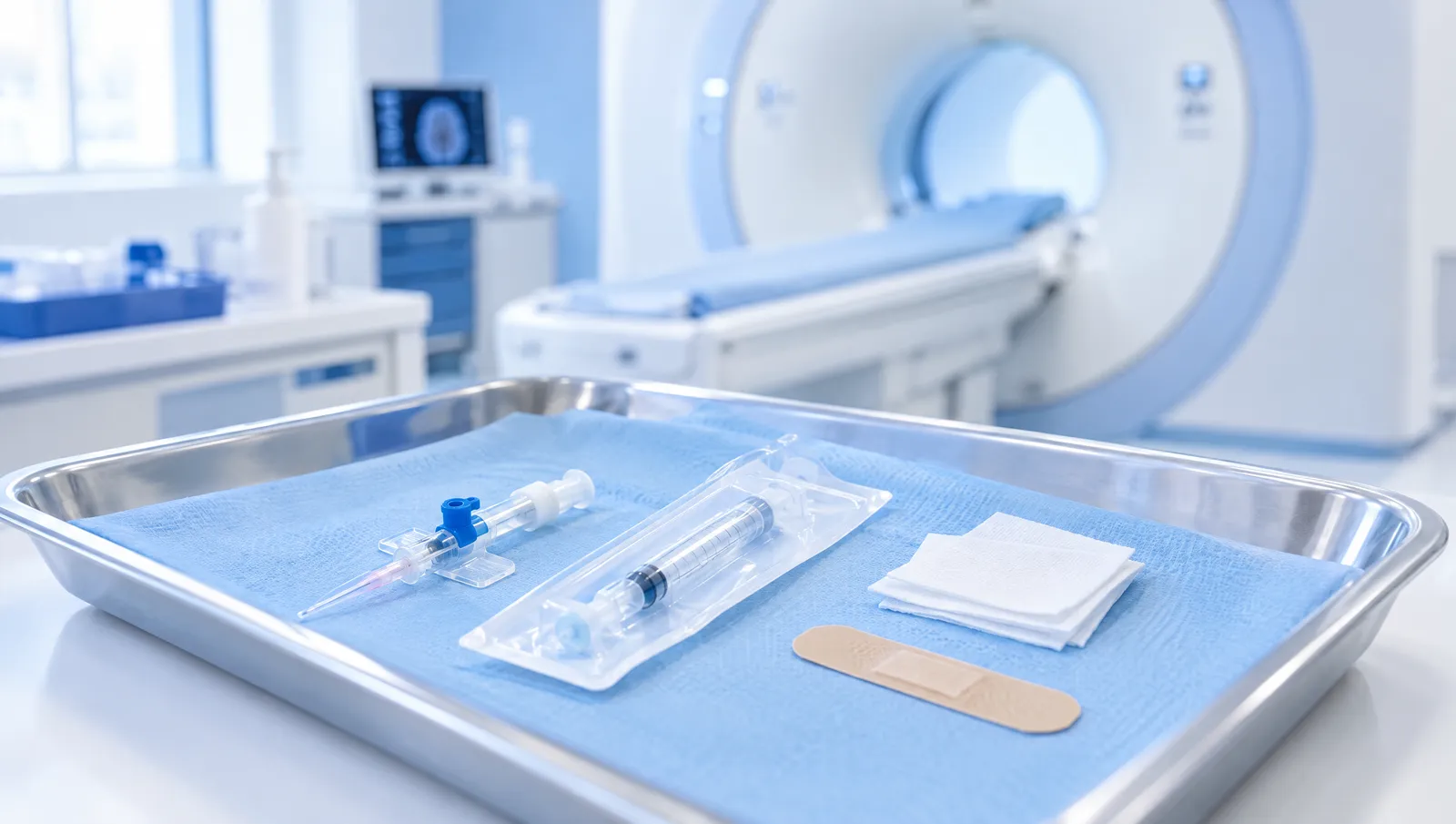
What is MRI contrast?
MRI contrast is a clear liquid that is injected into a vein. It is most often gadolinium-based, a metal bound into a stable compound so that the body can tolerate and eliminate it more easily. Once in the bloodstream, the contrast temporarily changes the signal from tissues on the images. Areas of the body with greater blood flow, inflammation or altered tissue then stand out more clearly from their surroundings.
MRI contrast is not the same as the iodine-based contrast given for a CT scan (MSCT). When booking, it is therefore helpful to say which scan you are having and whether you have ever had a reaction to any type of contrast.
MRI with or without contrast: when is contrast given?
Many MRI scans are done without contrast. Contrast is added when the blood supply to tissue, or the difference between healthy and altered tissue, needs to be seen more clearly. This is decided by the referring doctor and the radiologist, depending on the area being scanned and the reason for the scan. The most common situations in which contrast is considered are:
- scans of the head (brain), pituitary gland and spinal cord
- follow-up after surgery, for example after disc surgery, when scar tissue needs to be distinguished from a recurrent disc herniation (slipped disc)
- assessment of inflammation and changes in soft tissues
- scans of the breasts, prostate, liver and other abdominal and pelvic organs, when the scan plan includes it
- certain scans of the heart and blood vessels
- follow-up scans when the previous scan was also done with contrast, for comparison
Contrast is part of the scan plan and helps to make the images clearer. Your doctor will explain what the findings mean.
Which blood tests are done before the scan: creatinine and eGFR
Contrast leaves the body mainly through the kidneys. That is why kidney function is usually checked before the scan. The basic test is blood creatinine. From the creatinine value, together with age and sex, the eGFR is calculated, which is the estimated rate at which the kidneys filter the blood.
How recent the result needs to be, and who is asked for it, depends on the facility's rules and the doctor's assessment. Many facilities specifically ask for a recent result from older people and from people with diabetes, high blood pressure or known kidney disease. Creatinine and eGFR are also listed in the Maja Hospital laboratory price list, so when booking it is worth asking where and when it is easiest to have the test done.
When the eGFR is within limits the doctor considers safe, the scan goes ahead as planned. If kidney function is severely reduced, the radiologist assesses whether contrast is essential, whether a different agent should be chosen or whether the scan should be done without contrast. The reason for this caution is a rare but serious complication called nephrogenic systemic fibrosis. It has been described mainly in severe chronic kidney failure, in people on dialysis and in sudden (acute) kidney injury, and with the agents most commonly used today it occurs extremely rarely.
How to prepare for an MRI with contrast
Preparation for an MRI with contrast is similar to preparation for a standard MRI, with a few extra steps. You will receive instructions for your specific scan when you book.
- Bring your referral or doctor's recommendation, if you have one, as well as your creatinine and eGFR results and any previous scans with their reports.
- Write a list of the medicines you take regularly. Do not stop your regular medication on your own; this is for your doctor to decide.
- Tell the staff about any previous reactions to contrast, allergies, asthma, kidney disease, dialysis, pregnancy or breastfeeding.
- Also tell the staff about any implanted devices or metal in your body, for example a pacemaker, insulin pump, implants or metal parts from previous operations.
- Whether you need to come without eating depends on the type of scan and the facility's rules. For some abdominal scans and for a scan under sedation, you are usually asked not to eat for a few hours. Ask when booking what applies to your scan.
- Unless your doctor has restricted your fluid intake, drink water as usual before and after the scan.
- Wear comfortable clothing without metal parts and arrive early, as advised when you book, usually about 15 minutes, for registration, the questionnaire and insertion of the cannula.
How is contrast given and what is the scan like?
Before the scan, a thin plastic cannula is inserted into a vein in your arm. The first part of the scan is usually done without contrast. Then, according to the radiologist's plan, the contrast is injected through the cannula and the scan continues. It is important to lie still during the injection, as well as for the rest of the scan.
Most people do not feel anything in particular during the injection. Some feel a brief coldness at the injection site and, less often, a short metallic taste in the mouth or mild nausea. This usually passes within a minute or two. A scan with contrast usually takes a little longer than one without, because images are taken both before and after the injection. The exact duration depends on the area being scanned.
If you feel itching, nausea, difficulty breathing or any discomfort during the scan, tell the staff straight away, in the way the radiographer explains before the scan begins.
What is normal after a scan with contrast?
After the scan, the cannula is removed and brief pressure is applied to the injection site. Many facilities ask patients to stay in the waiting area for a short time after contrast for observation, usually 15 to 30 minutes. After that you can usually return to your normal activities, eating and driving. The exception is a scan with a sedative or sedation: in that case you go home with someone accompanying you and usually should not drive for the next 24 hours, as instructed by the doctor. It is normal for some people to experience:
- mild tenderness or a small bruise at the injection site
- a mild headache, nausea or dizziness, which pass quickly
- passing urine more often if you drink more water than usual
In people with normal kidney function, most of the contrast is passed out in the urine within the first day. Contact a doctor if you develop a rash, itching, redness or more severe pain and swelling at the injection site, because a reaction, although rare, can also appear several hours later. If you have difficulty breathing, swelling of the face or lips, or severe weakness, call 194 urgently.
Who needs particular caution?
Most people tolerate MRI contrast well, and serious reactions are rare. However, in some situations the radiologist specifically weighs up the benefits and risks before the scan, so it is important to mention them in advance:
- reduced kidney function, sudden (acute) kidney injury, dialysis or a kidney transplant
- a previous reaction to a contrast agent, for MRI or for CT
- asthma and significant allergies
- pregnancy or possible pregnancy, as contrast is usually avoided in pregnancy and given only when essential
- breastfeeding: according to the position of professional radiology societies, breastfeeding can usually continue without interruption. A mother who wishes to be extra cautious can agree a 24-hour pause with her doctor. In that case it is a good idea to express milk for the baby in advance, and milk expressed during the pause is discarded.
- children: as with adults, the dose of contrast is based on body weight, and the scan is planned with the radiologist and, if sedation is needed, with the anaesthetist
None of the above automatically means that the scan cannot be done. The doctor may adjust the type and dose of contrast, suggest a scan without contrast or a different diagnostic method.
Booking at Maja Radiology in Niš
MRI scans are carried out at Maja Radiology, in the Maja Hospital building at Vizantijski bulevar 39 in Niš. Scans are booked on 018 530 530. When booking, say that the scan is with contrast, which area is being scanned and whether you already have creatinine and eGFR results, so that you receive instructions on blood tests, eating and arrival time.
In the radiology price list, contrast and preparation for a scan with contrast are separate items, in addition to the price of the MRI scan itself. The prices of these items and of the creatinine and eGFR tests are shown in the table below the text, according to the website price list. Prices of individual MRI scans can be found in the radiology price list.
The information in this text is general in nature and does not replace an examination by a doctor.