
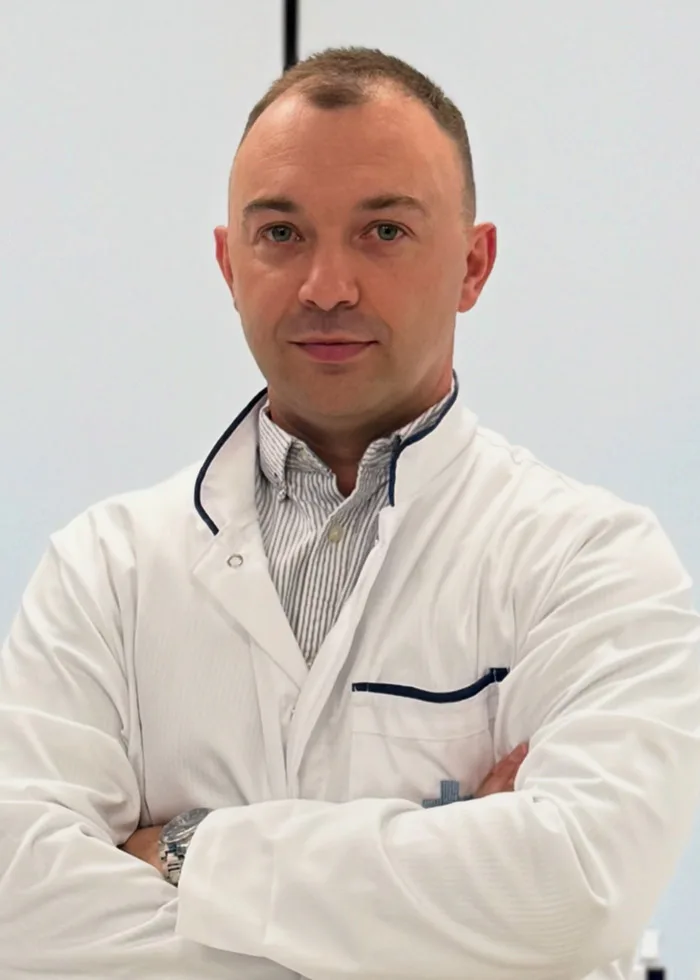
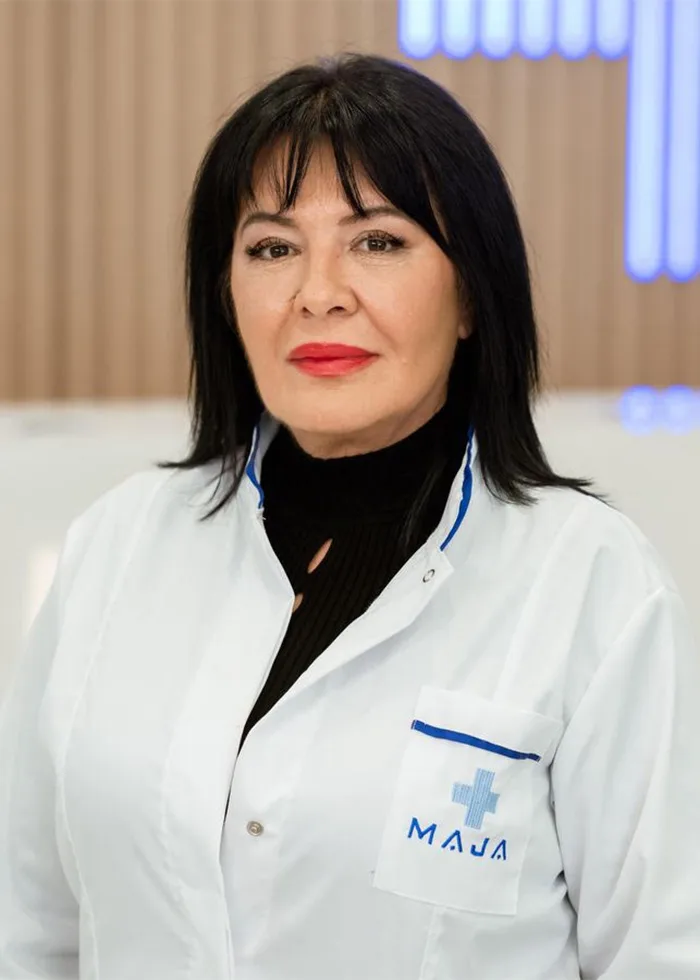
Dr Ljiljana Paunković
specialist in plastic and reconstructive surgery
Aesthetic surgery · Niš
Maja Hospital in Niš, at Vizantijski bulevar 39, carries out plastic, reconstructive and aesthetic surgery procedures, as well as aesthetic medicine treatments. Surgical procedures are performed by Dr Ljiljana Paunković and Dr Dimitrije Adamović, specialists in plastic and reconstructive surgery. They include breast surgery, eyelid, ear and lip correction, removal of skin lesions, lipomas and sebaceous cysts (atheromas), skin reconstruction, scar revision and hand surgery. The first step is a consultation with a plastic surgeon, and prices are published in the price list.
Our specialists
Procedures
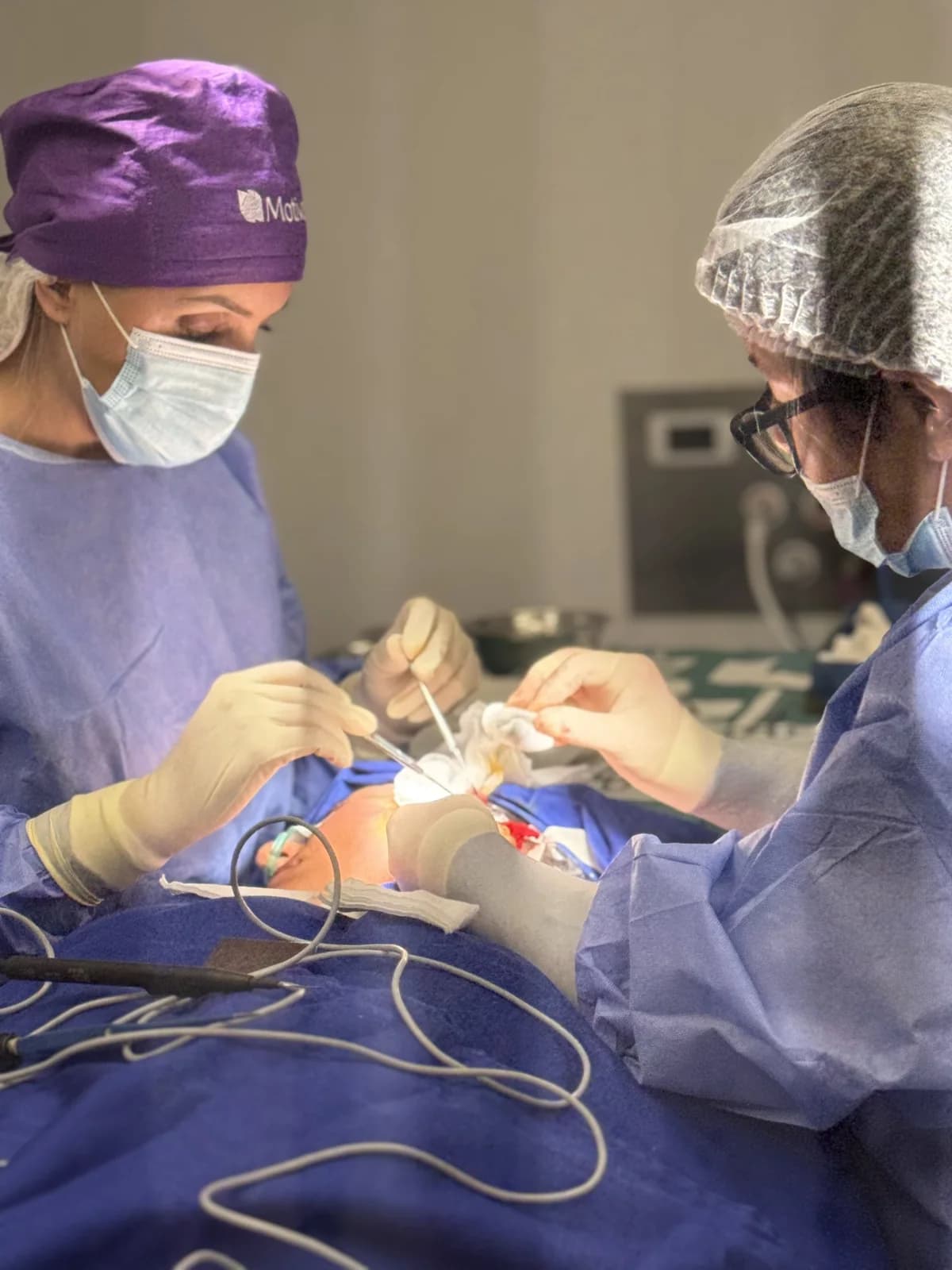
Eyelid surgery · Ear correction · Upper lip lift
Read more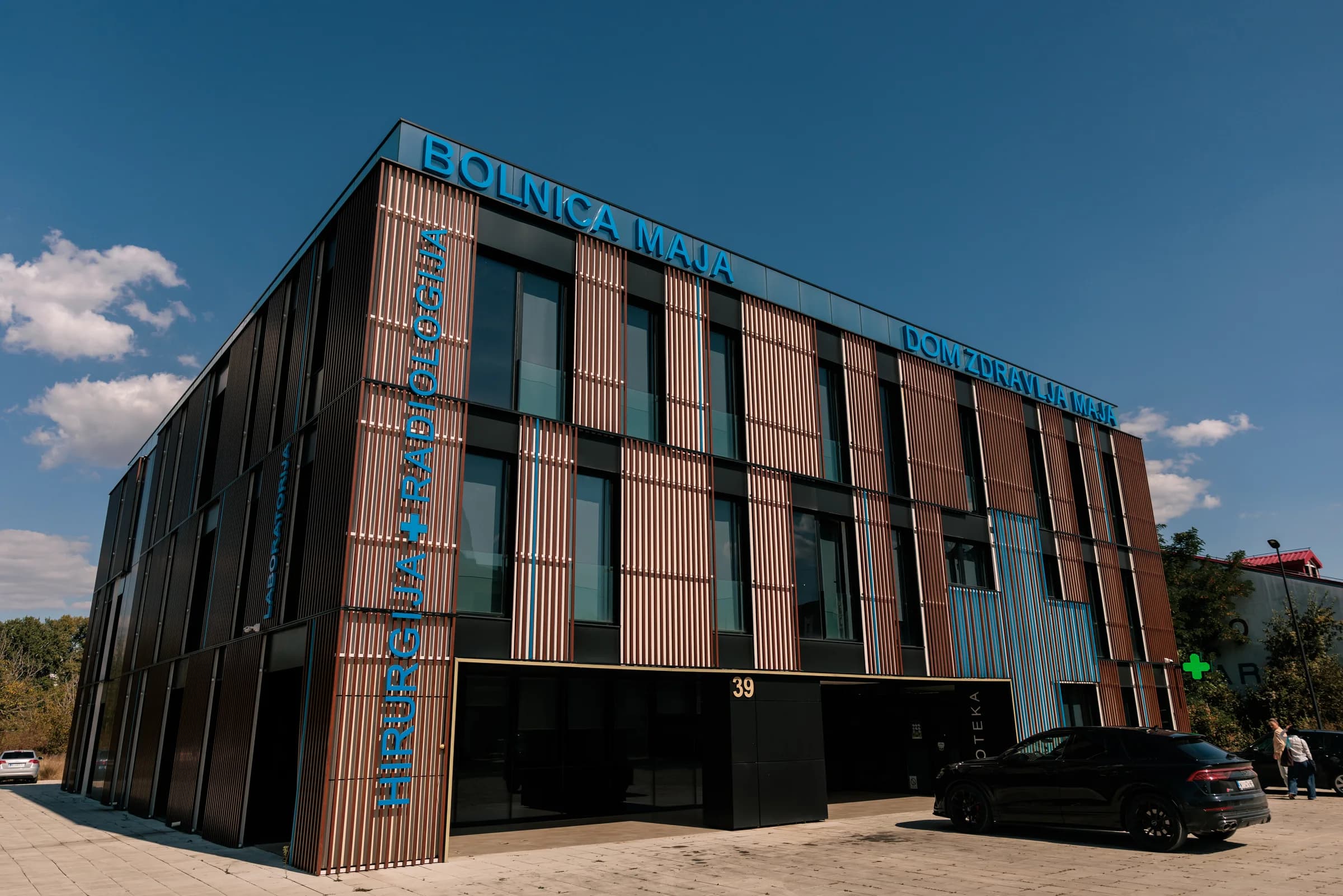
Breast augmentation · Breast lift · Breast reduction · Implant removal and capsulectomy
Read more
Dermolipectomy
Read more
Removal of skin lesions and tattoos · Removal of lipomas and atheromas · Scar revision · Skin reconstruction: grafts and flaps
Read more
Hyaluronic acid fillers, PRP treatment, treatments for skin hydration and quality, threads for tightening the skin and skin biostimulators.
Read more
Wounds, ingrown nails, abscesses and haematomas · Hand surgery
Read moreBotox and fillers
Move your mouse over the face to see the muscles beneath the skin. Choose an area to see the treatment.Tap a point on the face to see the muscles beneath the skin and the treatment for that area.
Relaxes the muscles that cause expression lines.

The treatment plan is always made by a doctor after an examination. You get the price at the examination.
Non-surgical lifting
The lines show the direction of lifting. Choose an area to see which treatment is used.
Threads, mesolifting and PRP.

The treatment plan is always made by a doctor after an examination. You get the price at the examination.
Plastic surgery deals with the shape and function of the skin, soft tissues and parts of the body. The aim of reconstructive surgery is to improve shape and function after an injury, after a growth has been removed, or in conditions present from birth. For example, when a larger defect is left after a lesion has been removed, the defect is covered with a skin graft (skin taken from another part of the body) or a flap, which means moving nearby tissue over it. Aesthetic surgery changes the appearance of healthy parts of the body, such as the breasts, eyelids or ears, according to the patient's wishes and the surgeon's assessment. At Maja Hospital, plastic surgery procedures are performed by specialists in plastic and reconstructive surgery. Alongside surgical procedures, non-surgical aesthetic medicine treatments are also carried out.
Common reasons for a consultation are a mole or other skin lesion that needs to be removed and checked, a lipoma or sebaceous cyst, a scar after an injury or operation, and an ingrown nail. Patients also come with hand problems, such as trigger finger or a ganglion cyst. Some patients would like a change in the size or shape of their breasts, or correction of the eyelids, ears or upper lip. A mole that is growing, changing colour or shape, bleeding or itching should be shown to a doctor without delay. A fresh, deep or heavily bleeding wound should not wait for a booked appointment: in that case, call an ambulance on 194. At the consultation, the surgeon assesses whether a procedure is needed, which method is an option and what can realistically be expected.
Many minor procedures are done under local anaesthetic and usually do not require an overnight stay in hospital. For some procedures, sedation is given alongside the local anaesthetic, and the patient is then monitored by a specialist anaesthetist. Larger procedures, such as breast operations or dermolipectomy, are usually done under general anaesthetic. How long the procedure takes, whether a hospital stay is needed and how long recovery takes all depend on the type and extent of the procedure. You discuss this with the surgeon at the consultation.
Every surgical procedure carries some risk. The most common are swelling, bruising, pain and temporary numbness in the treated area. Less common are bleeding or a collection of blood (haematoma), infection, slower wound healing, a noticeable or thickened scar, and asymmetry. With breast implants, the scar capsule around the implant can harden. After aesthetic medicine treatments, the most common effects are swelling, bruising and tenderness, and more serious complications are rare. At the consultation, the surgeon explains the risks of your procedure and what can realistically be expected, and before the procedure you give written consent.
Prices for procedures are listed in the plastic and aesthetic surgery price list, and prices for treatments in the aesthetic medicine (anti-ageing) price list. For many procedures the price depends on the size and number of lesions, so the price list has separate items for small, medium and large procedures. The final price is set by the surgeon after the consultation. Some items in the price list are marked “bez PH” (without PH), which refers to histopathological analysis. At the consultation, ask what the price of your procedure includes: the anaesthetic, the hospital stay, implants, histopathological analysis, dressing changes, stitch removal and follow-up appointments.
The first step is a consultation with a plastic surgeon at Maja Hospital. The surgeon talks with you about why you have come and what you expect, examines the area to be treated and looks at any test results you bring. They then explain whether a procedure is needed or possible, which method is an option, what the possible risks are and what the price includes.
For larger procedures, the doctor orders blood tests and any other examinations needed before the operation. For procedures under general anaesthetic or sedation, you will also talk to an anaesthetist. The doctor explains when to come and how to prepare.
On the day of the procedure, come at the agreed time. Minor procedures are usually done under local anaesthetic. For some procedures, sedation or pain relief (analgesia) is added under the supervision of a specialist anaesthetist, and larger procedures are usually done under general anaesthetic. The type of anaesthetic is suggested by the surgeon and the anaesthetist, and the decision is made together with you.
After the procedure you receive instructions on wound care, dressings and pain relief. You arrange appointments for dressing changes and stitch removal with the doctor. Stitches are usually removed after five to fourteen days, depending on where the procedure was done, and some stitches dissolve on their own and do not need to be removed. Contact the surgeon without delay if you develop a high temperature, pain that is getting worse, redness and swelling that are spreading, or pus or bleeding coming from the wound.
At the follow-up appointment, the surgeon checks how the wound is healing and arranges further care for the scar. If tissue was sent for histopathological analysis, the doctor explains the result at the follow-up. The number of follow-up appointments depends on the type of procedure.
A consultation with a plastic surgeon at Maja Hospital is booked by phone on 069 530 530 9. The hospital is at Vizantijski bulevar 39 in Niš. Bring any test results and medical records you have to the consultation, as well as a list of the medicines you take regularly.
For a consultation at a private healthcare institution that you pay for yourself, a referral from your GP is usually not needed. You will find out whether a referral is needed at Maja Hospital when you book. If you already have test results, for example a histopathology report, an ultrasound or other imaging, bring them to the consultation.
Prices for procedures at Maja Hospital are published in the plastic and aesthetic surgery price list, and prices for aesthetic medicine treatments in the aesthetic medicine (anti-ageing) price list. The price depends on the type and extent of the procedure, for example on the size and number of skin lesions. The final price is set by the surgeon after the consultation.
Aesthetic procedures are usually not covered by health insurance. Whether a reconstructive procedure can be covered by a private (voluntary) health insurance policy depends on the terms of the policy, so check this with your insurance company before booking. When booking, ask whether Maja Hospital works with your insurance company or with RFZO, Serbia's Republic Health Insurance Fund, for a particular procedure.
Minor skin procedures, scar revision, ingrown nail surgery and some ear procedures are usually done under local anaesthetic. For some procedures, sedation is added under the supervision of an anaesthetist. Larger procedures, such as breast operations, are usually done under general anaesthetic. The type of anaesthetic is suggested by the surgeon and the anaesthetist, and the decision is made together with you.
The information in this text is general in nature and does not replace an examination by a doctor.
Information on this website does not replace a medical examination. Treatment is decided by a doctor after the examination.