
Dr Milica Nestorović
specialist in general surgery, colorectal surgery and proctology (subspecialist in oncology)
Book an appointment with Dr Milica NestorovićProctological surgery at Maja Hospital in Niš covers consultations with a proctologist and the treatment of conditions of the rectum, the anal canal and the surrounding skin: haemorrhoids, anal fissure, abscess and fistula, pilonidal sinus, hidradenitis and rectal prolapse.
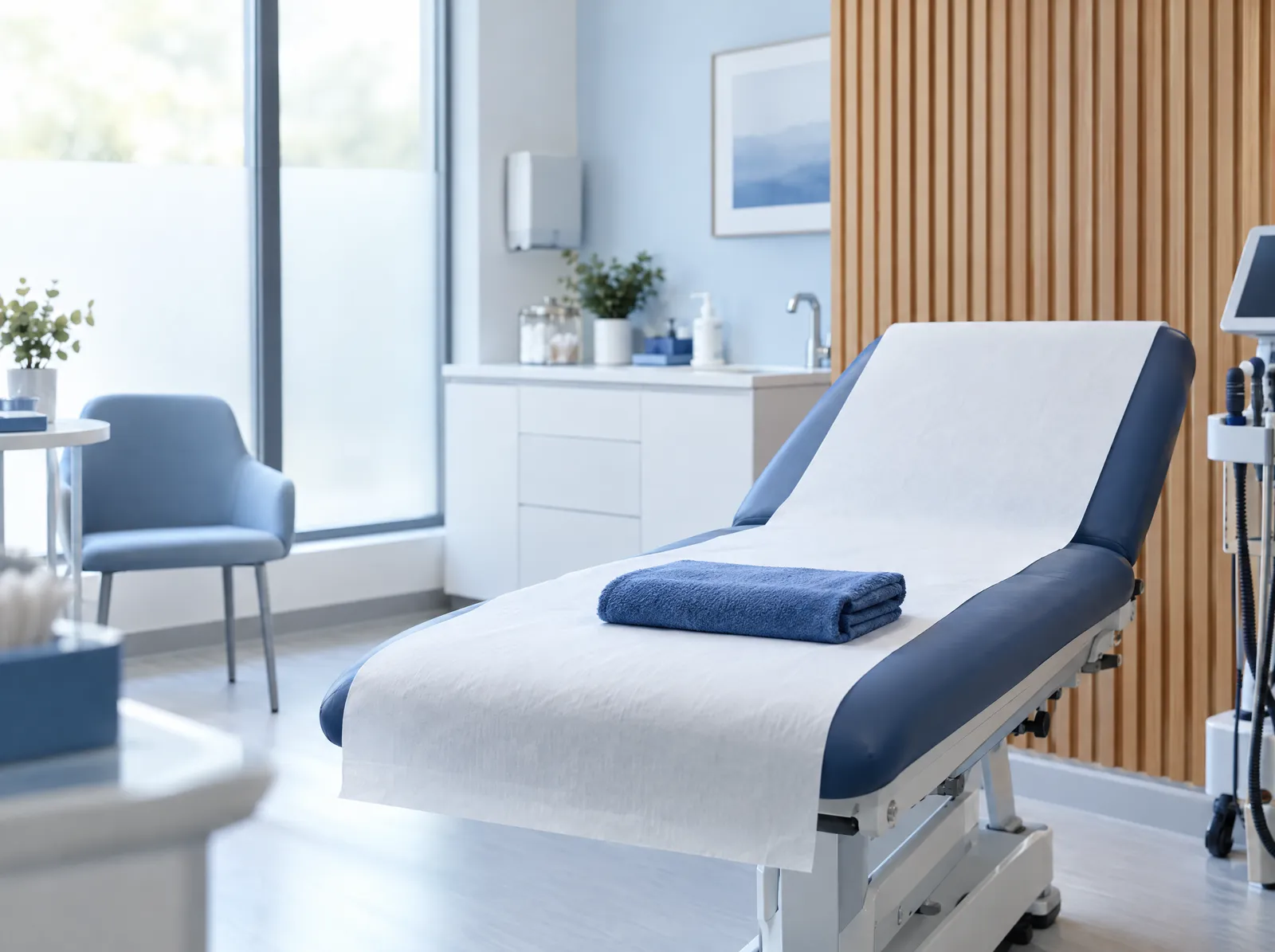
Consultations and operations are carried out by Dr Milica Nestorović, Prim. Dr Dragoslav Miljković and Dr Dragan Mihajlović, MSc, specialists in general surgery who practise colorectal surgery and proctology. The hospital is at Vizantijski bulevar 39.
A conversation, an examination of the skin around the anus and an examination of the last part of the bowel with a gloved finger (digital rectal examination). Based on the findings, the doctor recommends treatment or further tests.
Treatment of enlarged haemorrhoids, from advice on diet and bowel movements to surgery. The doctor chooses the treatment method according to the grade of the haemorrhoids and the examination findings.
Read more: Haemorrhoids and haemorrhoid surgery →A small sore (tear) in the skin of the anal canal. It is usually treated without surgery first, and a surgical procedure is considered when the fissure does not heal for a long time.
An abscess is an inflamed, pus-filled area next to the anus. It is usually treated by surgically opening it and draining the pus (incision and drainage), because medicines alone are generally not enough, so it should be seen by a surgeon without delay. A fistula is a narrow channel between the anal canal and the skin around the anus. It can remain after an abscess and is usually treated with surgery.
A long-term skin condition above the tailbone, in the cleft between the buttocks. A channel or cavity forms under the skin, often containing hairs, which can become inflamed and form an abscess. When it causes symptoms, it is usually treated surgically, and the type of procedure and wound care are decided by the surgeon.
A long-term inflammatory skin disease that starts in the hair follicles in skin folds, with painful lumps, pus-filled lesions and channels under the skin. Treatment often begins with a dermatologist, and when the lesions are persistent or keep coming back, the surgeon removes the affected skin. The extent of the procedure depends on the size of the lesion, and the procedure is usually done under sedation, with an anaesthetist present.
A condition in which the last part of the large bowel (the rectum) comes out through the anus. It should not be confused with prolapsing haemorrhoids, and the doctor establishes the difference at the examination. Maja Hospital performs rectal prolapse surgery, including laparoscopic rectopexy. The surgeon chooses the surgical approach according to the findings and the patient's age and general health.
Read more: Rectal prolapse →Large bowel and rectal operations, including laparoscopic proctocolectomy with end ileostomy and laparoscopic rectosigmoid resection, are carried out by the same surgeons who specialise in colorectal surgery and proctology. In detail: the large bowel surgery and rectal surgery pages.
Read more: Large bowel and rectal operations →specialist in general surgery, colorectal surgery and proctology (subspecialist in oncology)
Book an appointment with Dr Milica Nestorović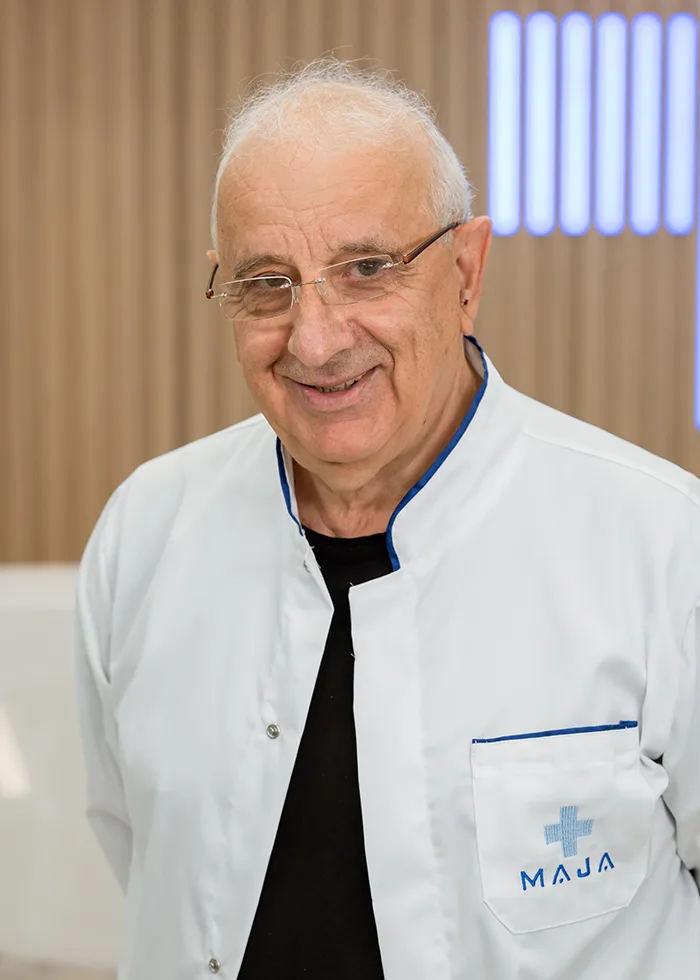
specialist in general surgery, colorectal surgery and proctology
Book an appointment with Prim. Dr Dragoslav Miljković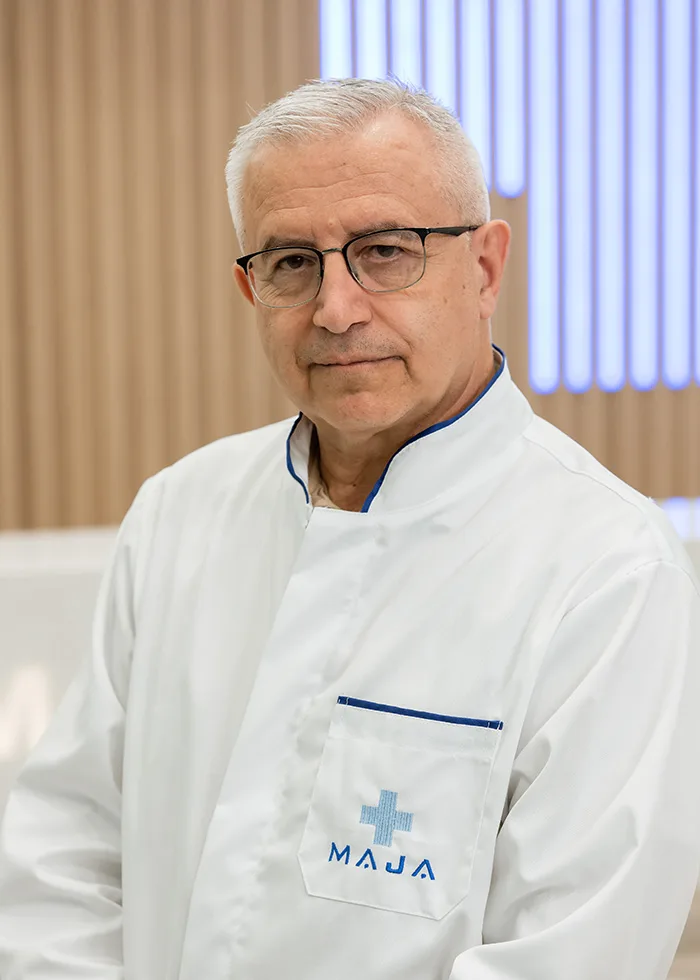
specialist in general surgery, colorectal surgery and proctology
Book an appointment with Dr Dragan Mihajlović
You book the consultation by phone on 069 530 530 9. When booking, you can ask whether any preparation is needed for your consultation.
The doctor talks to you about your symptoms and examines the skin around the anus and the last part of the bowel.
The doctor explains the findings and recommends treatment: advice on diet and bowel movements, medicines, further tests or surgery.
Before the operation you have tests and, if a spinal or general anaesthetic or sedation is planned, an assessment by an anaesthetist.
Come at the agreed time.
You receive instructions on aftercare, diet and bowel movements, and the date of your follow-up appointment.
You book the consultation by phone on 069 530 530 9. When booking, you can ask whether any preparation is needed for your consultation.
The doctor talks to you about your symptoms and examines the skin around the anus and the last part of the bowel. The examination is usually short and is carried out with respect for your privacy.
The doctor explains the findings and recommends treatment: advice on diet and bowel movements, medicines, further tests or surgery. If surgery is recommended, you receive an explanation of the procedure and a list of the tests you need.
Before the operation you have tests and, if a spinal or general anaesthetic or sedation is planned, an assessment by an anaesthetist. The type of anaesthetic is decided by the surgeon and the anaesthetist. They will give you instructions about food, fluids and medicines before the procedure. Do not stop taking medicines that prevent blood clotting (blood thinners) on your own; only do so on your doctor's instructions.
Come at the agreed time. After the procedure you stay under observation until you have recovered from the anaesthetic. Whether you go home the same day or stay in hospital depends on the procedure and the surgeon's assessment.
You receive instructions on aftercare, diet and bowel movements, and the date of your follow-up appointment. If you develop a high temperature, heavier bleeding or pain that does not ease despite painkillers, or if you cannot pass urine, contact your surgeon without delay. If the surgeon or the hospital cannot be reached, call an ambulance on 194.
Proctological surgery is part of general surgery. It deals with conditions of the last part of the large bowel (the rectum), the anal canal and the surrounding skin, including the area above the tailbone. The most common conditions are haemorrhoids, anal fissure, anal abscess and fistula, and pilonidal sinus. Less common are hidradenitis around the anus and on the buttocks, and rectal prolapse. Many of these conditions are first treated without surgery: through changes to diet, regulating bowel movements and medicines recommended by the doctor. An abscess, by contrast, is usually treated with a minor surgical procedure. Whether a surgical procedure is recommended depends on the findings and the doctor's assessment. Larger operations on the colon and rectum, such as resections, are described on the General and abdominal surgery and Gastrointestinal surgery pages.
A consultation with a proctologist is most often booked when someone notices blood in their stool or on toilet paper, when there is pain, itching, swelling or discharge around the anus, or when their usual bowel habits change. A consultation is also booked on the recommendation of a GP. Blood in the stool does not always have the same cause, so the cause needs to be established by a doctor. Do not wait for a booked appointment if the bleeding is heavy or does not stop, if your stool is black, if you have a high temperature together with pain and swelling around the anus, or if the pain keeps getting worse. In that case, contact a doctor without delay or call an ambulance on 194. Many people put off this examination because they feel embarrassed. For the doctor it is a routine examination, and it is carried out with respect for your privacy.
The examination begins with a conversation about the patient's symptoms, diet, bowel movements and the medicines they take. The doctor then examines the skin around the anus, in a position the doctor chooses, for example while the patient lies on their side. This is followed by a finger examination (digital rectal examination): the doctor uses a gloved finger with gel to examine the last part of the bowel. If needed, the doctor also looks inside the anal canal using a short instrument with a light (anoscopy). The examination is usually short. It may be uncomfortable, but it is usually not painful. If the area is very painful, for example with a fissure, the doctor may adapt or postpone part of the examination. At the end, the doctor explains the findings and recommends further treatment or additional tests, for example a colonoscopy or imaging.
If an operation is needed, the surgeon explains what the procedure involves, what the treatment options are, what the possible risks are and what recovery to expect. The necessary tests are done before the procedure. If the procedure is done under spinal or general anaesthetic or under sedation, there is also an assessment by an anaesthetist beforehand. The type of anaesthetic depends on the procedure (local, spinal, general or sedation) and is decided by the surgeon and the anaesthetist. Whether the patient goes home the same day or stays in hospital is decided by the surgeon, based on the type of procedure and the patient's general health. After the operation the patient receives instructions on wound care, diet and bowel movements, as well as a follow-up appointment. Returning to work and physical activity is agreed with the surgeon.
The examination begins with a conversation. The doctor then examines the skin around the anus and uses a gloved finger with gel to examine the last part of the bowel. If needed, the doctor also performs an anoscopy, an examination using a short instrument with a light. The examination is usually short and may be uncomfortable, but it is usually not painful. If you feel pain, tell the doctor, and the examination will be adapted.
Maja Hospital is a private healthcare institution, and consultations with a proctologist are booked directly by phone. For a consultation that you pay for yourself, a referral from your GP is usually not needed. You can check the price of the consultation when booking. If you use a voluntary (private) health insurance policy, the insurance company may require a referral or prior authorisation, so check this before booking.
No special preparation is usually needed for a first consultation. If the doctor plans a more detailed examination of the bowel, you will be given instructions on emptying your bowel. Bring a list of the medicines you take regularly and any previous test results you have.
No. Haemorrhoids are a common cause of bright red blood on the stool or on toilet paper, but bleeding can also be caused by an anal fissure, inflammatory bowel disease, polyps or tumours of the large bowel. That is why the cause of the bleeding is established by a doctor at the examination. If the bleeding keeps coming back, if your bowel habits change or if you are over the age of 50, the doctor often also recommends a colonoscopy. Heavy bleeding or black stools need to be seen by a doctor without delay.
No. Milder haemorrhoids are usually treated by changing the diet, eating more fibre and drinking more fluids, and with medicines recommended by the doctor. Surgery is considered when symptoms continue despite treatment or when the haemorrhoids are larger and prolapse (come out through the anus). The doctor recommends the treatment method after the examination, according to the grade of the haemorrhoids and the findings.
An anal fissure is a small sore (tear) in the skin of the anal canal. It usually develops after passing hard stool and hurts when you open your bowels. An anal fistula is a narrow channel between the anal canal and the skin around the anus, and it usually remains after an abscess. A fissure is often treated without surgery, while a fistula is usually treated surgically.
This depends on the type and extent of the procedure. Minor procedures can be done under local anaesthetic or under sedation, in which the patient is given medicines through a vein to help them relax and to relieve pain. Larger procedures are done under spinal or general anaesthetic. With a spinal anaesthetic, the patient feels no pain in the lower part of the body and stays awake, and if needed is also given medicines to help them relax. The type of anaesthetic is decided by the surgeon and the anaesthetist after the examination.
Recovery depends on the type of procedure and the findings. After minor procedures, a return to light everyday activities is usually possible within a few days. After larger operations, recovery takes longer, usually a few weeks. When a wound is left to heal open, for example after some operations for pilonidal sinus or fistula, full healing can take even longer, with regular dressing changes. At the follow-up appointment, the surgeon assesses when you can return to work, sitting for long periods and physical activity.
Maja Hospital works with several insurance companies that offer voluntary (private) health insurance. Whether you can use your policy for a proctology consultation or operation depends on your insurance company and your contract. So before the consultation or procedure, check with your insurer whether the consultation and the procedure are covered and whether prior authorisation is needed.
Maja Hospital is at Vizantijski bulevar 39 in Niš, in the same building as Maja Health Centre. You book a consultation with a proctologist by phone on 069 530 530 9. The hospital is open Monday to Friday from 08:00 to 20:00 and on Saturdays from 09:00 to 15:00. The hospital is closed on Sundays.
Procedures
Haemorrhoid surgery
Read more →
Procedures
Rectal prolapse surgery
Read more →

Advice
Anal fissure: when surgery is recommended and what recovery involves
Advice
Hidradenitis: when is surgery needed

Advice
Recovery after haemorrhoid surgery: the first days, bowel movements and what is normal
Advice
Rectal prolapse or haemorrhoids: what is the difference and when is surgery needed
The information in this text is general in nature and does not replace an examination by a doctor.
Information on this website does not replace a medical examination. Treatment is decided by a doctor after the examination.