
Urology in Niš: urologist consultations, diagnostic tests and surgery
Urology at Maja Hospital in Niš, at Vizantijski bulevar 39, covers urologist consultations, ultrasound scans of the kidneys, bladder, prostate and testicles, cystoscopy, surgery for an enlarged prostate through the urethra (TURP), endoscopic treatment to break up stones in the kidney, ureter and bladder, circumcision and procedures on the testicles.
At a glance
Full description
The urologist sees both men and women. Examinations and procedures are carried out by Dr Nikola Petrović, specialist in urology. Prices for urology services are published in the urology price list.
Urology: procedures
Full price list →Urology consultation and examination
First and follow-up consultations with a specialist in urology, a urology subspecialist or an Assistant Professor (Docent) of urology. In men, the doctor also examines the prostate with a finger (digital rectal examination) when needed, which is charged as a separate item in the price list.
Digital rectal examination, ultrasound, Doppler and urine flow test
Examination of the prostate with a finger (digital rectal examination), ultrasound and Doppler scans of the kidneys, urinary tract, prostate, testicles and penis, upper abdominal ultrasound, transrectal ultrasound of the prostate (TRUS) and urine flow measurement. Urinary tract ultrasound and kidney Doppler are done on the urologist's recommendation.
Cystoscopy and retrograde pyelography
In a cystoscopy, the urologist uses a thin optical instrument to look inside the urethra and bladder, and retrograde pyelography uses contrast to show the ureter and the collecting system of the kidney. Cystoscopy is usually done under local anaesthetic, with an anaesthetic gel.
Read more: Cystoscopy and retrograde pyelography →Prostate: biopsy and surgery through the urethra
Prostate biopsy guided by transrectal ultrasound (TRUS biopsy) under local anaesthetic, and bipolar transurethral resection of the prostate (TURP), an operation for an enlarged prostate through the urethra, with no cut in the skin. The tissue removed is sent for histopathological analysis, which is priced separately.
Read more: Prostate: biopsy and surgery through the urethra →TRUS prostate biopsy
Prostate biopsy guided by transrectal ultrasound (TRUS biopsy) under local anaesthetic. The tissue taken is sent for histopathological analysis, which is priced separately.
Read more: TRUS prostate biopsy →Stones in the kidney, ureter and bladder
Treatment to break up stones in the kidney, ureter and bladder. Kidney stones are broken up with a laser, using a thin flexible instrument passed through the urinary tract up to the kidney (flexible ureterorenoscopy, FURS). Stones in the ureter and bladder are broken up endoscopically. The doctor decides on the method after the consultation and imaging, and the price depends on the size and position of the stone and on whether the procedure is being repeated. After the procedure, a temporary J-J stent is fitted if needed, and it must be removed within the time set by the urologist.
Read more: Stones in the kidney, ureter and bladder →Circumcision and frenulectomy
Circumcision and frenulectomy under local anaesthetic, and repeat surgery after a previous circumcision.
Read more: Circumcision and frenulectomy →Genital warts and papillomas
Removal of genital warts (condylomata) and papillomas from the genitals, priced according to the number of lesions and the size of the area. Removal gets rid of the visible lesions, but genital warts can come back, so follow-up appointments are needed. In women genital warts are removed by a gynaecologist.
Read more: Genital warts and papillomas →Testicles and scrotum: hydrocele, varicocele, vasectomy
Operations for hydrocele (a build-up of fluid around the testicle), varicocele (enlarged veins in the spermatic cord) and epididymal cysts, removal of the epididymis, fixing the testicle in place and surgery for testicular torsion (twisting of the testicle). Testicular biopsy, vasectomy, removal of a testicle and fitting of a testicular prosthesis after removal are also available. Sudden, severe pain in a testicle may mean torsion, which is an emergency: do not wait for a booked appointment; go to the nearest emergency department without delay or call an ambulance on 194.
Read more: Testicles and scrotum: hydrocele, varicocele, vasectomy →Urological tumours: bladder, testicles, penis and prostate
Transurethral resection (TUR) of bladder tumours through the urethra, for smaller and larger tumours and for tumours of the bladder neck. Radical orchidectomy, that is, removal of the testicle for a testicular tumour, and surgery for tumours of the penis. Removal of both testicles (castration) is most often part of hormone treatment for advanced prostate cancer. The tissue removed is sent for histopathological analysis. The doctor decides on treatment based on the results.
TUR of bladder tumours
Transurethral resection (TUR) of bladder tumours through the urethra, for smaller and larger tumours and for tumours of the bladder neck. The tissue removed is sent for histopathological analysis. The doctor decides on treatment based on the results.
Read more: TUR of bladder tumours →Urethral polyps and stress incontinence surgery in women (TOT tape)
Removal of urethral polyps under local anaesthetic or under anaesthetic. For women who leak urine when they cough, sneeze or exert themselves (stress incontinence), treatment usually starts with pelvic floor exercises. If surgery is needed, a TOT tape can be placed under the urethra, and when the vaginal wall has also dropped, an anterior vaginal repair, or an anterior and posterior vaginal repair (colpoplasty), is done at the same time. The doctor decides on the type of procedure after the consultation.
Catheters, J-J stents and treatments given into the bladder
Insertion, changing and removal of urinary catheters, including silicone catheters, and insertion and removal of a J-J stent, a thin tube that temporarily connects the kidney and the bladder. Putting a medicine or solution into the bladder (instillation) and bladder washouts, as recommended by the urologist.
Read more: Catheters, J-J stents and treatments given into the bladder →Histopathological analysis of tissue samples
Tissue from the prostate, bladder, ureter, testicle or penis, taken by biopsy or during an operation, is examined under a microscope (histopathological analysis, also called histopathology), with additional tissue staining (immunohistochemistry) if needed. The price depends on the type and size of the sample. The urologist explains the result at the follow-up appointment.
Our specialists: Urology
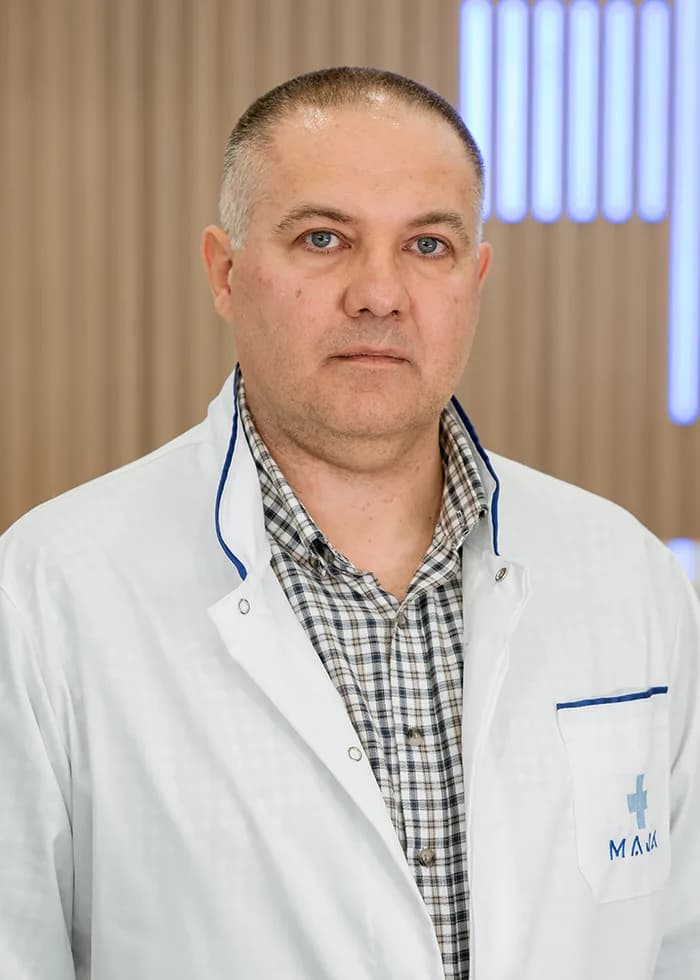
Dr Nikola Petrović
specialist in urology, subspecialist in oncology, urological oncology
Book an appointment with Dr Nikola PetrovićYour visit step by step
Step 1: Booking a consultation
You book a consultation with the urologist by phone.
Step 2: Consultation with the urologist
The urologist talks with you about your symptoms, medicines and previous results, and then examines you.
Step 3: Tests and scans
Depending on the findings, the urologist may ask for blood and urine tests, such as PSA and urine culture, a prostate MRI scan or a CT urogram (MSCT of the urinary tract).
Step 4: Treatment plan
You come back for a follow-up appointment with your results.
Step 5: The procedure
Minor procedures in adults, such as cystoscopy or circumcision, are usually done under local anaesthetic.
Step 6: Follow-up after the procedure
After the procedure, you come back for a follow-up appointment at the agreed time.
Show more: Your visit step by step
Booking a consultation
You book a consultation with the urologist by phone. If you are paying for the consultation yourself, a GP referral is usually not needed. If you use voluntary (private) health insurance, check with your insurer whether a referral is required. When booking, mention if you are also coming for an ultrasound scan or a urine flow test, so that you receive instructions on how to prepare.
Consultation with the urologist
The urologist talks with you about your symptoms, medicines and previous results, and then examines you. In men, the doctor also examines the prostate with a finger when needed, which is charged separately. If necessary, the doctor suggests an ultrasound scan, a cystoscopy or other tests.
Tests and scans
Depending on the findings, the urologist may ask for blood and urine tests, such as PSA and urine culture, a prostate MRI scan or a CT urogram (MSCT of the urinary tract). The Maja Hospital laboratory and Maja Radiology are at the same address, Vizantijski bulevar 39.
Treatment plan
You come back for a follow-up appointment with your results. The urologist explains the results and the possible treatment options: monitoring, medicines or a procedure. If surgery is suggested, the urologist tells you which pre-operative tests you need and whether you need to see an anaesthetist before the procedure.
The procedure
Minor procedures in adults, such as cystoscopy or circumcision, are usually done under local anaesthetic. Major procedures are done in the operating theatre, under an anaesthetic given by an anaesthetist. How long you stay in hospital depends on the procedure and your recovery, and this is decided by the doctor.
Follow-up after the procedure
After the procedure, you come back for a follow-up appointment at the agreed time. If a catheter or J-J stent has been fitted, the urologist decides when it is removed. Do not miss this appointment. If a tissue sample was taken, the result of the histopathological analysis is also explained at the follow-up. If after the procedure you develop a high temperature or shivering, cannot pass urine or have heavy bleeding, contact the urologist without delay or call an ambulance on 194.
How to prepare
- Bring your previous results: ultrasound scans, PSA, urine tests, imaging and discharge summaries.
- Bring a list of your medicines, and do not stop blood-thinning medicines without agreeing it with your doctor.
- Mention allergies, long-term illnesses, previous operations and whether you have been told to limit how much you drink.
- For an ultrasound scan through the abdomen and a urine flow test, come with a full bladder and do not pass urine just before.
Show 2 more: How to prepare
- Before an operation, do not eat or drink for as many hours as the anaesthetist tells you.
- For a procedure, arrange for someone to accompany you, and do not drive that day after an anaesthetic or sedatives.
In detail
What does a urologist do?
A urologist is a doctor who treats diseases and problems of the urinary system in men and women: the kidneys, the ureters, the bladder and the urethra. In men, a urologist also deals with the prostate, testicles and penis, as well as erection and fertility problems. The most common reasons for a consultation are changes in passing urine, blood in the urine, kidney stones, an enlarged prostate, a raised PSA level, recurrent urinary tract infections and changes in the testicles. Chronic kidney conditions, such as reduced kidney function, are usually managed by a nephrologist. A consultation can also be booked as a precaution, for example for a prostate check.
What happens at a urology consultation?
The consultation begins with a conversation about your symptoms, past illnesses, operations and the medicines you take. This is followed by an examination. In men, it may include an examination of the prostate with a finger through the back passage (digital rectal examination, DRE), which is listed as a separate charge in the price list. Depending on the findings, the urologist may recommend an ultrasound scan of the kidneys, bladder, prostate or testicles, a urine flow test (uroflowmetry), blood and urine tests or a cystoscopy. At the end, you receive a report with the findings and the suggested next steps.
Which urological operations are done at Maja Hospital?
Maja Hospital performs endoscopic procedures through the urethra and operations on the external genitals. These include bipolar transurethral resection of the prostate (TURP), laser treatment of kidney stones with a flexible instrument passed through the urinary tract (FURS), breaking up stones in the ureter and bladder, and transurethral removal of bladder tumours. Circumcision and frenulectomy, operations for hydrocele, varicocele and epididymal cysts, vasectomy and procedures for urinary leakage in women (TOT tape) are also performed. Minor procedures are done under local anaesthetic, and major ones under an anaesthetic given by an anaesthetist. The type of procedure and anaesthetic is decided by the doctor after the consultation.
Tests, scans and follow-up
If further imaging is needed, a prostate MRI scan and a CT urogram (MSCT of the urinary tract) can be done at Maja Radiology at the same address. Tests such as PSA, urine analysis and urine culture can be done at the Maja Hospital laboratory. Tissue samples taken during a biopsy or operation are sent for histopathological analysis, and the price of the analysis is given in the urology price list. After a procedure, you come back for a follow-up appointment. A catheter and a J-J stent are temporary: the urologist decides when they are changed or removed. Do not miss your follow-up appointment, as a stent left in the body for too long can cause complications.
Frequently asked questions
How much does a urology consultation cost in Niš?
Prices for urology consultations at Maja Hospital are published in the urology price list. The first consultation with a specialist, the follow-up consultation, the consultation with a subspecialist and the consultation with an Assistant Professor (Docent) of urology are listed separately. The prostate examination with a finger, ultrasound scans, the urine flow test and other examinations are paid for separately, according to the price list, depending on what the doctor recommends.
Do I need a referral to see a private urologist?
Maja Hospital is a private healthcare institution, and you book a urology consultation directly, by phone. If you pay for the consultation yourself, a GP referral is usually not needed. If the consultation is paid for by voluntary health insurance, check with your insurer before booking whether a referral or a doctor's recommendation is required. Bring your previous results, discharge summaries and a list of the medicines you take.
Does a urologist also see women?
Yes. A urologist deals with the urinary system in both sexes. Women most often see a urologist because of recurrent urinary tract infections, kidney stones, blood in the urine or urinary leakage. Maja Hospital also performs procedures for women, such as removal of urethral polyps and vaginal repair (colpoplasty) with TOT tape.
What is stress incontinence and how is it treated?
Stress incontinence is involuntary leakage of urine when coughing, sneezing or exerting yourself. In women treatment usually starts with pelvic floor exercises. If surgery is needed, a TOT tape can be placed under the urethra, and when the vaginal wall has also dropped, an anterior, or anterior and posterior, colpoplasty is done at the same time. The doctor decides on the type of procedure after the consultation.
When should a man have his prostate checked?
Men are usually advised to talk to a urologist about a prostate examination and a PSA test after the age of 50, or from the age of 45 if their father or brother has had prostate cancer. A consultation is also booked if there are changes in passing urine, such as a weak stream, needing to pass urine often at night or a feeling that the bladder does not empty completely. The consultation includes a conversation, a prostate examination and, if needed, a PSA test and an ultrasound scan. If you cannot pass urine at all and your lower abdomen is tense and painful, this is an emergency: seek emergency medical help without delay.
Show 9 more: Frequently asked questions
What does a digital rectal examination of the prostate involve?
A prostate examination with a finger (digital rectal examination, DRE) takes only a short time. Wearing a glove and using gel, the urologist inserts a finger into the back passage and checks the size, shape and firmness of the prostate. Patients usually describe it as pressure and brief discomfort rather than pain. Depending on the findings, the urologist may also recommend a prostate ultrasound or a PSA test. The prostate examination with a finger is charged as a separate item in the price list.
What is uroflowmetry (urine flow test)?
Uroflowmetry measures the flow of urine while you pass urine. The urologist may recommend it after the consultation, for example when there are changes in passing urine such as a weak stream. You come for the test with a full bladder, so mention it when booking to receive instructions. It is a separate item in the urology price list.
How do I prepare for a prostate and bladder ultrasound?
An ultrasound scan of the bladder and prostate through the abdomen usually needs a full bladder. You are generally advised to drink about a litre of water around an hour before the scan and not to pass urine before it. If your doctor has limited how much fluid you drink, for example because of heart or kidney disease, mention this when booking. Preparation for a transrectal ultrasound of the prostate (TRUS) is different. You will receive exact instructions when booking.
Is cystoscopy painful?
Cystoscopy is usually done under local anaesthetic, using an anaesthetic gel applied into the urethra. Patients most often feel pressure and brief discomfort. The examination generally takes a few minutes. Afterwards, stinging when passing urine and a small amount of blood in the urine may last for a day or two. If you develop a high temperature or heavier bleeding, or cannot pass urine, contact a doctor without delay.
What is a TRUS prostate biopsy?
A TRUS biopsy involves taking small samples of prostate tissue with a thin needle, guided by an ultrasound probe inserted into the last part of the bowel (rectum). At Maja Hospital it is done under local anaesthetic. The urologist recommends it when a PSA result, an examination or imaging suggests that the tissue needs to be examined. After the biopsy, blood may be seen in the urine or stools for a few days, and in the semen for several weeks. If you develop a high temperature or shivering, cannot pass urine or have heavy bleeding, contact a doctor without delay or, outside working hours, an emergency service. The samples are sent for histopathological analysis, and the doctor explains the result at the follow-up appointment.
How are kidney stones broken up?
The treatment depends on the size, position and composition of the stone. A smaller stone often passes on its own, with monitoring and the treatment prescribed by the doctor. For kidney stones, one of the methods at Maja Hospital is laser treatment with a thin flexible instrument passed through the urinary tract (FURS). Stones in the ureter and bladder are also broken up endoscopically, through the urinary tract. Pain in the side (loin pain) with a high temperature and shivering, or being unable to pass urine, is an emergency: seek emergency medical help without delay.
What are hydrocele and varicocele, and how are they operated on?
A hydrocele is a build-up of fluid around the testicle, and a varicocele is an enlargement of the veins in the spermatic cord. Both are diagnosed by examination and ultrasound. When the doctor recommends surgery, a hydrocele is operated on under anaesthetic, on one or both sides, and varicocele surgery at Maja Hospital is done under local anaesthetic. At the consultation, the doctor explains whether surgery is needed.
What is a vasectomy and is it permanent?
A vasectomy is a procedure that cuts the vas deferens, the tubes through which sperm travel from the testicles. It is considered a permanent method of contraception, so the decision is made after a discussion with the urologist. At Maja Hospital it is done under anaesthetic. You do not become infertile on the same day: until a semen analysis, done at the time set by the urologist, confirms that there is no sperm in the semen, you need to use other contraception. A vasectomy usually does not affect erections or ejaculation.
How long is the hospital stay after urological surgery?
It depends on the procedure and your recovery. After minor procedures under local anaesthetic, such as circumcision in adults, patients often go home the same day, and this is decided by the doctor. After operations under anaesthetic, such as prostate surgery or breaking up stones, the doctor decides how long you stay based on how your recovery goes. Talk to the urologist before the procedure about the expected length of stay and when you can return to your usual activities.
Advice and answers
Procedures
Circumcision
Read more →
Procedures
Cystoscopy and urethrocystoscopy
Read more →
Procedures
Breaking up stones (lithotripsy)
Read more →
Procedures
Prostate surgery (TURP)
Read more →
Procedures
Varicocele and hydrocele surgery
Read more →
Procedures
TRUS prostate biopsy
Read more →
Procedures
TUR of bladder tumours
Read more →
Procedures
Genital wart removal
Read more →
Procedures
Urinary catheter insertion, change and removal
Read more →
Advice
Adult circumcision: what the procedure involves and recovery day by day
Advice
Phimosis in adults: common questions before surgery

Advice
Laser kidney stone treatment: what the procedure and recovery are like
Advice
TURP prostate surgery: how long it takes, the catheter and recovery
The information in this text is general in nature and does not replace an examination by a doctor.
Book an appointment: Urology
Information on this website does not replace a medical examination. Treatment is decided by a doctor after the examination.