
Prof. Nebojša Đorđević
specialist in general surgery, endocrine surgery
Book an appointment with Prof. Nebojša ĐorđevićEndocrine surgery at Maja Hospital in Niš, at Vizantijski bulevar 39, covers consultations with a surgeon and operations on the thyroid and adrenal glands.
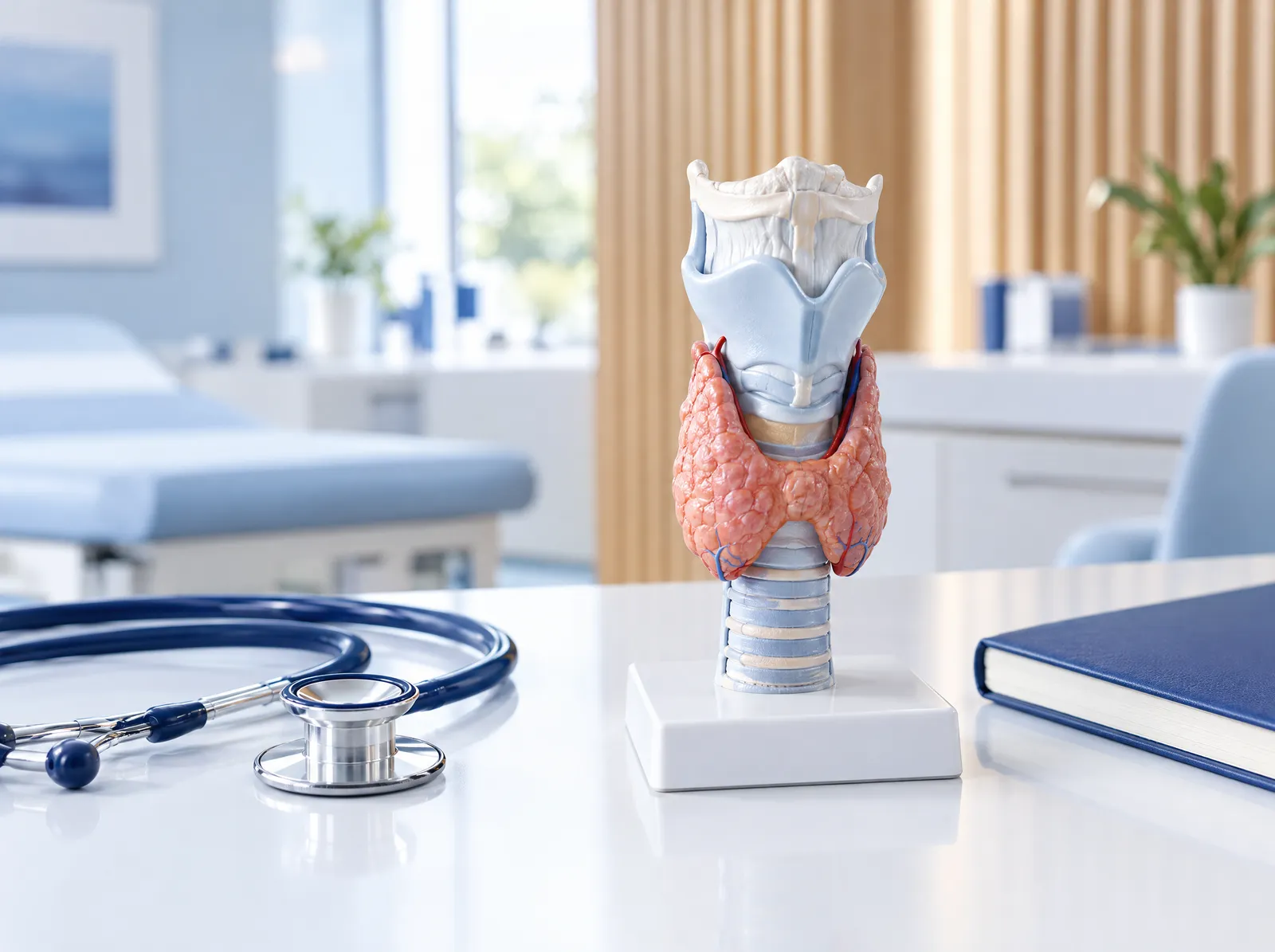
Thyroid consultations and operations are carried out by specialists in general surgery whose subspecialty is endocrine surgery. A thyroid ultrasound and Doppler scan, as well as some of the tests needed before surgery, can be done in the same building. Whether an operation is needed, which type of procedure is appropriate and how long the hospital stay will be are decided by the surgeon after the consultation and a review of all your test results.
A discussion, an examination and a review of your previous test results and scans. The surgeon assesses whether an operation is needed and which tests should be done before a decision is made. Before a scheduled operation, a pre-operative assessment with the surgeon is also carried out.
Thyroid ultrasound and Doppler, ultrasound of the soft tissues of the neck and, if needed, a CT or MRI scan of the neck and abdomen and a bone density scan. Imaging is done in the radiology department in the same building.
Thyroid hormones and antibodies, calcitonin, calcium, phosphate, parathyroid hormone and vitamin D, and for the adrenal glands cortisol, ACTH and metanephrines. Thyroglobulin is usually measured after surgery for cancer, during follow-up. The doctor decides which tests are needed and whether you also need tests that are not done in this laboratory.
Removal of one lobe (lobectomy, also called hemithyroidectomy) or the whole thyroid gland (total thyroidectomy), depending on the findings. It is usually done under general anaesthetic.
Read more: Thyroid surgery →Removal of an adrenal gland (adrenalectomy, listed in the price list as supraadrenalectomy) when a tumour, most often benign, produces excess hormones, or when an abnormality needs to be removed because of its size or appearance on a scan. The general surgery price list includes both open and laparoscopic surgery. Which surgeon performs the procedure and which approach is appropriate are agreed after the consultation and a review of your test results.
Anaesthesia is provided by a specialist in anaesthesiology and resuscitation, who sees the patient before the operation and monitors them during the procedure. After the operation the patient stays in a hospital room until discharge, and the length of the stay is decided by the surgeon according to how recovery goes. The price of anaesthesia is not listed separately in the price list; when booking, please check what the price of the operation includes.
The first follow-up appointment, with a wound check and removal of stitches, if stitches that need to be removed were used. The surgeon explains the histopathology result, and follow-up calcium and thyroid hormone tests are also monitored. The prices of these tests are in the Hormone and laboratory tests group.
specialist in general surgery, endocrine surgery
Book an appointment with Prof. Nebojša Đorđević
specialist in general surgery, endocrine surgery
Book an appointment with Dr Miodrag ĐorđevićConsultations with an endocrine surgeon are booked by phone.
The surgeon examines you, reviews your previous test results and explains whether an operation is needed, what the options are and what the risks are.
If needed, a thyroid ultrasound or Doppler scan and blood hormone tests are done.
Before the operation, basic blood tests and a pre-operative assessment are done.
Thyroid operations are usually done under general anaesthetic.
At the first follow-up appointment the wound is checked and the stitches are removed, unless dissolvable stitches were used.
Consultations with an endocrine surgeon are booked by phone. When booking, mention which test results you already have, so that the consultation can be as thorough as possible.
The surgeon examines you, reviews your previous test results and explains whether an operation is needed, what the options are and what the risks are. If an operation is not needed, you will be given a recommendation for further monitoring.
If needed, a thyroid ultrasound or Doppler scan and blood hormone tests are done. If a needle biopsy of a nodule is needed, the surgeon explains where and how it is done.
Before the operation, basic blood tests and a pre-operative assessment are done. If your thyroid is overactive, its function is brought back to normal with medicines before the operation. The surgeon may also ask for your vocal cords to be checked by an ENT (ear, nose and throat) specialist, especially if your voice has changed or you have had neck surgery before. For a hormone-producing adrenal tumour, preparation with medicines is often needed before the operation. The anaesthetist assesses your general health and gives you instructions about the medicines you take regularly and about fasting before the operation.
Thyroid operations are usually done under general anaesthetic. After the procedure, your breathing, voice, wound and calcium level are monitored. The surgeon decides the day of discharge according to how your recovery goes.
At the first follow-up appointment the wound is checked and the stitches are removed, unless dissolvable stitches were used. When the histopathology result arrives, the surgeon explains it and arranges further follow-up, usually together with an endocrinologist.
Endocrine surgery is the branch of surgery that deals with operations on the endocrine glands. Most often these are the thyroid gland at the front of the neck, the small parathyroid glands next to it, of which there are usually four, and the adrenal glands above the kidneys. These glands produce hormones that affect metabolism, heart function, the level of calcium in the blood and blood pressure. That is why the decision to operate is usually made together with an endocrinologist, based on the examination, an ultrasound or other imaging, hormone tests and, if needed, a cytology result. At Maja Hospital in Niš, endocrine surgery is performed by specialists in general surgery with a particular focus on this field.
Most thyroid abnormalities do not need surgery. They are monitored or treated by an endocrinologist. Surgery is most often considered when the cytology result after a needle biopsy of a nodule indicates cancer or is suspicious, and sometimes also when it is indeterminate. It is also considered when the gland is so enlarged (goitre) that it presses on the windpipe or gullet. For an overactive thyroid (hyperthyroidism), surgery is one of the treatment options, alongside medicines and radioactive iodine, and the choice depends on your test results and what you agree with your doctor. The extent of the operation depends on the findings and the doctor's assessment. One lobe can be removed (lobectomy, also called hemithyroidectomy), or the whole gland (total thyroidectomy). The course of treatment, preparation and recovery are described further down this page.
The parathyroid glands control the level of calcium in the blood. When one or, less often, several of them become overactive, the levels of calcium and parathyroid hormone (PTH) in the blood are raised. The most common cause is a benign (non-cancerous) enlargement of one gland (an adenoma). Over time this can weaken the bones and contribute to the formation of kidney stones. A raised parathyroid hormone level with normal or low calcium usually has a different cause, for example vitamin D deficiency or kidney disease, and in that case it is not usually treated with surgery. When the surgeon and the endocrinologist decide that an operation is needed, an attempt is made before the procedure to locate the enlarged gland with ultrasound and other imaging.
The adrenal glands are usually operated on when a tumour, most often benign, is found on them and produces excess hormones, or when an abnormality is found that needs to be removed because of its size or appearance on a scan. Such an abnormality is often found by chance, on an abdominal scan done for another reason. Before a decision is made, blood and urine hormone tests are done, together with a CT or MRI scan. For some hormone-producing tumours, preparation with medicines is needed before surgery, and this is decided by the endocrinologist and the surgeon.
Maja Hospital is a private hospital at Vizantijski bulevar 39 in Niš. The radiology department and the laboratory are in the same building. A thyroid ultrasound and Doppler scan can be done before or after the consultation with the surgeon, and samples for hormone tests are taken at the laboratory. Before the operation, the patient is seen by an anaesthetist. Thyroid operations are usually done under general anaesthetic. The removed tissue is sent for histopathology (examination of the tissue under a microscope), and the result is explained at the follow-up appointment after the operation. The plan for the operation, including the type of procedure and the length of the hospital stay, is decided by the surgeon after the consultation and a review of all your test results.
An endocrine surgeon operates on the endocrine glands: the thyroid, parathyroid and adrenal glands. At Maja Hospital in Niš, this field is covered by specialists in general surgery whose subspecialty is endocrine surgery. Their profiles are in the Our specialists section of this page. An endocrine surgeon usually works with an endocrinologist, who manages treatment with medicines and monitors the patient before and after the operation.
Surgery is most often considered when the cytology result from a needle biopsy of a nodule indicates cancer or is suspicious, and when an enlarged gland (goitre) presses on the windpipe or gullet. For an overactive thyroid, surgery is one of the treatment options, alongside medicines and radioactive iodine. If the cytology result is indeterminate, the doctor often recommends a repeat biopsy first. The decision is based on the examination, ultrasound, hormone tests and the doctor's assessment.
No. Thyroid nodules are common, and most are benign and are monitored with ultrasound. When a nodule has features on ultrasound that call for further investigation and has reached a certain size, the doctor usually recommends a fine needle aspiration (FNA). The cytology result from the biopsy, together with the ultrasound, helps decide whether an operation is needed.
The length of the operation depends on its extent. Removing one lobe takes less time than removing the whole gland. The hospital stay usually lasts from one to several days, depending on the type of operation and how your recovery goes. The surgeon explains the exact plan at the consultation, after reviewing your test results.
In the first few days, mild pain when swallowing and a feeling of tightness in the neck are common. When you can return to work depends on the type of work you do and how your recovery goes, and the length of sick leave is decided by the doctor. The incision is usually made in a natural skin crease at the front of the neck. The scar is red and firmer at first, and usually fades over the following months.
After the whole thyroid gland is removed, the body no longer produces thyroid hormone, so lifelong hormone replacement in tablet form is needed. After one lobe is removed, the remaining part of the gland often produces enough hormone, so medication is not always needed. After the operation, you may also need to take calcium and vitamin D for a while, depending on your test results. The dose is decided by the doctor based on follow-up tests.
The nerves that move the vocal cords run next to the thyroid gland, and the parathyroid glands, which control calcium, are also next to it. That is why hoarseness can occur after the operation, as can low calcium, most often after removal of the whole gland. These changes are usually temporary, but in rare cases they can be permanent. Calcium levels are monitored after the operation. Tingling around the lips and in the fingers or a change in your voice should be reported to a doctor as soon as possible. Sudden swelling of the neck or difficulty breathing needs urgent medical help. At the consultation, the surgeon explains the risks of each type of operation.
The parathyroid glands are small glands behind the thyroid gland. There are usually four of them. They control the level of calcium in the blood. Surgery is usually considered when one or more glands are overactive, so that calcium and parathyroid hormone (PTH) levels are raised. A raised parathyroid hormone level with normal calcium often has a different cause, for example vitamin D deficiency, and in that case surgery is usually not needed. Before the operation, an attempt is made to locate the enlarged gland with ultrasound and other imaging. The decision is made by the surgeon and the endocrinologist based on test results and findings.
The adrenal gland is usually operated on when a tumour, most often benign, is found on it and produces excess hormones, or when an abnormality is found that needs to be removed because of its size or appearance on a scan. Before a decision is made, blood and urine hormone tests and a CT or MRI scan of the abdomen are done. For some hormone-producing tumours, preparation with medicines is needed before surgery. In the general surgery price list, this operation is listed as supraadrenalectomy, both open and laparoscopic.
The price of thyroid surgery is not currently published in the Maja Hospital price list. You can get information about the price and what it includes by phone or at the consultation with the surgeon, once it is known which operation is needed. The prices of the surgeon's consultation, thyroid ultrasound, hormone tests and a day in hospital are listed in the price list on this page.
Maja Hospital is a private healthcare institution and consultations are booked directly by phone. For a consultation at a private institution that you pay for yourself, a referral from your GP is usually not needed. If the consultation or operation is paid for by an insurance company, check with your insurer whether a referral or authorisation is needed. If you have test results or an endocrinologist's opinion, bring them to the consultation.
Maja Hospital works with several insurance companies. What is covered (consultation, operation, days in hospital) depends on the terms of your policy. Before booking, check your cover with your insurer or at the hospital reception.
Procedures
Thyroid surgery
Read more →

Advice
Recovery after thyroid surgery: voice, calcium, scar and follow-up
The information in this text is general in nature and does not replace an examination by a doctor.
Information on this website does not replace a medical examination. Treatment is decided by a doctor after the examination.