Blood count, blood clotting and sample collection
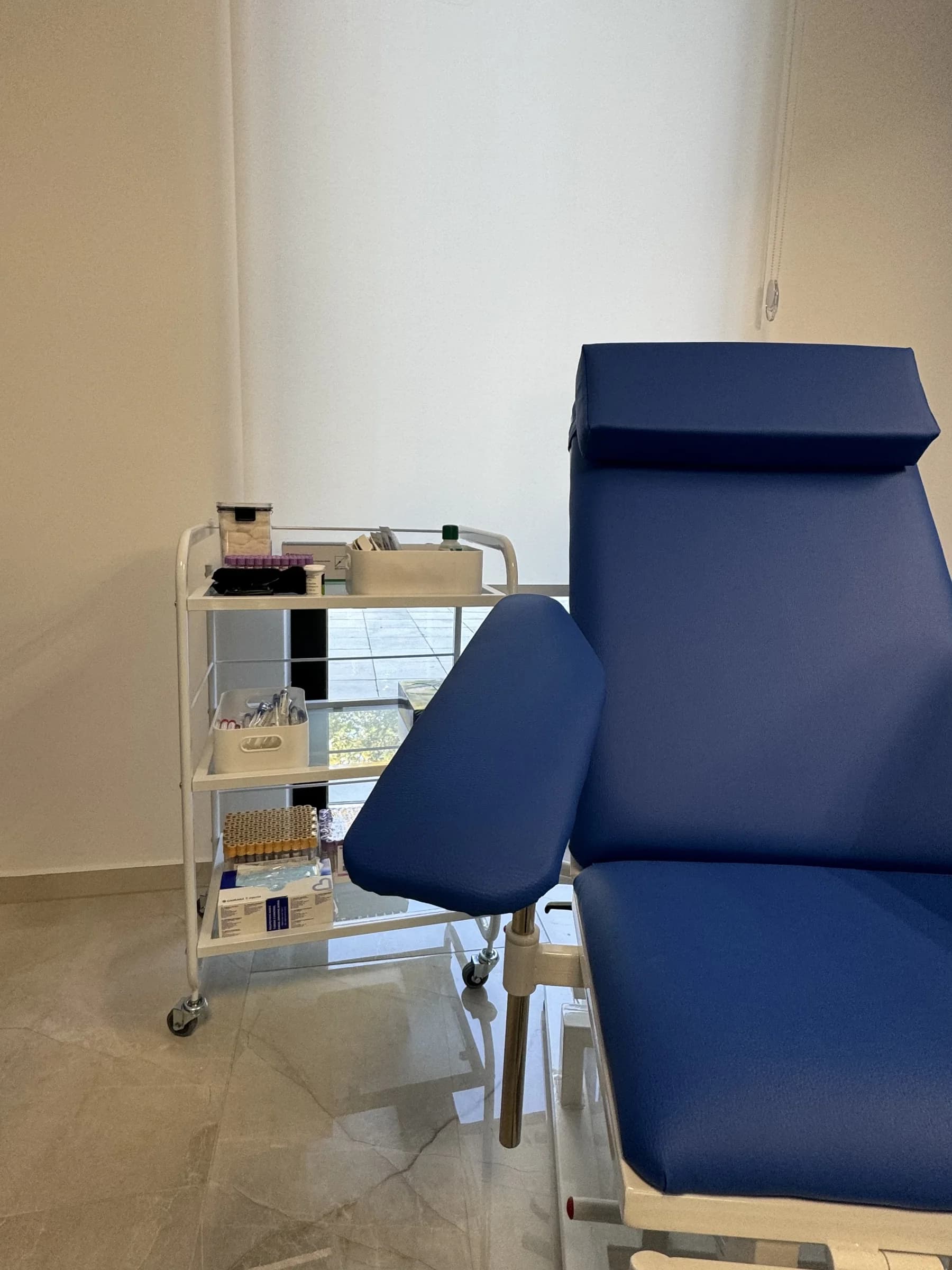
A full blood count and a blood film give an overview of the blood cells, and the erythrocyte sedimentation rate (ESR) is a general indicator of inflammation. Blood clotting tests (PT-INR, APTT, fibrinogen, bleeding time and clotting time) are most often requested before an operation and to monitor treatment with medicines that prevent blood clotting. A D-dimer test is most often requested when the doctor is assessing the possibility of a blood clot (thrombosis). This group also includes blood group and Rh factor, a thrombophilia panel for pregnant women, blood sampling and the “Home visit” item, whose terms you should check by phone.
A full blood count and a blood film give an overview of the blood cells, and the erythrocyte sedimentation rate (ESR) is a general indicator of inflammation. Blood clotting tests (PT-INR, APTT, fibrinogen, bleeding time and clotting time) are most often requested before an operation and to monitor treatment with medicines that prevent blood clotting. A D-dimer test is most often requested when the doctor is assessing the possibility of a blood clot (thrombosis). This group also includes blood group and Rh factor, a thrombophilia panel for pregnant women, blood sampling and the “Home visit” item, whose terms you should check by phone.
Biochemistry: kidneys, liver, pancreas and heart
Kidney function tests (urea, creatinine, eGFR, cystatin C), uric acid, liver tests (AST, ALT, ALP, GGT, bilirubin, total protein and albumin), LDH, pancreatic enzymes (amylase, lipase), CK and cardiac markers (troponin, CK-MB, NT-proBNP), CRP and procalcitonin as indicators of inflammation and infection, electrolytes, calcium, magnesium and phosphate. Chest pain, difficulty breathing or sudden weakness are emergencies. In that case, do not wait for laboratory tests: call an ambulance on 194.
Kidney function tests (urea, creatinine, eGFR, cystatin C), uric acid, liver tests (AST, ALT, ALP, GGT, bilirubin, total protein and albumin), LDH, pancreatic enzymes (amylase, lipase), CK and cardiac markers (troponin, CK-MB, NT-proBNP), CRP and procalcitonin as indicators of inflammation and infection, electrolytes, calcium, magnesium and phosphate. Chest pain, difficulty breathing or sudden weakness are emergencies. In that case, do not wait for laboratory tests: call an ambulance on 194.
Blood sugar, blood fats, iron and vitamins
Glucose, the oral glucose tolerance test (OGTT) and HbA1c to assess blood sugar, insulin, lipid profile (cholesterol, HDL, LDL, triglycerides), iron with ferritin, transferrin, UIBC and TIBC, vitamin D, vitamin B12, folic acid and homocysteine. For most of these tests you should come in the morning, having fasted. HbA1c is an exception and can be done without fasting. Preparation for the OGTT is different and is described in the Preparation section.
Glucose, the oral glucose tolerance test (OGTT) and HbA1c to assess blood sugar, insulin, lipid profile (cholesterol, HDL, LDL, triglycerides), iron with ferritin, transferrin, UIBC and TIBC, vitamin D, vitamin B12, folic acid and homocysteine. For most of these tests you should come in the morning, having fasted. HbA1c is an exception and can be done without fasting. Preparation for the OGTT is different and is described in the Preparation section.
Hormones
Thyroid hormones and antibodies (TSH, T3, T4, FT3, FT4, anti-TPO, anti-Tg, thyroglobulin), calcitonin and parathyroid hormone, pituitary and sex hormones (FSH, LH, prolactin, oestradiol, progesterone, testosterone) and AMH, beta hCG and the double test in pregnancy, as well as cortisol, ACTH, metanephrines and methoxytyramine. The double test is a screening test in the first trimester of pregnancy: the result is a risk estimate calculated together with the gynaecologist's ultrasound findings, and it is not a diagnosis. For some hormones, the time of day and the day of the menstrual cycle matter, and these are decided by the doctor.
Thyroid hormones and antibodies (TSH, T3, T4, FT3, FT4, anti-TPO, anti-Tg, thyroglobulin), calcitonin and parathyroid hormone, pituitary and sex hormones (FSH, LH, prolactin, oestradiol, progesterone, testosterone) and AMH, beta hCG and the double test in pregnancy, as well as cortisol, ACTH, metanephrines and methoxytyramine. The double test is a screening test in the first trimester of pregnancy: the result is a risk estimate calculated together with the gynaecologist's ultrasound findings, and it is not a diagnosis. For some hormones, the time of day and the day of the menstrual cycle matter, and these are decided by the doctor.
Tumour markers
PSA (total and free), CEA, CA 19-9, CA 125, CA 15-3, HE4 and AFP. Markers are most often used to monitor the course of treatment and for follow-up after treatment, alongside an examination and other findings. They are not a reliable test for detecting disease in people without symptoms, and they do not replace preventive check-ups. A raised value is not in itself a diagnosis, and a value within normal limits does not rule out disease, so the result is always interpreted by a doctor.
PSA (total and free), CEA, CA 19-9, CA 125, CA 15-3, HE4 and AFP. Markers are most often used to monitor the course of treatment and for follow-up after treatment, alongside an examination and other findings. They are not a reliable test for detecting disease in people without symptoms, and they do not replace preventive check-ups. A raised value is not in itself a diagnosis, and a value within normal limits does not rule out disease, so the result is always interpreted by a doctor.
Immunology and autoimmune tests
Rheumatoid factor and anti-CCP, ANA screen and individual antinuclear antibodies, antibodies to double-stranded DNA (price list name: Anti-sDNA), complement C3 and C4, antiphospholipid and anticardiolipin antibodies, antibodies to gliadin and tissue transglutaminase, which are used in diagnosing coeliac disease, and the genetic marker HLA-B27. Do not stop eating gluten before coeliac disease tests, because once gluten is cut out the result may be falsely negative. If you are already on a gluten-free diet, tell your doctor. The presence of HLA-B27 does not in itself mean disease, and the result is interpreted by a doctor.
Rheumatoid factor and anti-CCP, ANA screen and individual antinuclear antibodies, antibodies to double-stranded DNA (price list name: Anti-sDNA), complement C3 and C4, antiphospholipid and anticardiolipin antibodies, antibodies to gliadin and tissue transglutaminase, which are used in diagnosing coeliac disease, and the genetic marker HLA-B27. Do not stop eating gluten before coeliac disease tests, because once gluten is cut out the result may be falsely negative. If you are already on a gluten-free diet, tell your doctor. The presence of HLA-B27 does not in itself mean disease, and the result is interpreted by a doctor.
Tests for viruses, bacteria, fungi and parasites
Tests for hepatitis B and C, HIV and syphilis, the TORCH screen (most often toxoplasma, rubella, cytomegalovirus and herpes viruses; please check the exact components by phone), antibodies to Epstein-Barr virus, chickenpox, parvovirus, Borrelia, Helicobacter pylori, chlamydia, mycoplasma, the fungus Aspergillus and other pathogens. For some pathogens, the price list also includes a confirmatory Western blot test. A positive result for HIV, hepatitis or syphilis is confirmed with an additional test. A test done soon after possible exposure to an infection can be negative, so your doctor will advise when it should be repeated.
Tests for hepatitis B and C, HIV and syphilis, the TORCH screen (most often toxoplasma, rubella, cytomegalovirus and herpes viruses; please check the exact components by phone), antibodies to Epstein-Barr virus, chickenpox, parvovirus, Borrelia, Helicobacter pylori, chlamydia, mycoplasma, the fungus Aspergillus and other pathogens. For some pathogens, the price list also includes a confirmatory Western blot test. A positive result for HIV, hepatitis or syphilis is confirmed with an additional test. A test done soon after possible exposure to an infection can be negative, so your doctor will advise when it should be repeated.
Swabs, cultures and histopathology
Throat, nose, tongue, mouth, eye, ear, skin and wound swabs, gynaecological and urological swabs, HPV typing, tests for chlamydia, mycoplasmas and trichomonas, semen culture and rapid antigen tests for influenza, SARS-CoV-2 and RSV from a swab. This part of the price list also includes histopathology tests on tissue samples, which are most often done after surgical and gynaecological procedures.
Throat, nose, tongue, mouth, eye, ear, skin and wound swabs, gynaecological and urological swabs, HPV typing, tests for chlamydia, mycoplasmas and trichomonas, semen culture and rapid antigen tests for influenza, SARS-CoV-2 and RSV from a swab. This part of the price list also includes histopathology tests on tissue samples, which are most often done after surgical and gynaecological procedures.
Urine and stool tests
Urinalysis with sediment, urine culture, protein, calcium and phosphate in a 24-hour urine sample, a test for five types of drugs, a faecal occult blood test, calprotectin, stool culture, Clostridium difficile toxins, viruses in stool, parasites and digestion tests. Before you come, check how the sample should be collected and what kind of container to bring it in.
Urinalysis with sediment, urine culture, protein, calcium and phosphate in a 24-hour urine sample, a test for five types of drugs, a faecal occult blood test, calprotectin, stool culture, Clostridium difficile toxins, viruses in stool, parasites and digestion tests. Before you come, check how the sample should be collected and what kind of container to bring it in.