Vascular surgery in Niš
Vascular surgery at Maja Hospital in Niš covers consultations with a vascular surgeon, diagnosis and treatment planning for diseases of the arteries and veins, for example varicose veins in the legs and narrowing of the arteries in the legs and neck.
At a glance
Full description
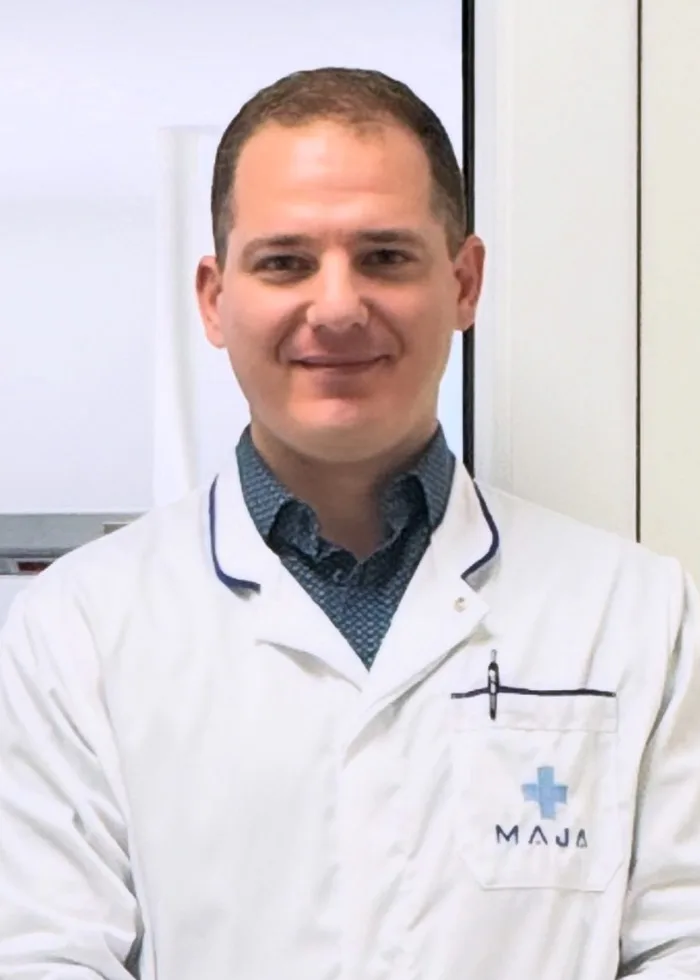
Consultations are carried out by Dr Nemanja Stepanović, a specialist in vascular surgery. A Doppler scan of the blood vessels can be done at Maja Radiology, at the same address: Vizantijski bulevar 39, Niš. After the consultation and test results, the doctor recommends monitoring, treatment without surgery or a procedure.
Vascular surgery: procedures
Consultation with a vascular surgeon
A conversation about your symptoms and past illnesses, an examination of the legs, skin and pulses, and a review of the test results you bring. At the end of the consultation the doctor recommends further tests, monitoring or treatment.
Varicose veins in the legs
Assessment of the superficial veins based on the examination and a Doppler scan, and a choice of treatment: from compression stockings and monitoring to a procedure on the vein.
Read more: Varicose veins in the legs →Narrowed and blocked leg arteries: assessment and monitoring
Assessment of reduced blood flow through the leg arteries, for example with calf pain when walking that goes away when you stop. The doctor decides which scans are needed and recommends treatment depending on the location and degree of the narrowing. Pain in the foot or toes that also occurs at rest, especially at night, and a wound or dark discolouration of a toe need prompt examination. Sudden paleness, coldness, numbness and severe pain in a leg need an ambulance (194).
Blood vessels of the neck (carotid arteries): assessment and monitoring
Assessment of narrowing of the carotid arteries, usually based on a Doppler scan of the blood vessels in the neck. Based on the results, the vascular surgeon recommends monitoring or further treatment. Sudden weakness or numbness on one side of the body, difficulty speaking or sudden loss of vision in one eye, even if they pass quickly, need an ambulance (194).
Arterial aneurysms: assessment and monitoring
An aneurysm is a permanent widening of part of an artery, most often the abdominal aorta and less often the arteries in the pelvis or behind the knee. It is often found by chance, on an ultrasound or CT scan. The doctor assesses the size and growth of the widening and recommends monitoring or treatment. Sudden, severe pain in the abdomen or back in someone with a known aneurysm needs an ambulance (194).
Deep vein thrombosis and thrombophlebitis
Consultation and monitoring after deep vein thrombosis (DVT) or inflammation of a superficial vein with a clot (thrombophlebitis), assessment of the veins and a plan for further treatment. Sudden swelling and pain in one leg need urgent assessment: call an ambulance on 194 or go to the nearest emergency department. Sudden shortness of breath or chest pain needs an ambulance (194).
Slow-healing wounds on the legs
Assessment of whether a wound on the lower leg or foot is caused by a problem with the veins or arteries, including wounds in people with diabetes. When the cause lies in the blood vessels, wound care is planned together with their treatment. A wound on the foot with redness, swelling, pus, a high temperature or dark discolouration of the skin needs an urgent examination.
Our specialists: Vascular surgery
Your visit step by step
Step 1: Booking a consultation
You book a consultation with the vascular surgeon by phone.
Step 2: Consultation with the vascular surgeon
The doctor talks with you about your symptoms, past illnesses and medicines, examines your legs, skin and pulses and reviews the test results you bring.
Step 3: Doppler scan and other tests
When the doctor considers it necessary, a Doppler scan of the blood vessels is done.
Step 4: Treatment plan
The doctor explains the results and recommends monitoring, treatment without surgery or a procedure.
Step 5: Preparation and the procedure
If you decide to have a procedure, you will receive a list of tests and instructions on how to prepare.
Step 6: Follow-up after treatment
After a procedure or during monitoring, you attend follow-up appointments on a schedule set by the doctor.
Show more: Your visit step by step
Booking a consultation
You book a consultation with the vascular surgeon by phone. When booking, mention the reason for the consultation and whether you already have the results of a Doppler scan or other imaging. If you have private health insurance, ask when booking whether it can be used for this consultation, and check the terms with your insurer before the appointment.
Consultation with the vascular surgeon
The doctor talks with you about your symptoms, past illnesses and medicines, examines your legs, skin and pulses and reviews the test results you bring. For the examination, your legs need to be uncovered up to the groin.
Doppler scan and other tests
When the doctor considers it necessary, a Doppler scan of the blood vessels is done. The Doppler scan can be done at Maja Radiology, at the same address. Depending on the doctor's assessment, a CT scan with contrast (MSCT angiography) or blood tests may also be done.
Treatment plan
The doctor explains the results and recommends monitoring, treatment without surgery or a procedure. At the consultation you can ask about all the options, the preparation and the expected recovery.
Preparation and the procedure
If you decide to have a procedure, you will receive a list of tests and instructions on how to prepare. When the procedure requires an anaesthetic, an anaesthetist assesses your health before the procedure and agrees the type of anaesthetic with you. Where and how the procedure is done is explained by the doctor at the consultation.
Follow-up after treatment
After a procedure or during monitoring, you attend follow-up appointments on a schedule set by the doctor. At the follow-up, the wound, swelling and symptoms are checked, and the Doppler scan is repeated if needed.
How to prepare
- Bring previous results: Doppler scans, CT scans, discharge summaries and reports from other doctors.
- Bring a list of your medicines with doses, especially blood thinners, and do not stop them on your own.
- Before a CT scan with contrast, mention any previous reaction to contrast and any kidney or thyroid disease.
- If you have diabetes or high blood pressure, bring your latest blood sugar results and blood pressure readings.
Show 2 more: How to prepare
- Wear clothes that are easy to take off, and if you wear compression stockings, bring them.
- Bring your ID card and, if paying through private insurance, your policy or the insurer's authorisation.
In detail
What does vascular surgery cover?
A vascular surgeon treats diseases of the blood vessels: the arteries, which carry blood from the heart to the body, and the veins, which return it to the heart. The blood vessels of the heart itself and the blood vessels inside the skull are not part of this field. The most common reasons for a consultation are varicose veins in the legs, narrowing and blockage of the leg arteries, narrowing of the carotid arteries in the neck, widening of the arteries (aneurysms) and wounds on the lower leg that are slow to heal. At Maja Hospital in Niš, consultations and treatment are led by Dr Nemanja Stepanović, a specialist in vascular surgery. Treatment does not always mean an operation. For many conditions the doctor recommends monitoring and lifestyle changes, and for vein disease often compression stockings as well. The doctor decides on treatment after the consultation and test results.
When do patients book a consultation with a vascular surgeon?
A consultation is most often booked because of changes you can see or feel in your legs: enlarged, twisting veins, a feeling of heaviness and swelling that gets worse in the evening, changes in skin colour around the ankles, a wound that takes a long time to heal, or pain in the calves when walking that goes away when you stop. Another common reason is a finding from another doctor, for example narrowing of a carotid artery on a Doppler scan of the neck or widening of the aorta on an abdominal ultrasound. In people with diabetes, high blood pressure or raised blood fat levels, and in smokers, the risk of arterial disease is higher, so your GP or an internal medicine specialist may also recommend a check of the blood vessels. Some conditions cannot wait for a booked appointment and need an ambulance (194) or the nearest emergency department: sudden swelling and pain in one leg; sudden paleness, coldness, numbness or severe pain in a leg; sudden shortness of breath or chest pain; sudden weakness or numbness on one side of the body, difficulty speaking or sudden loss of vision in one eye, even if these pass quickly; sudden, severe pain in the abdomen or back in someone with a known aneurysm.
How is the diagnosis made?
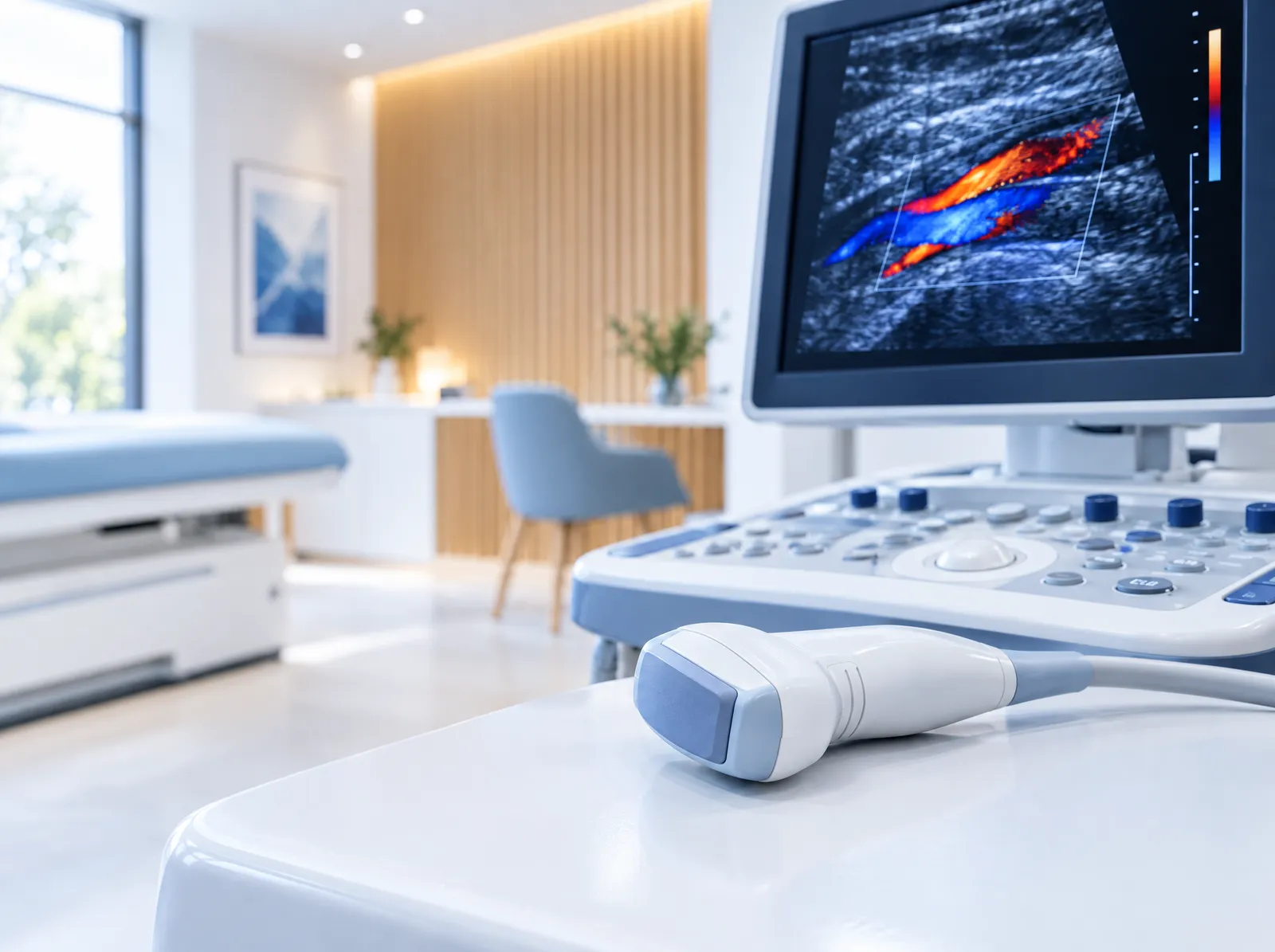
Diagnosis is based on the consultation: a conversation about your symptoms, past illnesses and medicines, followed by an examination of the skin, veins and pulses in the legs. The most common additional test is a Doppler scan, which is an ultrasound scan of the blood vessels. A Doppler scan shows how blood flows through the veins and arteries, where there is a narrowing, whether there is a clot in a vein and whether blood flows backwards in the veins. A Doppler scan of the blood vessels in the legs, neck and arms can be done at Maja Radiology, at the same address. When a more detailed picture of the arteries is needed, the doctor may recommend a CT scan with contrast (MSCT angiography), which is done at Maja Radiology. Before a scan with contrast, tell the doctor if you have ever had a reaction to contrast, if you have kidney or thyroid disease and if you take medicines for diabetes. If the doctor considers it necessary, a blood test to check kidney function is done before the scan. Other blood tests are usually done before a procedure.
What does treatment involve?
The treatment plan depends on the test results, your general health and your wishes. There are usually three options. The first is monitoring, with follow-up consultations and repeat Doppler scans. The second is treatment without surgery: regular physical activity, weight loss, stopping smoking and medicines prescribed by the doctor, and for vein disease, compression stockings recommended by the doctor. With narrowed leg arteries, compression stockings should not be worn without a doctor's advice. The third is a procedure on the blood vessel, when the doctor judges that it would be beneficial. Before a procedure the surgeon assesses your health, and when the procedure requires an anaesthetic, an anaesthetist also carries out an assessment and agrees the type of anaesthetic with you. How and where the procedure is done, whether a hospital stay is needed and how long recovery takes are explained by the doctor at the consultation.
Frequently asked questions
What does a vascular surgeon treat?
A vascular surgeon treats diseases of the arteries and veins, except for the blood vessels of the heart and the blood vessels inside the skull. Most often these are varicose veins in the legs, narrowing and blockage of the leg arteries, narrowing of the carotid arteries in the neck, aneurysms, and wounds on the legs that are slow to heal because of vein or artery disease. Treatment may be monitoring, treatment without surgery or a surgical procedure, depending on the test results and the doctor's assessment.
Where in Niš can I book a private consultation with a vascular surgeon?
At Maja Hospital, at Vizantijski bulevar 39 in Niš, consultations and treatment for diseases of the blood vessels are led by Dr Nemanja Stepanović, a specialist in vascular surgery. Maja Hospital is a private hospital, and consultations are booked by phone.
When should I see a vascular surgeon?
A consultation is most often booked because of varicose veins, recurring swelling of the legs, a feeling of heaviness in the legs, changes in skin colour around the ankles, a wound that takes a long time to heal or calf pain when walking. Swelling of both legs can also have other causes, for example heart or kidney disease, so it is helpful to have it assessed by your GP first. A consultation may also be recommended by a GP or an internal medicine specialist, for example in people with diabetes or after a Doppler scan has shown a narrowed artery. Sudden swelling and pain in one leg, as well as sudden paleness, coldness and numbness of a leg, cannot wait for a booked appointment: call an ambulance on 194 or go to the nearest emergency department.
What happens at a consultation with a vascular surgeon?
The consultation starts with a conversation about your symptoms, past illnesses and medicines. The doctor then examines your legs, skin, veins and pulses and reviews the test results you bring. If needed, the doctor recommends a Doppler scan of the blood vessels or other imaging. Finally, the doctor explains the findings and recommends the next steps: monitoring, treatment without surgery or a procedure.
Does a consultation with a vascular surgeon include a Doppler scan?
A Doppler scan is the most common additional test for vein and artery disease, but not everyone needs one. The doctor recommends it when it is necessary to see how blood flows through the blood vessels. At Maja Hospital, a Doppler scan of the blood vessels in the legs, neck and arms can be done at Maja Radiology, at the same address, and the prices are in the radiology price list. You will find out when booking whether the Doppler scan is part of the consultation or is booked separately.
Show 5 more: Frequently asked questions
How much does a consultation with a vascular surgeon in Niš cost?
You will be told the price of a consultation with a vascular surgeon at Maja Hospital when you book by phone. The prices of Doppler scans of the blood vessels in the legs, neck and arms are published in the radiology price list. The cost of treatment depends on the results and the type of procedure, so you will be given a price after the consultation.
Do I need a referral to see a vascular surgeon?
For a consultation at a private healthcare institution, a referral from your GP at a state health centre is usually not needed. You will find out when booking whether a referral is needed at Maja Hospital. If the consultation is paid for by private insurance, the insurer may require a referral or authorisation, so check this with your insurer before the appointment.
Is a Doppler scan of the blood vessels painful?
A Doppler scan is an ultrasound examination. The probe is moved over the skin with gel, with no needles and no radiation. The scan is usually not painful. If the leg is swollen or tender, the pressure of the probe may be uncomfortable, so let the doctor know during the scan.
How are varicose veins in the legs treated?
Treatment depends on the Doppler scan results and your symptoms. For milder changes, compression stockings, physical activity and raising the legs when resting are usually advised. When the doctor considers it necessary, a procedure on the vein is done. Which treatment is suitable, what the preparation involves and how long recovery takes are explained by the doctor after the consultation and Doppler scan.
What should I do if I have sudden swelling and pain in one leg?
Sudden swelling, pain, redness and warmth in one leg can be a sign of deep vein thrombosis. If this is accompanied by sudden shortness of breath, chest pain or coughing up blood, it may be a sign that the clot has travelled to the lungs. Sudden paleness, coldness, numbness and severe pain in a leg may be a sign of a blocked artery. All these conditions need urgent assessment: call an ambulance on 194 or go to the nearest emergency department. Do not wait for a booked appointment.
Advice and answers
Procedures
Varicose vein surgery
Read more →

Advice
Recovery after varicose vein surgery: swelling, bruising, walking and follow-up
The information in this text is general in nature and does not replace an examination by a doctor.
Book an appointment: Vascular surgery
Information on this website does not replace a medical examination. Treatment is decided by a doctor after the examination.