
Dr Milica Nestorović
specialist in general surgery, colorectal surgery and proctology (subspecialist in oncology)
Book an appointment with Dr Milica NestorovićGastrointestinal surgery at Maja Hospital in Niš covers operations on the digestive organs: the stomach, small and large bowel, rectum, liver, gallbladder, bile ducts and pancreas.
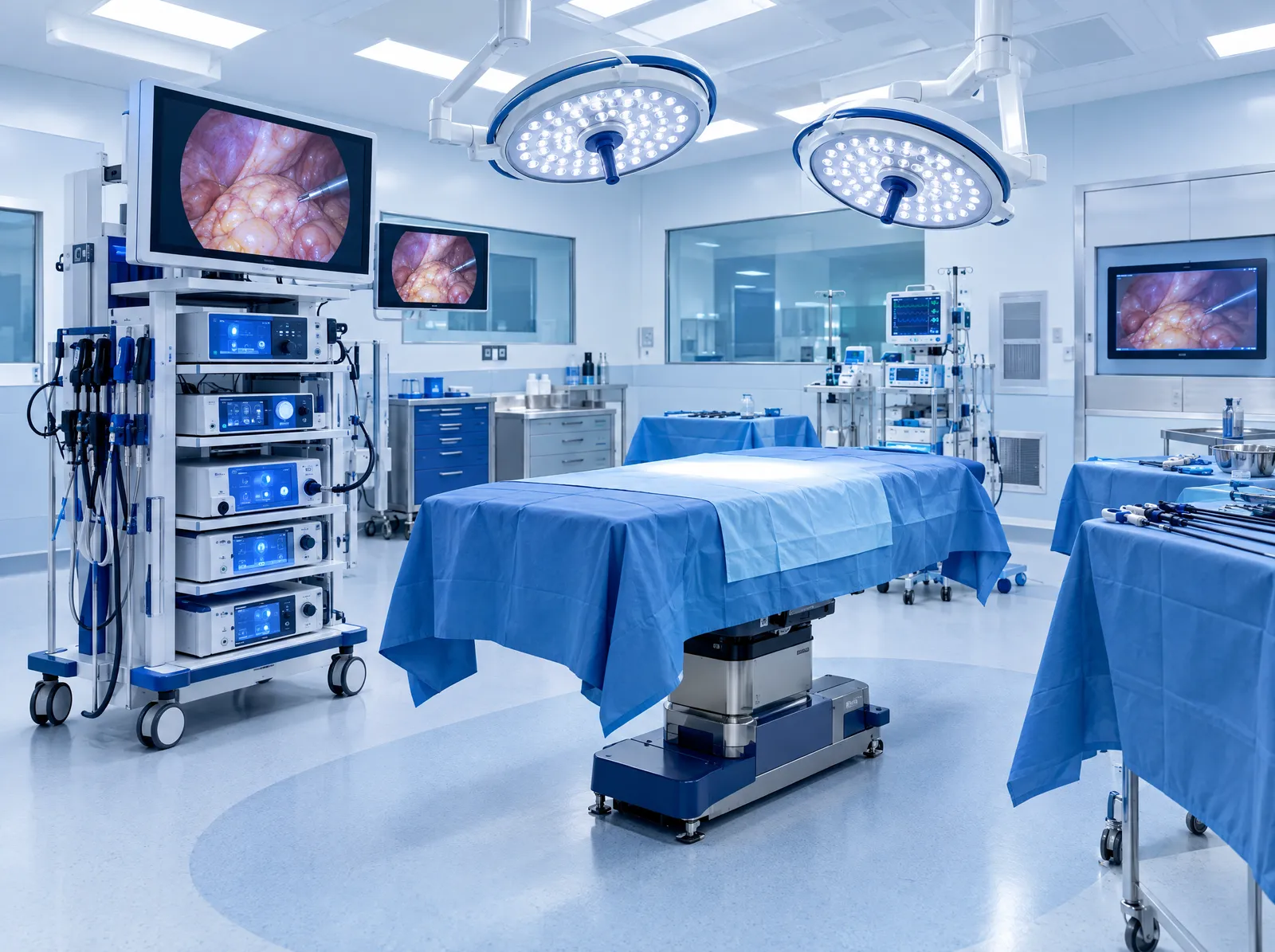
These include operations for hiatus hernia and achalasia, large bowel (colon) resection and stoma closure. Procedures are carried out by specialists in general surgery whose areas of special interest are hepatobiliary and colorectal surgery. Some operations are also done laparoscopically (keyhole surgery), and the surgeon chooses the method based on your test results. The first step is a consultation with a surgeon at Maja Hospital, Vizantijski bulevar 39.
Hiatus hernia repair (a hernia through an opening in the diaphragm), by open or laparoscopic surgery. It is usually combined with an anti-reflux procedure (fundoplication): the upper part of the stomach is wrapped around the lower end of the oesophagus, which reduces acid flowing back into the oesophagus. Surgery is also performed for achalasia, a condition in which the lower end of the oesophagus does not relax, so food has difficulty passing into the stomach. In this operation, the muscles at the junction of the oesophagus and stomach are cut (myotomy).
Read more: Hiatus hernia and achalasia →Complete removal of the stomach (total gastrectomy) together with the surrounding lymph nodes, most often for stomach tumours. A connection between the stomach and the small bowel (gastroenterostomy) when food has difficulty passing from the stomach into the bowel. Resections of the duodenum and small bowel, depending on the findings.
Removal of the diseased part of the large bowel (segmental colectomy), by open or laparoscopic surgery, with the bowel joined by hand-sewing or with surgical staples. When necessary, the whole large bowel is removed (total colectomy), and sometimes the rectum as well (proctocolectomy). The small bowel is then joined to the rectum or the anal canal, or a stoma is formed.
Read more: Large bowel (colon) operations →Operations on the last part of the large bowel: resections of the rectum and rectosigmoid, by open and laparoscopic surgery. When the abnormal area is very low down, the rectum and anal canal are removed and a permanent stoma is formed (abdominoperineal resection). This group also includes operations for rectal prolapse (when the rectum slips down), among them laparoscopic rectopexy. The extent of the operation depends on the findings.
Read more: Rectal operations →Formation of a stoma (a colostomy or ileostomy), most often temporary, when the join in the bowel needs to be protected while it heals or when the bowel needs to be rested. Revision of a stoma for complications such as narrowing, prolapse of the stoma or a hernia next to the stoma (parastomal hernia). Closure of the stoma when the surgeon judges that the join in the bowel has healed. Some stomas are permanent.
Read more: Stomas: formation, revision and closure →Laparoscopic or open removal of the gallbladder and operations on the bile ducts: removing stones from the bile duct, temporary drainage (T-tube), partial resection of the bile ducts and joining the bile ducts to the bowel. If needed, an X-ray of the bile ducts is taken during the operation (cholangiography). A stone in the bile duct is often removed endoscopically (ERCP), without an operation. The choice depends on the findings.
Read more: Gallbladder and bile ducts →Liver resections for cysts and tumours, drainage operations for complications of chronic pancreatitis (for example a pseudocyst or a widened pancreatic duct), resection of the head of the pancreas, removal of the spleen (splenectomy) and taking a tissue sample from the liver or pancreas during surgery. Acute inflammation of the pancreas (acute pancreatitis) is usually treated without an operation.
Examination of the abdominal cavity with a camera (exploratory laparoscopy), including tissue sampling, when scans and tests do not give a clear answer. Release of bowel adhesions (adhesiolysis) when adhesions after previous operations cause a blockage in the bowel or other symptoms.
specialist in general surgery, colorectal surgery and proctology (subspecialist in oncology)
Book an appointment with Dr Milica Nestorović
specialist in general surgery, hepatobiliary surgery
Book an appointment with Dr Marko Gmijović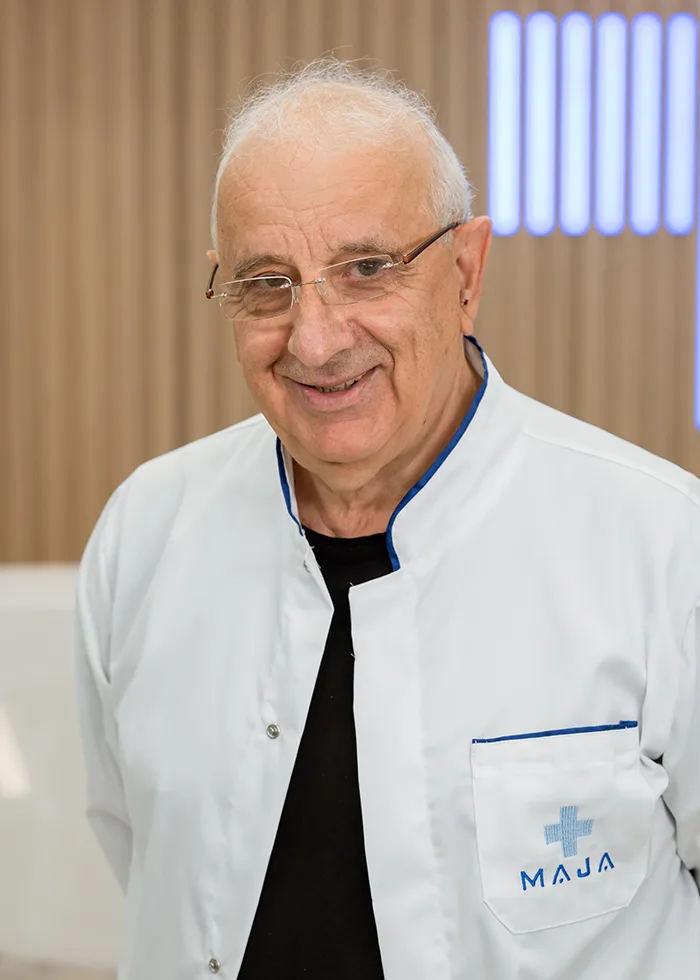
specialist in general surgery, colorectal surgery and proctology
Book an appointment with Prim. Dr Dragoslav Miljković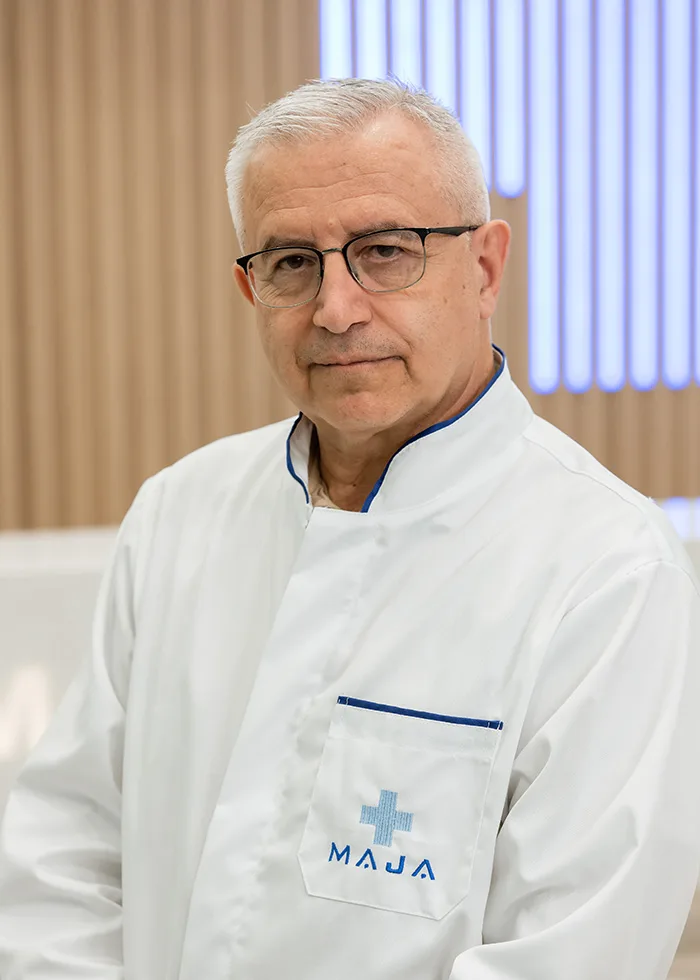
specialist in general surgery, colorectal surgery and proctology
Book an appointment with Dr Dragan MihajlovićConsultations are booked by phone.
The surgeon talks to you, examines you and reviews your test results.
Before the operation you will usually have a pre-operative assessment with the surgeon and an assessment with the anaesthetist, together with blood tests and an ECG.
The operation is usually done under general anaesthetic.
When you are discharged, you receive a discharge summary with instructions on diet, wound care and physical activity.
Consultations are booked by phone. Bring your existing medical records to the consultation: test results, gastroscopy or colonoscopy reports, scans on CD, discharge summaries and a list of the medicines you take regularly.
The surgeon talks to you, examines you and reviews your test results. If anything is missing, they refer you for further tests, imaging or endoscopy. They then explain whether an operation is needed, which method they recommend, what the possible risks are and what other treatment options there are.
Before the operation you will usually have a pre-operative assessment with the surgeon and an assessment with the anaesthetist, together with blood tests and an ECG. The surgeon and the anaesthetist give you instructions about eating, the medicines you take and, for large bowel operations, bowel preparation. Do not stop taking any of your medicines on your own initiative.
The operation is usually done under general anaesthetic. After the operation you are looked after by the surgeon, the anaesthetist and the nursing staff. The length of the stay depends on the type of operation and how your recovery goes, and the surgeon tells you the approximate length at the consultation.
When you are discharged, you receive a discharge summary with instructions on diet, wound care and physical activity. This is followed by a follow-up appointment and, if needed, removal of stitches or clips. If the removed tissue was sent for histopathological examination, the surgeon explains the result and agrees the next steps with you. If after discharge you develop a high temperature, severe or worsening abdominal pain, vomiting, bleeding, yellowing of the skin (jaundice), redness of the wound or discharge from it, or if your bowels or stoma stop working, contact the surgeon without delay or call an ambulance on 194.
Gastrointestinal (digestive) surgery is the part of general surgery that deals with operations on the digestive organs. These are the oesophagus and stomach, the small and large bowel, the rectum, the liver, the gallbladder with the bile ducts, and the pancreas. At Maja Hospital, operations in this field are performed on the stomach, small and large bowel, rectum, liver, gallbladder, bile ducts and pancreas, as well as operations for hiatus hernia and achalasia. They are carried out by specialists in general surgery whose areas of special interest are hepatobiliary surgery (liver, bile ducts, pancreas) and colorectal surgery (large bowel and rectum). Operations for abdominal wall hernias and appendix removal are described on the general and abdominal surgery page. Haemorrhoids and other conditions of the anal canal are described on the proctological surgery page.
In this field, an operation is most often considered for the following conditions:
For many conditions, surgery is not the first choice of treatment. The decision is made by the surgeon after the examination, based on laboratory results, imaging and endoscopy. For tumours, treatment often includes cancer treatment (oncology) as well as surgery. This is usually decided at a meeting of doctors from several specialties (a multidisciplinary team meeting).
Open surgery is done through a cut (incision) in the abdomen. Laparoscopic (keyhole) surgery is done through several small cuts, through which the surgeon passes a camera and thin instruments. Compared with open surgery, laparoscopy usually means less pain and smaller scars, and a quicker return to everyday activities. However, laparoscopy is not suitable for every patient. The choice depends on the condition, any previous abdominal operations and your general health. Sometimes the surgeon switches from laparoscopic to open surgery during the procedure, when this is safer. The hospital price list includes both options for several procedures, for example for the gallbladder, the large bowel and the rectum.
Before the operation you will usually need laboratory tests and imaging of the abdomen: an ultrasound, a CT scan (MSCT) or an MRI scan. The laboratory and Maja Radiology are at the same address, Vizantijski bulevar 39, so most of the tests can be done in one place. Gastroscopy and colonoscopy are offered by the internal medicine service of Maja Health Centre. Before the operation, an anaesthetist assesses your general health and agrees the type of anaesthetic with you. Major operations on the digestive organs are usually done under general anaesthetic.
Gastrointestinal surgery is the part of general surgery that deals with operations on the digestive organs: the oesophagus, stomach, small and large bowel, rectum, liver, gallbladder, bile ducts and pancreas. At Maja Hospital in Niš, operations in this field are performed on the stomach, bowel, rectum, liver, gallbladder, bile ducts and pancreas, as well as operations for hiatus hernia and achalasia. They are carried out by specialists in general surgery whose areas of special interest are hepatobiliary and colorectal surgery.
With a hiatus hernia, part of the stomach passes through an opening in the diaphragm into the chest. A small hernia that causes no symptoms is usually not operated on. Surgery is considered when reflux symptoms do not improve with treatment and changes to diet, when the hernia is large and causes symptoms, or when there are complications, such as difficulty swallowing, bleeding with anaemia or the stomach becoming trapped. The decision is made by the surgeon after the examination and tests, usually a gastroscopy and imaging, and, before anti-reflux surgery, often also a test that measures the pressure in the oesophagus (manometry).
Recovery depends on the size of the hernia, the method and your general health. After laparoscopic surgery, patients usually return to lighter everyday activities after two to four weeks, and recovery after open surgery takes longer. In the first weeks the diet is liquid, then puréed, in smaller meals, and heavy lifting is avoided. Temporary difficulty swallowing and bloating are common in the first weeks. If swallowing becomes increasingly difficult or you cannot swallow even liquids, contact the surgeon. The surgeon gives you an exact recovery plan when you are discharged.
In a large bowel resection, the surgeon removes the diseased part of the bowel and joins the healthy ends, by hand-sewing or with surgical staples. The operation is done under general anaesthetic, by open or laparoscopic surgery. Sometimes a temporary stoma is made to protect the join in the bowel while it heals. The removed tissue is sent for histopathological examination, and the surgeon explains the result at the follow-up appointment.
The length of stay depends on the type of operation, the method, your general health and how your recovery goes. After laparoscopic surgery the stay is usually shorter than after open surgery. Patients go home when their bowels are working again, when they can eat and move around and when their pain is under control. The surgeon tells you the approximate length of stay at the consultation.
A temporary stoma (colostomy or ileostomy) is usually closed after a few weeks to a few months, once the join in the bowel has healed and any additional treatment has finished. Before closure, the surgeon checks the join with an examination and, usually, a contrast X-ray or endoscopy. Closing a loop stoma is usually a smaller operation than the first one, while rejoining the bowel after an end stoma is a larger operation. Some stomas are permanent, and the surgeon discusses this with the patient before the operation.
Bowel preparation means clearing out the large bowel before an operation or an endoscopic examination. It usually involves a low-residue diet (no seeds, skins, or raw fruit and vegetables), a liquid diet the day before the procedure and a bowel-cleansing solution. The exact regime depends on the type of operation and your health, so the preparation must be done strictly according to the surgeon's instructions. If you have kidney disease, heart disease or diabetes, the preparation is adjusted, so it is important that your doctor knows about them. For some operations, bowel preparation is not needed.
No. The choice of method depends on the condition, the size of the abnormal area, previous abdominal operations and your general health. Compared with open surgery, laparoscopy usually means smaller cuts, less pain after the operation and a quicker return to everyday activities. Sometimes the surgeon switches from laparoscopic to open surgery during the operation, when this is safer for the patient. This is not a failure of the operation, but a possibility planned for in advance.
For operations on the oesophagus, stomach, large bowel and rectum, the surgeon usually asks for an endoscopy report: a gastroscopy for the oesophagus and stomach, and a colonoscopy, which examines the whole large bowel, before large bowel and rectal operations. If the examination has not been done, the surgeon refers you for it as part of the preparation. Gastroscopy and colonoscopy are offered by the internal medicine service of Maja Health Centre.
Prices for hiatus hernia surgery and for operations on the stomach, bowel, liver, pancreas and bile ducts are listed on this page, with each group of procedures, and in the Maja Hospital general surgery price list. For some of the more complex operations, the price is on request. The hospital confirms the final price and what it includes after the consultation with the surgeon.
Procedures
Large bowel surgery
Read more →
Procedures
Hiatus hernia surgery
Read more →
Procedures
Rectal surgery
Read more →
Procedures
Stoma: colostomy and ileostomy
Read more →
Advice
Temporary stoma: colostomy, ileostomy and stoma reversal
Advice
Hiatal hernia: what it is and when surgery is considered
The information in this text is general in nature and does not replace an examination by a doctor.
Information on this website does not replace a medical examination. Treatment is decided by a doctor after the examination.