Hernia: symptoms, how to recognise it and when surgery is needed
A hernia is most often recognised by a soft bulge in the groin, at the navel or on a scar from an earlier operation. The bulge usually gets bigger when you stand, cough or strain, and gets smaller or disappears when you lie down. It may come with discomfort, a feeling of heaviness or pain on exertion. In adults a hernia does not go away on its own. Surgery is most often advised when the hernia causes complaints, when it is growing or when it gets in the way of work and everyday activities. Whether surgery is needed is assessed by the surgeon after an examination.
Signed by: Assist. Prof. Marko Gmijović, MD

What is a hernia and where does it most often appear?
A hernia forms when part of the contents of the abdominal cavity, most often fatty tissue or part of the bowel, passes through a weak spot in the abdominal wall. From the outside it is most often seen or felt as a soft bulge.
Hernias differ by the place where they form:
- Inguinal hernia, in the groin. It is more common in men, but it also occurs in women.
- Femoral hernia, low in the groin, at the top of the thigh. It is more common in women.
- Umbilical hernia, in or next to the navel.
- Epigastric hernia, in the middle of the abdomen, above the navel.
- Ventral and incisional hernia, on the front abdominal wall, most often on a scar from an earlier operation.
A hiatal hernia forms at the diaphragm, inside the body, so it cannot be seen from the outside. It causes different complaints and has its own article.
This text refers to adults.
What are the symptoms of a hernia?
The most common sign of a hernia is a bulge in a place where there was none before. The symptoms most often described are:
- a soft bulge in the groin, at the navel, in the middle of the abdomen or on a scar
- the bulge gets bigger when you stand, cough, sneeze or strain
- the bulge gets smaller or disappears when you lie down
- discomfort, pulling, a feeling of heaviness or pressure in that place
- a dull pain that gets worse with exertion, lifting or after standing for a long time
In men an inguinal hernia can descend towards the scrotum.
A hernia does not have to hurt. In some people the only sign is a bulge noticed while showering or getting dressed. How strong the complaints are does not always depend on the size of the hernia, so even a small hernia can be bothersome.
A bulge in the groin or on the abdomen does not have to be a hernia. Other changes can look similar, for example an enlarged lymph node or a lipoma (a fatty lump under the skin). That is why appearance alone is not a reliable guide. The cause is established by a doctor at an examination.
Why does a hernia form?
A hernia forms where there is a weak spot in the abdominal wall. Some weak spots are present from birth and some develop during life, for example on a scar after an operation. Anything that raises the pressure in the abdomen for a long time or often can contribute to a hernia appearing or growing.
A hernia is more common with these factors:
- heavy physical work and frequent lifting
- a long-lasting cough
- straining because of constipation or difficulty passing urine
- excess weight
- pregnancy
- earlier operations on the abdomen
- older age
- hernias in the family
A hernia can also appear in people with none of these factors.
How does a doctor establish that it is a hernia?
The diagnosis is most often made by examination alone. The surgeon examines the place of the bulge while you stand and while you lie down, and most often asks you to cough or tense your abdomen. The hernia then shows more clearly.
Sometimes the doctor also asks for an ultrasound. This is more common when the hernia is small, when it cannot be felt clearly or when it has to be told apart from other changes. With a hernia on a scar from an earlier operation the surgeon sometimes asks for imaging of the abdomen, an ultrasound or a CT scan.
The surgeon decides which examinations are needed. The imaging report is always interpreted by a doctor, together with the complaints and the examination.
When is a hernia only monitored?
For a small hernia without complaints the surgeon sometimes suggests monitoring and a repeat examination, most often in men with an inguinal hernia. In women, surgery for an inguinal hernia is most often advised earlier, because in women an inguinal hernia is harder to tell apart from a femoral hernia, which becomes trapped more often.
Monitoring means that you know the warning signs and that you contact the surgeon if the hernia grows or starts to bother you. When a repeat examination is needed is agreed with the surgeon.
In adults a hernia does not go away on its own. Exercises, creams and teas do not close the gap in the abdominal wall. A hernia belt can ease the complaints, but it does not close the gap either.
When is hernia surgery needed?
Surgery is most often advised in these situations:
- the hernia causes complaints or pain
- the hernia is getting bigger over time
- the hernia gets in the way of work and everyday activities
- the hernia has come back after an earlier operation
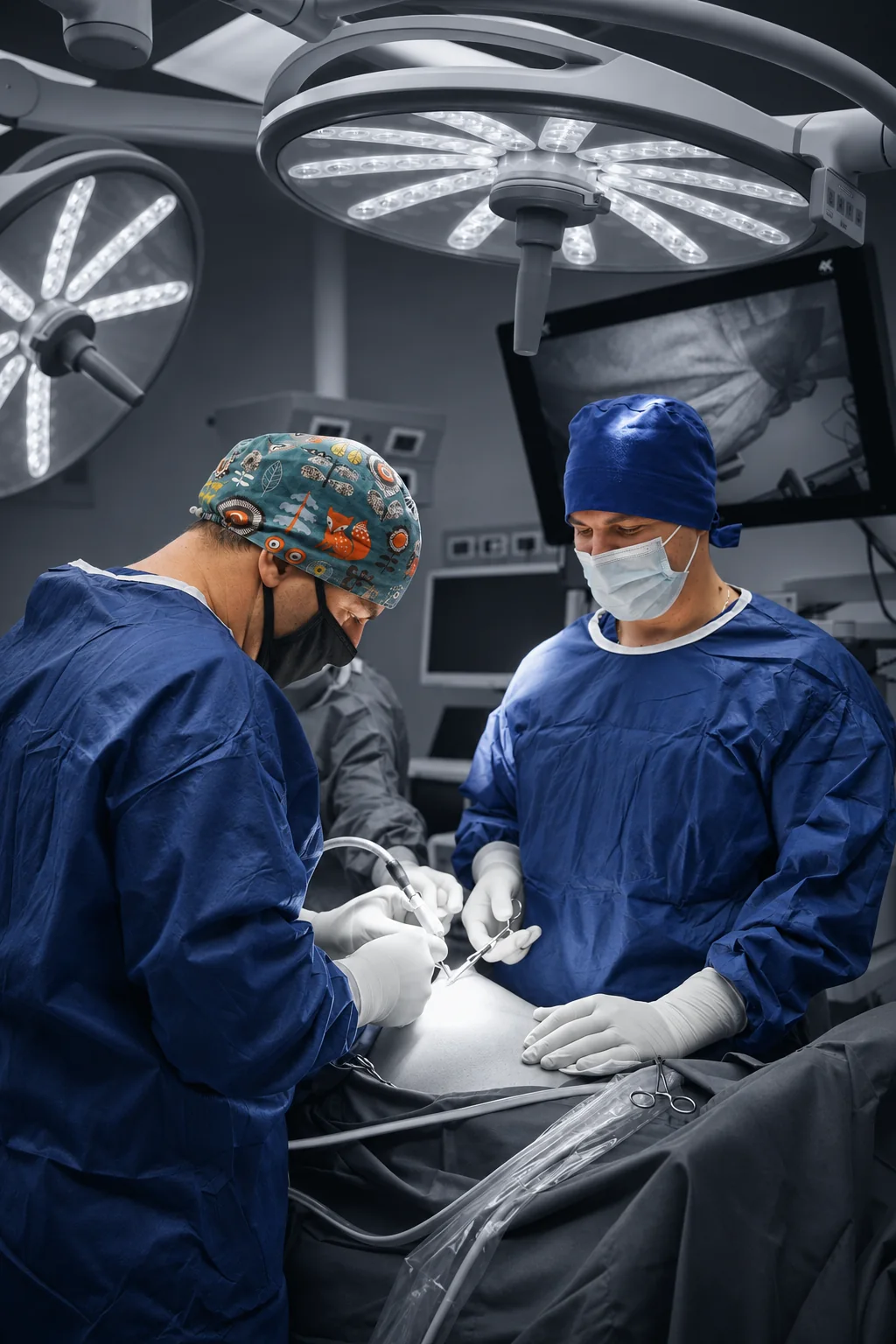
During the operation the surgeon returns the contents of the hernia to their place and strengthens the weakened part of the abdominal wall, most often with mesh. The medical name of the procedure is hernioplasty. The operation is done open, through a cut above the hernia, or laparoscopically, through several small cuts. Which method and which anaesthetic are an option depends on the type and size of the hernia, earlier operations and general health.
The decision is made by the patient together with the surgeon, after an examination. What the operation looks like and how to prepare for it is described on the procedure page, and recovery in separate articles.
Which signs call for an urgent examination?
A hernia can become trapped. The contents of the hernia then stay caught in the gap and cannot go back. These signs can point to that:
- the hernia becomes hard, painful or tender to touch and cannot be returned
- the skin over the hernia turns red or dark
- sudden severe pain in the abdomen
- nausea and vomiting
- a swollen abdomen, without wind or stools
In that case do not wait for a booked appointment and do not try to push the hernia back by force. Call the emergency service on 194 or go to the nearest emergency department.
What does an examination by a surgeon at Maja Hospital look like?
Bring your earlier medical records and a list of the medicines you take regularly to the examination. If you have been operated on before, bring the discharge letter and the reports from that operation. It helps to write down when you noticed the bulge, whether it changes and what makes the complaints worse.
The surgeon talks with you about the complaints and examines you. After that the surgeon explains whether it is a hernia, whether surgery is needed or monitoring is enough, and whether any further examinations are needed.
The prices of the surgeon's examination and of some of the hernia operations are shown in the table below. Which price list item applies to your case, the surgeon tells you after the examination.
The information in this text is general in nature and does not replace an examination by a doctor.