What to bring to hospital for an operation: a checklist for admission and discharge day
For a planned operation at Maja Hospital in Niš, at Vizantijski bulevar 39, bring your ID, all your test results and any previous discharge summaries, the medicines you take regularly, a list of doses and allergies, and your glasses and other aids. If you are staying overnight, also pack pyjamas, slippers and toiletries. Leave jewellery and valuables at home. Do not drive for at least 24 hours after a general or spinal anaesthetic or after sedation, so arrange for someone to accompany you. Your surgeon and anaesthetist will give you exact instructions.
Which documents should I bring to hospital for an operation?
Pack your documents first, all in one folder. The doctor uses your test results to check that everything is ready for the operation.
- ID card or passport.
- Health insurance card.
- All the tests you have had for the operation: laboratory tests, ECG, ultrasound or scans with their reports, and the scans on disc too, if you have one.
- Previous discharge summaries and specialist reports, if you are being treated for a long-term condition.
- A list of allergies (to medicines, plasters, latex, food) and details of previous operations and anaesthetics. Tell us if you or anyone in your family has had a problem with an anaesthetic.
- The card or report for any device you have implanted or wear, for example a pacemaker, defibrillator or insulin pump.
- A referral or letter from the doctor who sent you, if you have one.
- If an insurance company is paying for the operation: your voluntary health insurance policy and the insurer's approval, if the insurer requires it.
- The name and phone number of a person the hospital can call when needed.
Your surgeon will tell you at the pre-operative assessment which test results are needed and how recent they must be. If a result is missing, contact the hospital before the day of admission, not when you arrive.
Which medicines and aids should I bring to hospital?
Bring the medicines you take regularly, in their original packaging. This includes inhalers, insulin and drops. With your medicines, bring a list showing the name of each medicine, the dose and when you take it. That way the doctor and nurse know exactly what treatment you are on. Also tell the doctor about any vitamins, herbal remedies and food supplements.
Some medicines are often temporarily stopped or changed before an operation, for example blood thinners, diabetes medicines and once-weekly injections for diabetes or weight loss. These injections can slow down stomach emptying, so the anaesthetist needs to know about them. Your treatment should only be changed on a doctor's instructions, never on your own. So at the pre-operative assessment, mention every medicine you take. If you are not sure whether you can take your medicine on the morning of the operation, ask the anaesthetist in advance.
Also bring any aids you use every day:
- Glasses for distance and reading, with their case.
- A case and solution for contact lenses, as lenses are usually removed before an operation.
- Hearing aid, with spare batteries or a charger.
- Dentures and a container for them.
- A breathing machine for use during sleep (CPAP), if you use one for sleep apnoea. Tell the anaesthetist about it at your assessment.
- A walking stick, crutches or a walking frame, if you use them.
What should I pack for a hospital stay?
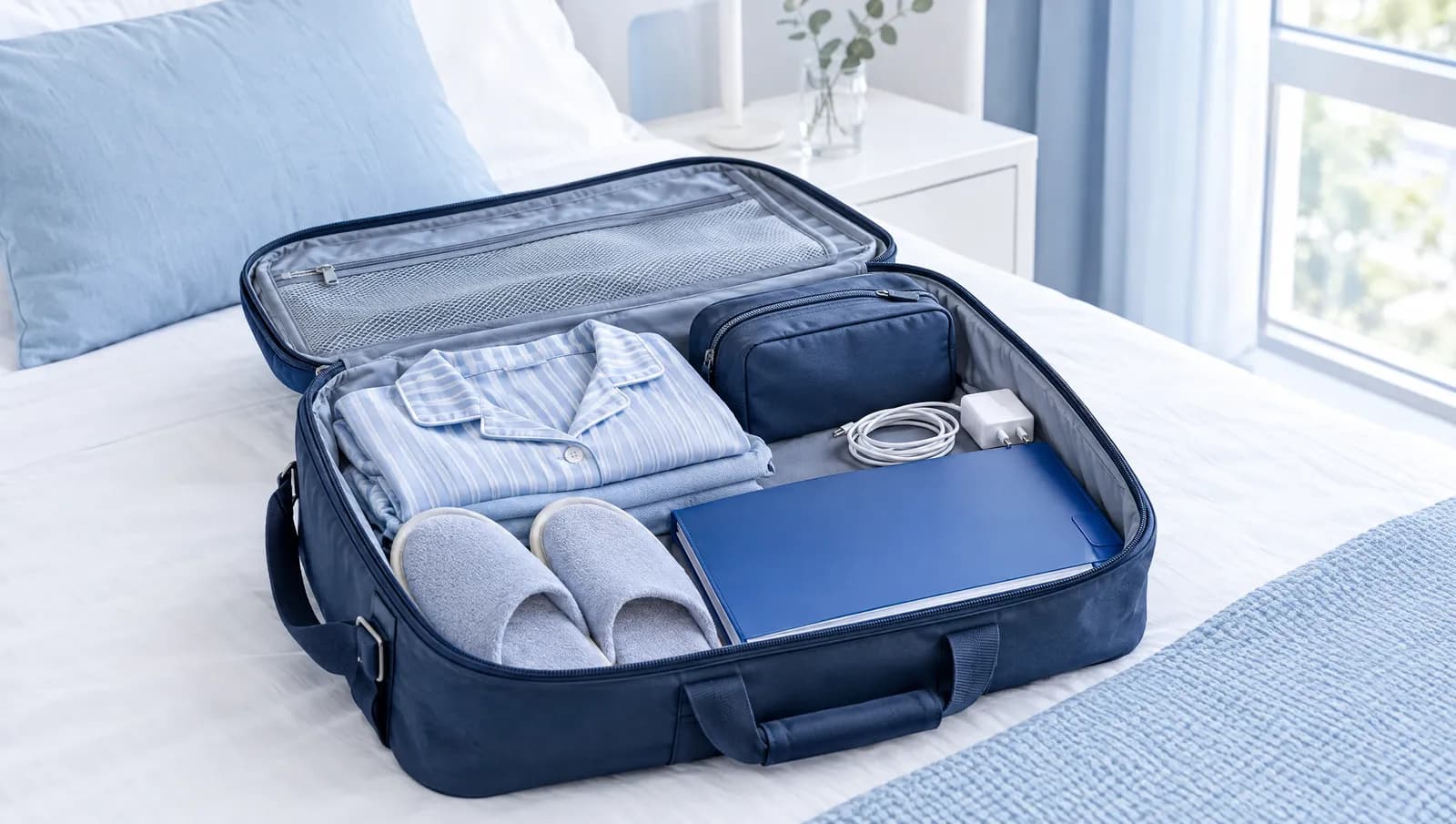
If you are staying in hospital after the operation, pack a small bag. Your surgeon decides how many days you stay, depending on the type of procedure, the anaesthetic and how your recovery goes. So pack light, only what you will really need.
- Pyjamas or a nightdress and a dressing gown.
- Slippers with a closed heel and a non-slip sole that are easy to put on.
- Underwear and socks.
- Toiletries: toothbrush and toothpaste, comb, small towel, tissues.
- Mobile phone and a charger with a long cable.
- A book, a newspaper or headphones, for the waiting time.
- A small amount of money.
- Loose, comfortable clothes for going home that do not press on the operation site.
When you book, ask what the hospital provides during your stay, for example bedding, towels, a theatre gown and meals. In the general surgery price list, the hospital day, the first check-up after the operation and removal of stitches are listed as separate items. Ask at the same time whether, for your procedure, they are included in the price of the operation or paid for separately.
What should I leave at home and what should I remove before coming to hospital?
All jewellery is usually removed before an operation, and valuables are easier to keep safe at home than in a hospital room.
- Jewellery, including rings, chains and piercings. If a ring will not come off, tell the nurse on admission.
- Watch, large amounts of money and other valuables.
- A laptop and other expensive equipment, unless you really need them.
Remove nail varnish, false nails and make-up at home, before you come to hospital. They are usually removed before an operation because this reduces the number of bacteria on the skin, and it makes it easier for staff to check the colour of your skin and nails and to measure the oxygen in your blood with a clip on your finger.
Do not shave or wax the operation site yourself, as small scratches increase the risk of wound infection. If hair needs to be removed, this is done in hospital. Have a shower the evening before or the morning of the operation, unless your doctor has told you otherwise.
What happens on the day of admission?
A day or two before admission, check the items on the list. Avoid alcohol for at least 24 hours before the procedure, and if you smoke, tell the anaesthetist.
Fasting before an anaesthetic lasts a few hours, not days. Usually you should not eat for at least 6 hours before the anaesthetic, and for longer after a fatty or heavy meal. Water and other clear fluids, such as tea without milk, can usually be drunk up to 2 hours before the procedure. Milk and coffee with milk are not clear fluids. The anaesthetist sets the exact times and you should follow them. If you did eat or drink something after the agreed time, tell the anaesthetist before the procedure. If you have diabetes, ask the anaesthetist how to manage your meals, medicines and fasting.
If you develop a cold, a cough, a high temperature, diarrhoea or vomiting in the few days before the operation, contact the hospital. The doctor will then decide whether the operation can go ahead at the agreed time.
Arrive for admission at the agreed time. Usually you first give your personal details and hand over your documents and test results. A nurse then checks your results, allergies and the medicines you take and explains what will happen for the rest of the day. Also say if there is any chance you might be pregnant. Several people may ask you the same questions. This is a routine check, not a mistake.
If the procedure is done under sedation, a spinal or a general anaesthetic, an anaesthetist will see you before the procedure. The surgeon, usually already at the pre-operative assessment, explains what will be done, the possible risks and the other treatment options. Before the operation you sign a consent form for the operation and, for an anaesthetic, usually a separate anaesthetic consent form as well. Ask any questions you wrote down at home before you sign. For a child under 15, consent is given by a parent or guardian.
Do I need someone with me after the operation?
For at least 24 hours after a general or spinal anaesthetic or after sedation, do not drive, operate machinery, drink alcohol, sign important documents or make important decisions. This is the usual advice, and the anaesthetist may recommend a longer period. That is why an adult needs to take you home and stay with you for the first 24 hours. Agree in advance when your escort will collect you and leave their phone number on admission. If the procedure is done under local anaesthetic only, the surgeon will tell you whether you need an escort and when you can drive.
Your escort also helps on the day of discharge. They carry your bag, listen to the doctor's instructions with you and help you remember at home what was said. If you live alone, arrange for someone to drop in during the first few days after discharge to help with shopping, medicines and meals.
When you book the operation, check whether your escort can stay in hospital during your stay and what the visiting rules are.
What will I receive at discharge and how do I get home?
The surgeon decides on the day of discharge, depending on the type of operation, the anaesthetic and how your recovery goes. At discharge you receive a discharge summary with instructions on wound care, diet, activity and the date of your check-up. Before you leave, make sure you know the answers to these questions:
- Which medicines do I take at home, at what dose and for how long?
- How do I care for the wound and when can I shower?
- When is my check-up, and will my stitches be removed and when?
- How long should I avoid lifting, driving and work?
- Which signs mean I should contact a doctor straight away?
- Who do I contact if I have a question after discharge, including out of hours?
Plan to go home by car or taxi, with your escort. Do not drive yourself for at least 24 hours after a general or spinal anaesthetic or after sedation. The surgeon will tell you when you can drive again after the operation itself. At home, get the things you will need for the first few days ready in advance and put them within easy reach, so you do not have to lift or bend.
Keep your discharge summary and bring it to your check-up, and also take it to your GP. Your GP decides on sick leave, so ask them before the operation which documents they need.
Contact your surgeon straight away if you notice any of these signs:
- A temperature of 38 °C or higher, or shivering.
- The wound is getting redder, more swollen and more painful.
- Pus is coming from the wound or blood is soaking through the dressing.
- Pain is getting worse despite medication.
- You cannot pass urine or you keep vomiting.
- Your calf is swollen and painful.
If you suddenly have difficulty breathing or chest pain, or you are bleeding heavily, do not wait: call an ambulance on 194.
The information in this text is general in nature and does not replace an examination by a doctor.