Inguinal hernia repair in Niš
Inguinal hernia repair at Maja Hospital in Niš (Vizantijski bulevar 39) is an operation in which the surgeon pushes the contents of the hernia back into the abdomen and strengthens the weakened part of the abdominal wall, usually with a mesh.
At a glance
- Anaesthetic
- Local or general
- Hospital stay
- usually Short
- Return to work
- Lighter work usually after 1 to 2 weeks
Note: These figures are general and approximate. Decisions for each patient are made by the surgeon after an examination.
Facts and description
The hospital's price list includes surgery under local or general anaesthetic, laparoscopic (keyhole) surgery, surgery for a complex hernia and repeat surgery. The type of operation and the length of the hospital stay are decided by the surgeon after an examination, and the type of anaesthetic by the surgeon and the anaesthetist.
All facts
- What the procedure is
- Pushing the hernia contents back and strengthening the abdominal wall in the groin, usually with a mesh (hernioplasty)
- Methods
- Open or laparoscopic surgery, as assessed by the surgeon
- Anaesthetic
- Local or general. For repeat surgery, the price list also includes local anaesthetic with sedation or a spinal anaesthetic. Laparoscopic surgery is usually done under general anaesthetic. The type of anaesthetic is decided by the surgeon and the anaesthetist.
- Length of the procedure
- As a rough guide, usually 30 to 90 minutes, and longer for a complex or recurrent hernia
- Hospital stay
- Usually short. The exact length is decided by the surgeon, based on the method, the anaesthetic and the patient's general health.
- Return to work
- Lighter work usually after 1 to 2 weeks. Heavy physical work and lifting usually after 4 to 6 weeks, as instructed by the surgeon.
- Follow-up appointments
- First follow-up and removal of stitches, unless dissolvable stitches were used, usually 7 to 10 days after the operation
- Price
- Depends on the method, the anaesthetic and the type of hernia. The items for the operation are in the price table on this page, and the price of laparoscopic surgery is available on request. The consultation, each day of the hospital stay and follow-up appointments are separate items in the price list.
Inguinal hernia repair: prices
Recovery
- Pain and discomfort around the wound are expected for the first few days. The surgeon prescribes pain relief.
- Bruising and swelling in the groin, and in men also around the scrotum, usually go down within about two weeks. A large or painful bruise, or swelling that is getting worse, should be shown to the surgeon.
- Walking is encouraged from the first day, and everyday activities are resumed gradually.
- When coughing or sneezing, support the wound with the palm of your hand.
Show 5 more: Recovery
- Keep the wound clean and dry. Showering is usually possible after a few days, but have a bath or go swimming only once the wound has healed, as instructed by the surgeon.
- Stitches, unless they are made of a material that dissolves on its own, are usually removed 7 to 10 days after the operation.
- Heavy lifting and strenuous physical effort are usually avoided for 4 to 6 weeks, as advised by the surgeon.
- After an anaesthetic, do not drive for at least 24 hours. You can drive again when you can wear a seatbelt and do an emergency stop without pain, and when you are not taking medicines that cause drowsiness. The exact timing is decided by the surgeon at the follow-up appointment.
- Contact the surgeon if you have a temperature of 38 °C or higher or shivering, pain or swelling in the groin or scrotum that is getting worse, redness, warmth or pus at the wound, heavier bleeding from the wound, nausea or vomiting lasting longer than 24 hours, or pain and swelling in the calf.
How to prepare
- Have the tests the surgeon and anaesthetist ask for, usually a full blood count, blood chemistry, blood clotting tests and an ECG.
- List your allergies and medicines, and do not change blood thinners or diabetes medicines on your own.
- Do not eat or drink before the operation, following exactly the instructions you receive from the hospital.
- Stop smoking as early as possible before the operation.
Show 2 more: How to prepare
- Bring your ID card, health insurance card, test results, list of medicines and loose, comfortable clothing.
- Arrange help at home for the first few days after the operation.
When to contact a doctor right away
- If you are unable to pass urine, or have sudden difficulty breathing, chest pain or are coughing up blood, call the emergency medical service on 194 or go to the nearest emergency department.
In detail
What is an inguinal hernia and what happens during the operation?
An inguinal (groin) hernia develops when part of the contents of the abdomen, usually fatty tissue or part of the bowel, pushes through a weak spot in the abdominal wall in the groin. From the outside it usually looks like a soft lump. The lump usually gets bigger when standing, coughing or straining, and smaller when lying down. Inguinal hernias are more common in men, but they also occur in women.
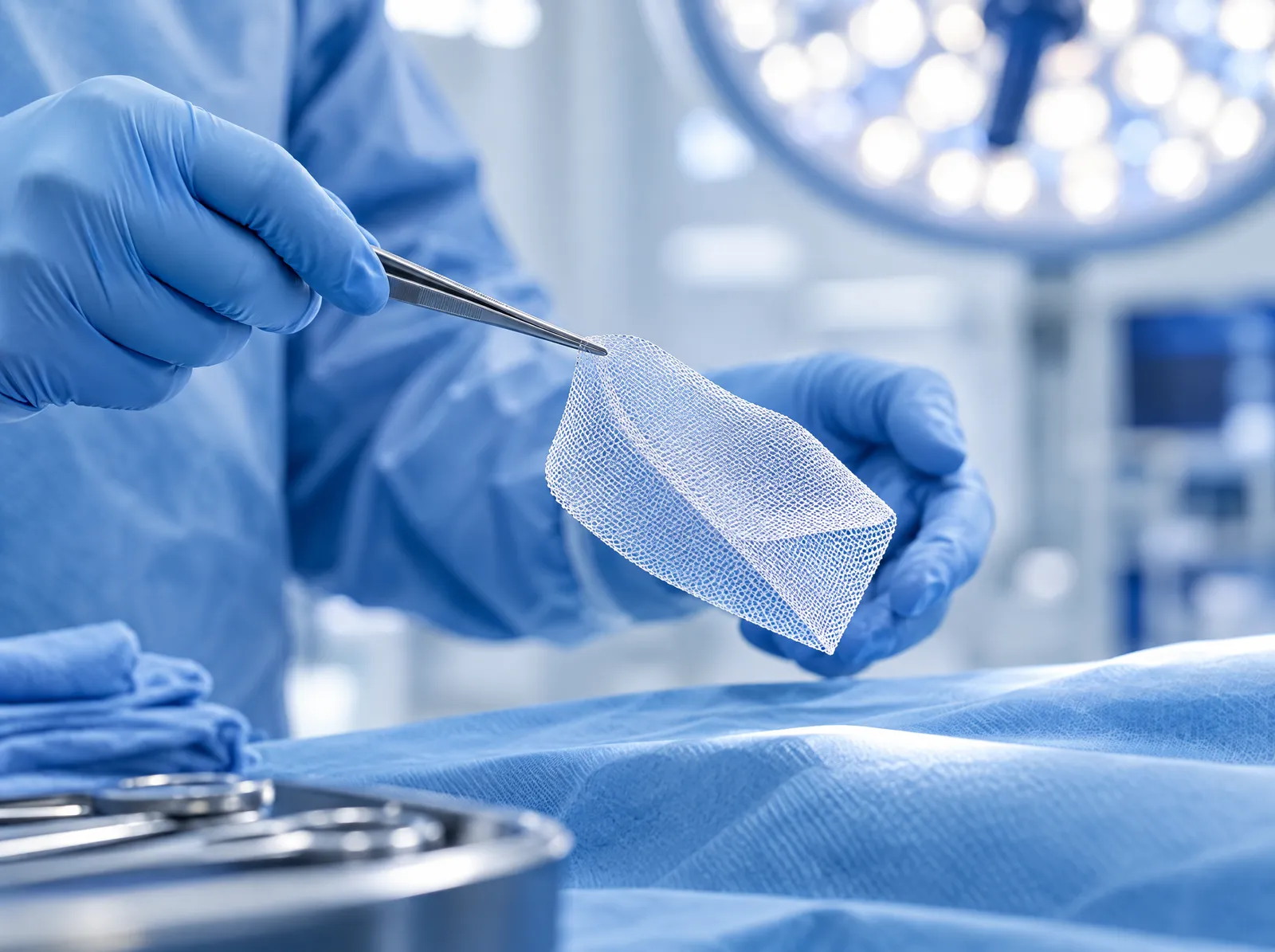
In adults, a hernia does not go away on its own. A hernia belt (truss) can ease the symptoms, but it does not close the opening in the wall. During the operation, the surgeon pushes the contents of the hernia back into the abdomen and strengthens the weakened part of the wall. This is usually done with a mesh, a medical device that stays in the body and that the surrounding tissue grows into over time. The medical name for the procedure is hernioplasty.
The information on this page applies to adult patients.
When is inguinal hernia surgery recommended?
The decision to operate is made by the surgeon after an examination. The diagnosis is usually made from the examination alone, and sometimes the doctor also asks for an ultrasound scan.
Surgery is usually recommended when a hernia causes symptoms, when it gets bigger over time or when it makes work and everyday activities difficult. For men with a small hernia that causes no symptoms, the doctor sometimes suggests monitoring the hernia and examining it again later. In women, surgery is usually advised earlier, because in their case an inguinal hernia is harder to tell apart from a femoral hernia (a hernia at the top of the thigh), which is more likely to become trapped.
An urgent examination is needed if the hernia becomes hard, painful or tender to the touch and cannot be pushed back, if the skin over it turns red or dark, or if the hernia is accompanied by sudden severe abdominal pain, nausea, vomiting, bloating or being unable to pass wind or stools. These can be signs of a trapped (incarcerated) hernia. In that case, do not wait for a booked appointment: call the emergency medical service on 194 or go to the nearest emergency department.
What surgical methods are used?
The Maja Hospital price list includes items for inguinal hernia repair under local and under general anaesthetic, for laparoscopic surgery on one side or on both sides, for surgery for a complex hernia and for repeat surgery. There are two main surgical methods: open and laparoscopic.
Open (conventional) surgery: the surgeon makes a cut a few centimetres long in the groin, pushes the hernia contents back and places a mesh. This is usually done under local or general anaesthetic, and sometimes under a spinal anaesthetic.
Laparoscopic surgery: through several small openings in the abdomen, and with the help of a camera, the surgeon places a mesh on the inner side of the abdominal wall. This is usually done under general anaesthetic. This method is often considered for a hernia on both sides, for a hernia that has come back after open surgery, and for women.
A complex (inguinoscrotal) hernia in men extends down into the scrotum and usually requires more extensive surgery. If a hernia comes back after a previous operation, the surgeon usually recommends repeat surgery (reoperation). Sometimes the old mesh then needs to be removed and the wall strengthened again.
Which method is more suitable depends on the size and type of hernia, whether the hernia is on one side or both, any previous operations, general health, and the assessment of the surgeon and the anaesthetist.
What happens on the day of the operation?
Before the operation, the surgeon reviews the test results and agrees the type of anaesthetic with the patient. For a general or spinal anaesthetic, and for sedation, the patient is also examined by an anaesthetist. The patient is told when to arrive and from what time they must not eat or drink.
On the day of the operation, the patient arrives for admission at the agreed time. The surgeon explains the procedure and its possible risks once more, and the patient signs a consent form for the operation. The side of the hernia is usually marked before the patient goes into the operating theatre. After the operation, the patient is monitored by medical staff until the anaesthetic wears off and they are able to get up, walk and pass urine on their own.
Before discharge, the patient receives a discharge summary with instructions on wound care, pain relief and the follow-up appointment. When the patient can go home is decided by the surgeon. After an anaesthetic, the patient must not drive themselves, so they need to arrange for someone to accompany them and, after a general anaesthetic, for someone to stay with them for the first 24 hours.
What are the possible risks?
As with any operation, this one carries certain risks. The most common are bruising, swelling or a build-up of fluid around the wound, and in men also in the scrotum, which usually settle on their own within a few weeks. Less common are wound infection, bleeding or a larger painful collection of blood (haematoma), difficulty passing urine after the anaesthetic, numbness of the skin below the cut, and groin pain lasting longer than three months.
Rarely, there may be damage to the nerves, blood vessels or the tube that carries sperm (vas deferens) in the groin, pain or swelling of the testicle, injury to the bowel or bladder, mainly with laparoscopic surgery, or a blood clot in the veins of the leg, which can travel to the lungs. The hernia can come back, but this is not common.
The patient discusses the risks related to their own health with the surgeon and the anaesthetist before the operation.
Repeat inguinal hernia surgery (reoperation, recurrence)
When an inguinal hernia comes back after a previous operation, it is called a recurrent hernia. A repeat operation (reoperation) is then usually needed. It is usually more demanding than the first one, because the surgeon works in the area of the scar and the previously placed mesh. Sometimes the old mesh is removed and the wall is reinforced again with new mesh.
The Maja Hospital price list has two items for reoperation of an inguinal hernia with removal of the mesh and a new repair: under local anaesthetic with sedation or spinal anaesthetic, and under general anaesthetic. Whether a repeat operation is needed, which method is used and which anaesthetic, is decided by the surgeon after an examination, and the type of anaesthetic by the surgeon and the anaesthetist. Please bring the discharge letter and results from the previous operation, if you have them.
Frequently asked questions
How much does inguinal hernia repair cost in Niš?
The price at Maja Hospital depends on the method, the type of anaesthetic and whether the hernia is on one side, on both sides, complex or recurrent. The items for the operation itself are in the price table on this page and in the general surgery price list, and the price of laparoscopic surgery is available on request. The surgeon's consultation, each day of the hospital stay, the follow-up appointment and stitch removal are separate items in the price list. The surgeon will tell you which item applies to your case after an examination.
How long does inguinal hernia surgery take?
As a rough guide, the procedure itself usually takes 30 to 90 minutes. The length depends on the size and type of hernia, the method and whether one or both sides are operated on. Including admission, preparation and recovery from the anaesthetic, the patient spends several hours in hospital.
Can hernia surgery be done under local anaesthetic?
Yes. Open inguinal hernia repair can often be done under local anaesthetic, and the Maja Hospital price list has an item for it. Local anaesthetic is not suitable for every hernia, for example a very large or complex one. Laparoscopic surgery is usually done under general anaesthetic. The type of anaesthetic is decided jointly by the surgeon and the anaesthetist, based on the findings and the patient's general health.
How long will I stay in hospital after hernia surgery?
The hospital stay after inguinal hernia repair is usually short. A longer stay is possible after more extensive procedures, for a hernia on both sides or a recurrent hernia, or because of other health conditions. The length of the stay at Maja Hospital is decided by the surgeon after an examination.
How long is sick leave after inguinal hernia repair?
As a rough guide, usually 1 to 2 weeks for office work and lighter work, and usually 4 to 6 weeks for heavy physical work, sometimes longer. Sick leave is decided by your GP on the basis of your medical records, so bring your discharge summary to your GP appointment.
Show 6 more: Frequently asked questions
When can I lift heavy things after hernia surgery?
Heavy lifting and strenuous physical effort are usually avoided for 4 to 6 weeks. Walking and lighter activities are encouraged from the first few days. The load is increased gradually, as advised by the surgeon at the follow-up appointment.
Can an inguinal hernia go away without surgery?
In adults, an inguinal hernia does not go away on its own. A hernia belt (truss) can only ease the symptoms and does not close the opening in the wall. For men with a small hernia that causes no symptoms, the surgeon sometimes suggests monitoring it with regular check-ups. In women, surgery is usually advised earlier. The decision on surgery is made after an examination.
Which is better, laparoscopic or open hernia surgery?
Both methods are accepted in surgery, and a mesh is usually used in both. Laparoscopic surgery is done through small openings, usually under general anaesthetic, and open surgery through a single cut in the groin, often under local anaesthetic. Which one is more suitable in a particular case is assessed by the surgeon, based on the type of hernia, previous operations and general health.
Does the mesh stay in the body permanently?
Usually, yes. The mesh used for an inguinal hernia stays in the body, and over time the surrounding tissue grows into it, which strengthens the abdominal wall. Rarely, there may be an infection, long-lasting pain or other problems related to the mesh. In that case, the surgeon assesses further treatment, which sometimes includes removing the mesh.
How is repeat surgery for a recurrent inguinal hernia done?
A recurrent hernia is usually treated with a repeat operation (reoperation), which is usually more demanding than the first one. The Maja Hospital price list includes reoperation of an inguinal hernia with removal of the old mesh and a new repair, under local anaesthetic with sedation or spinal anaesthetic, or under general anaesthetic. Whether a repeat operation is needed and how it will be done is decided by the surgeon after an examination and a review of the results from the previous operation.
Can a hernia come back after surgery?
It is possible, but it is not common. The risk depends on the size and type of hernia, the surgical method and general health, and smoking and being overweight can increase it. If a lump appears in the groin again after the operation, contact the surgeon. The surgeon assesses further treatment, which is usually another operation.
← General and abdominal surgery
The information in this text is general in nature and does not replace an examination by a doctor.
Book an appointment: Inguinal hernia repair
Information on this website does not replace a medical examination. Treatment is decided by a doctor after the examination.