
Dr Milica Nestorović
specialist in general surgery, colorectal surgery and proctology (subspecialist in oncology)
Book an appointment with Dr Milica NestorovićRemoval of the diseased part of the large bowel and joining the healthy ends, open or laparoscopic. The surgeon decides on the extent after examination and diagnostics.
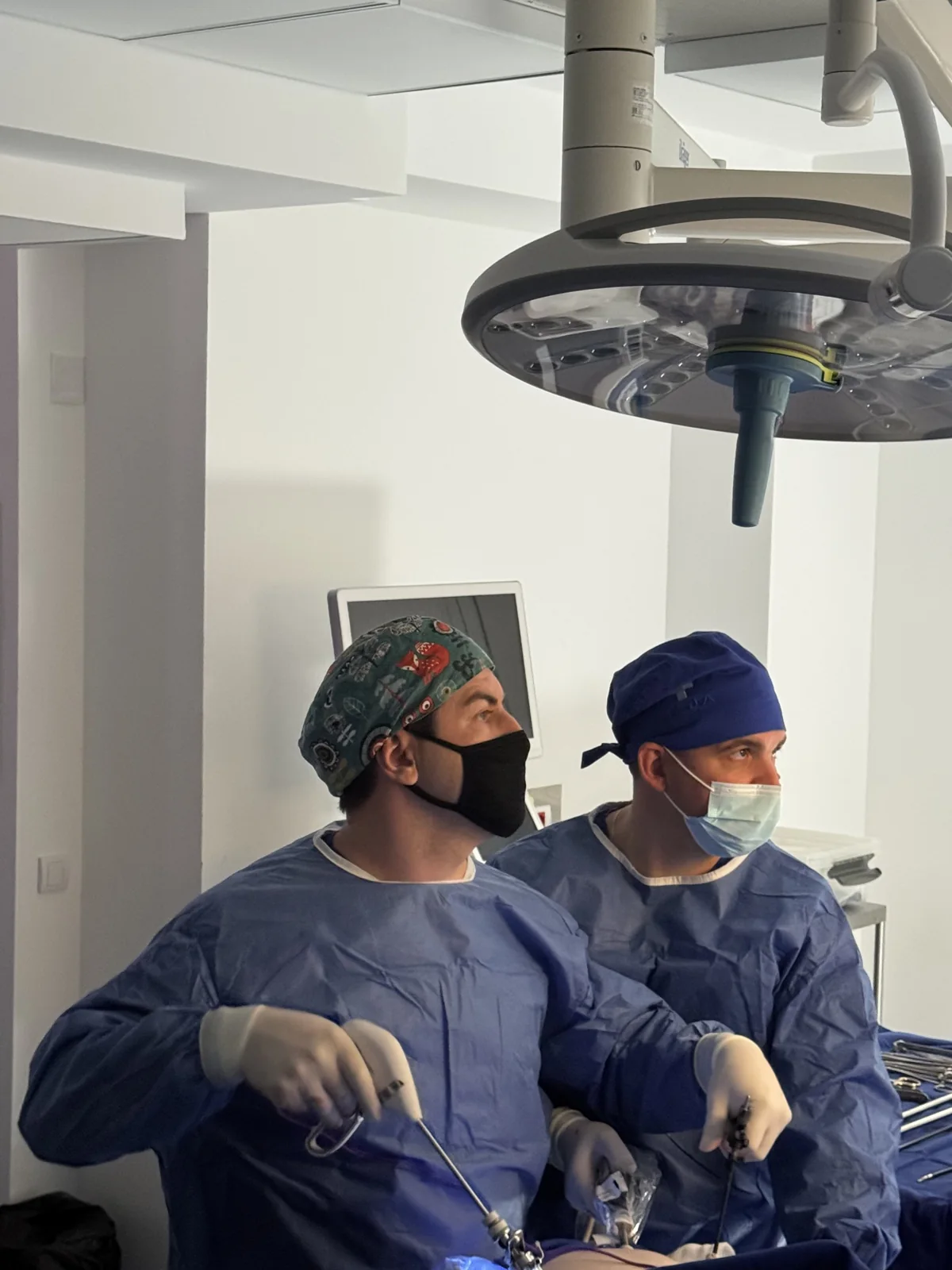
Large bowel surgery (colon resection) is the removal of the diseased part of the large bowel and joining the healthy ends, by hand or with surgical staples. At Maja Hospital, Vizantijski bulevar 39 in Niš, the price list includes open and laparoscopic segmental colon resection, total colectomy and proctocolectomy. The operations are carried out by surgeons who specialise in colorectal surgery, and the surgeon decides on the extent after examination and diagnostics.
The surgeon discusses your symptoms, reviews colonoscopy and imaging results and explains the treatment plan.
Tests and scans are done; for bowel operations the surgeon decides whether bowel preparation is needed.
The anaesthetist assesses your general health; major bowel operations are usually done under general anaesthesia.
Open or laparoscopic, depending on the findings and the surgeon's assessment.
You go home when the bowel works, you can eat and move; the surgeon explains the tissue report at follow-up.
specialist in general surgery, colorectal surgery and proctology (subspecialist in oncology)
Book an appointment with Dr Milica Nestorović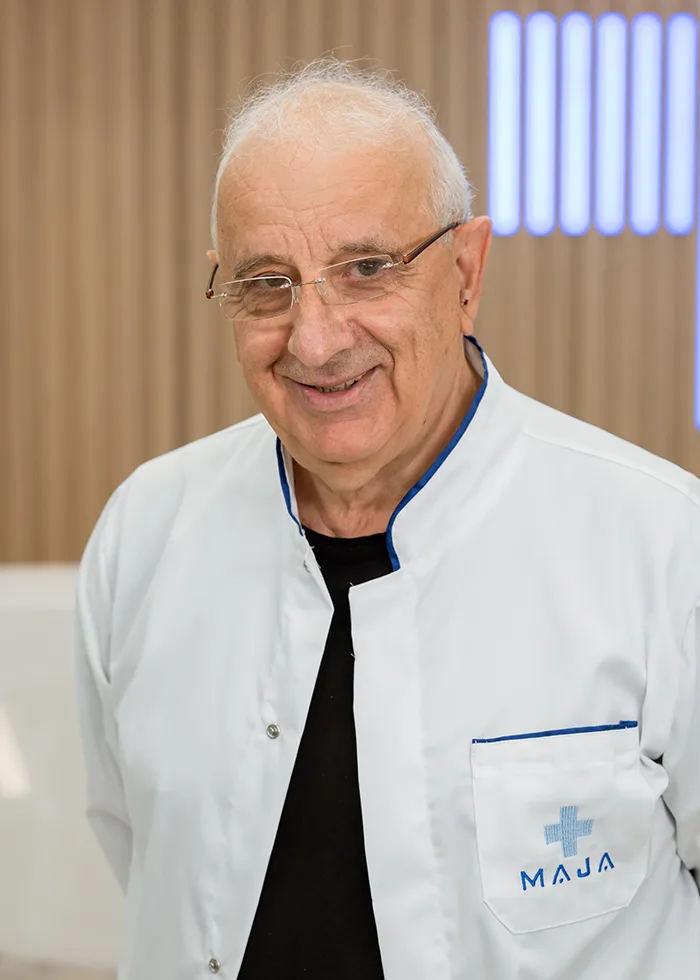
specialist in general surgery, colorectal surgery and proctology
Book an appointment with Prim. Dr Dragoslav Miljković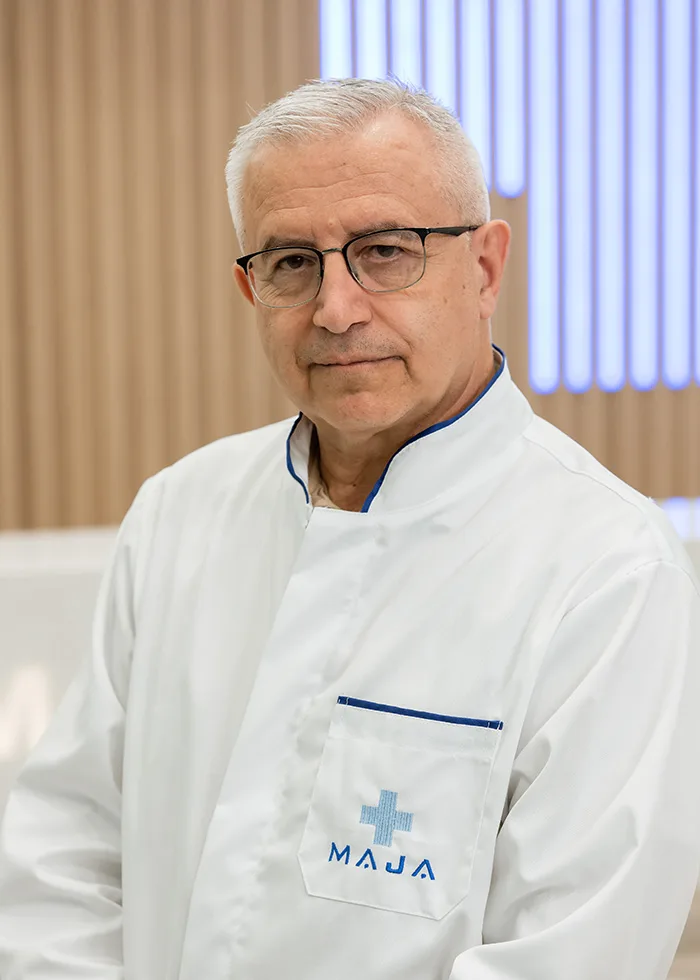
specialist in general surgery, colorectal surgery and proctology
Book an appointment with Dr Dragan MihajlovićIn a colon resection the surgeon removes the diseased part of the large bowel and joins the healthy ends, by hand or with surgical staples. When only one part is removed, it is a segmental resection. The operation is done under general anaesthetic, open or laparoscopically. Sometimes a temporary stoma is made to protect the join while it heals. The removed tissue is sent for pathology, and the surgeon explains the report at follow-up.
Large bowel surgery is most often considered for polyps that cannot be removed endoscopically, tumours of the large bowel, repeated or complicated diverticulitis and other bowel diseases. For many conditions surgery is not the first choice. The surgeon decides after a consultation, colonoscopy, imaging and laboratory results. With tumours, treatment often also includes oncological treatment, usually decided by a multidisciplinary team.
When needed, the whole large bowel is removed (total colectomy) and the small bowel is joined to the rectum. In a proctocolectomy the large bowel and rectum are removed; a reservoir can then be formed from the end of the small bowel and joined to the anal canal (J-pouch), or a permanent ileostomy is formed. The price list also includes resection of the duodenum and small bowel. These operations are priced on request.
The surgeon removes the diseased part of the bowel and joins the healthy ends, by hand or with surgical staples. The operation is done under general anaesthetic, open or laparoscopically. The removed tissue is sent for pathology.
The Maja Hospital general surgery price list has items for open and laparoscopic segmental colon resection, with a hand-sewn or stapled join; total colectomy and proctocolectomy are priced on request. All items are in the price table on this page.
It depends on the type of operation, the method, general health and recovery. You go home when the bowel works again, you can eat and move and the pain is under control.
Before large bowel surgery the surgeon usually asks for a colonoscopy, which examines the whole large bowel. Colonoscopy is offered by the internal medicine service of Maja Health Centre.
The information in this text is general in nature and does not replace an examination by a doctor.
Information on this website does not replace a medical examination. Treatment is decided by a doctor after the examination.