
Dr Marko Gmijović, PhD
specialist in general surgery, hepatobiliary surgery
Book an appointment with Dr Marko GmijovićLaparoscopic (keyhole) gallbladder removal, or laparoscopic cholecystectomy, is an operation to remove the gallbladder through several small cuts in the abdomen, using a camera and thin instruments.
Note: These figures are approximate. The surgical plan and the length of the hospital stay and recovery are decided by the doctor after an examination.
The most common reason for the operation is gallstones in the gallbladder that cause symptoms. At Maja Hospital in Niš, at Vizantijski bulevar 39, the procedure is carried out by specialists in general surgery. The operation is done under general anaesthetic and usually takes about an hour. The hospital stay afterwards is usually one to two days, as assessed by the surgeon. The surgeon assesses whether the operation is needed after an examination and a review of the ultrasound results.
specialist in general surgery, hepatobiliary surgery
Book an appointment with Dr Marko Gmijović
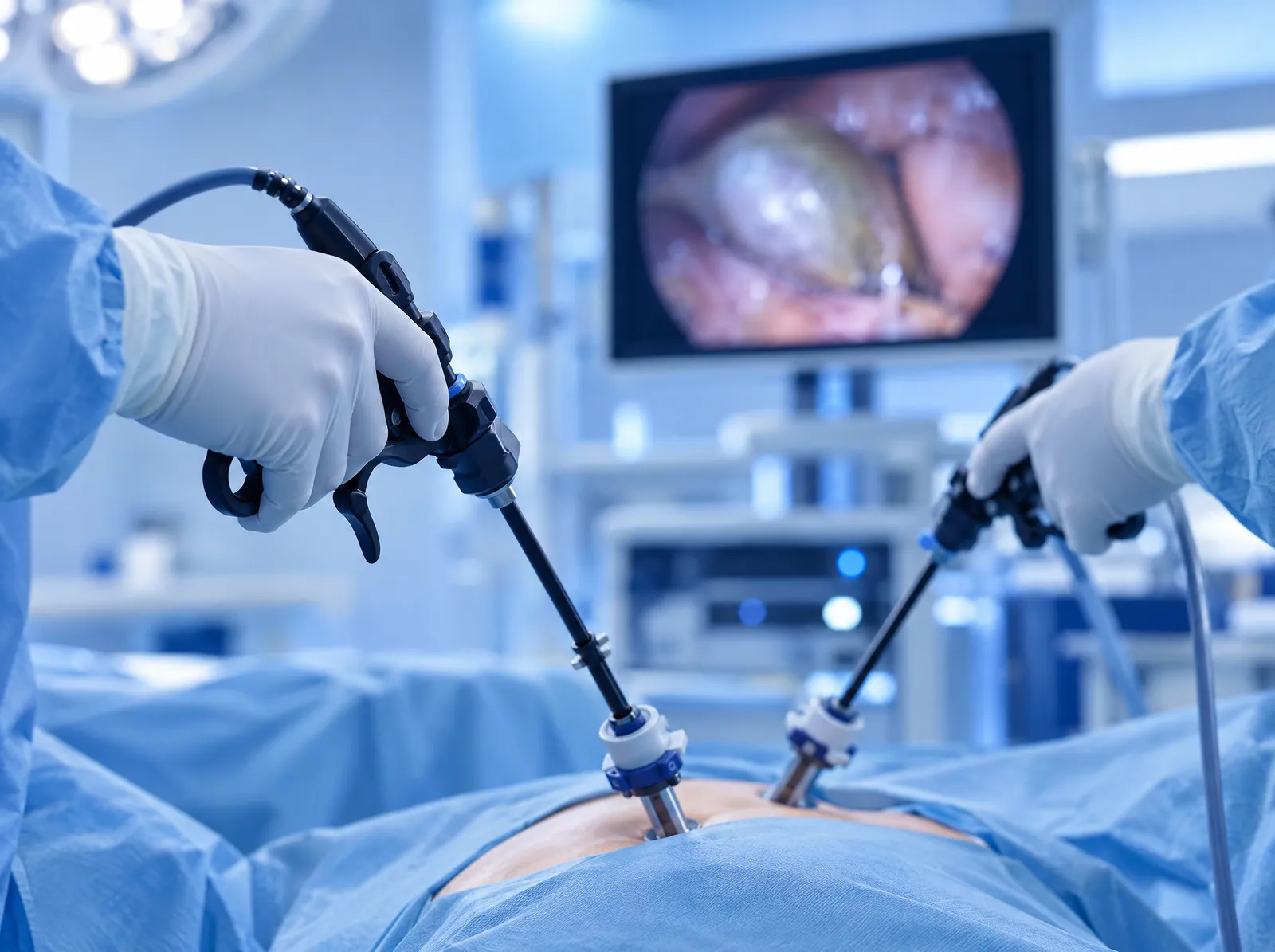
The gallbladder is a small, pear-shaped organ under the liver, on the right side of the abdomen. It stores bile, a fluid that is made by the liver and helps to digest fats. Laparoscopic gallbladder removal, known medically as laparoscopic cholecystectomy, involves removing the whole gallbladder through several small cuts in the abdomen, usually three to four. The cuts are usually between half a centimetre and one and a half centimetres long, and the cut through which the gallbladder is taken out may be slightly longer when the gallstones are large. A camera (laparoscope) is passed through one cut and sends an enlarged image to a screen, and thin instruments are passed through the others. During the procedure, the abdomen is filled with gas (carbon dioxide) to give the surgeon space and a good view. After the operation, the liver continues to make bile, which then flows through the bile ducts directly into the small intestine. The procedure is part of general and abdominal surgery at Maja Hospital.
The most common reason for the operation is gallstones (cholelithiasis) that cause symptoms, for example attacks of severe pain in the upper right part of the abdomen or below the breastbone. These attacks, known as biliary colic, last from half an hour to several hours and often come on after a large meal or at night. Surgery is also considered for inflammation of the gallbladder (cholecystitis), for gallbladder polyps of a certain size, and when a gallstone has caused inflammation of the pancreas or a blockage of the bile ducts. Gallstones that do not cause symptoms are usually just monitored, except in particular cases assessed by the doctor. Whether surgery is needed and when to have it is assessed by the surgeon on the basis of an examination, an abdominal ultrasound scan and blood tests, and, if needed, an MRI scan of the bile ducts (MRCP). The final decision is made by the patient together with the surgeon. Severe pain in the upper abdomen that does not go away even after several hours, especially with a high temperature, shivering, vomiting or yellowing of the skin and the whites of the eyes, needs an urgent examination, not a booked appointment. In that case, call the emergency medical service on 194 or go to the nearest emergency department.
Laparoscopic surgery is the usual way of removing the gallbladder in most patients. When the operation is technically more demanding, for example when the gallbladder is severely inflamed or there are adhesions (bands of scar tissue) from previous abdominal operations, it usually takes longer. Conventional (open) surgery is done through a longer cut, usually below the ribs on the right side, when the laparoscopic approach is not possible or not safe. In a small number of cases, the surgeon decides during a laparoscopic operation that it is safer to complete the procedure as open surgery, a possibility that is discussed before the operation. When needed, the bile ducts are X-rayed with contrast during the procedure (intraoperative cholangiography). When a gallstone has moved from the gallbladder into the main bile duct, it is usually removed endoscopically, using a thin instrument with a camera that is passed through the mouth (ERCP), before or after the operation, and less often surgically, during the operation itself. The Maja Hospital price list includes laparoscopic, complex laparoscopic and open (conventional) gallbladder surgery, as well as gallbladder surgery with a procedure on the bile ducts, when a stone is removed from the main bile duct during the operation or a new connection is made between the bile duct and the intestine. X-ray imaging of the bile ducts during the operation and the consultation with the surgeon are listed as separate items in the general surgery price list. After the consultation, the surgeon explains which price list item applies to the planned operation.
Arrive at the hospital at the agreed time, having had nothing to eat or drink as instructed, and bring all your test results and medical records. On admission, your results are checked and you talk to the anaesthetist about the anaesthetic, any previous illnesses and the medicines you take. After the procedure and its possible risks have been explained to you, you sign a consent form for the operation. A thin plastic tube (cannula) is then placed in a vein in your arm, and fluids and medicines are given through it. The operation is done under general anaesthetic, so you are asleep throughout the procedure. After you wake up, your blood pressure, pulse, breathing and pain are monitored. Usually on the same day, when the doctor allows, you get up for the first time with help from the staff and have something to drink. You go home when the surgeon judges that you are recovering well, usually on the first or second day after the operation, with a discharge summary, written instructions and a follow-up appointment. You need someone to accompany you home, as driving yourself is not recommended for the first few days after the operation.
Laparoscopic gallbladder removal is a common and well-known procedure, but like any operation it carries certain risks. Bleeding, wound infection, bile leakage, a hernia where a cut was made or a reaction to the anaesthetic may occur. Less often, injury to the bile ducts or the intestine, or blood clots, may occur. Sometimes a stone is left behind in the main bile duct after the operation, and it is then usually removed endoscopically. In some patients, symptoms similar to those before the operation, such as pain or bloating, may continue afterwards. This is why the surgeon assesses before the operation whether the symptoms really are caused by the gallbladder. At the consultation, the surgeon explains the risks in relation to your health and what is done to reduce them.
Laparoscopic gallbladder removal usually takes about an hour. A more complex operation, for example when there is inflammation or there are adhesions from previous operations, may take longer. The exact length depends on what is found during the procedure.
After laparoscopic surgery, the hospital stay is usually one to two days. After conventional, open surgery the stay is usually longer, several days. The surgeon lets you go home when you are drinking and eating, walking, and your pain is under control.
Sick leave is issued by your registered general practitioner (GP), based on the discharge summary and the surgeon's recommendation. How long it lasts depends on the type of work you do and on how your recovery goes. As a rough guide, sick leave usually lasts one to two weeks for office work, and four to six weeks for physical work and heavy lifting. After open surgery, recovery usually takes longer.
On the first day, you have fluids and light food. In the following weeks, smaller meals, boiled and stewed food and less fatty, fried and spicy food are recommended. Most people return to their usual diet over time, and the doctor gives you specific instructions when you are discharged.
In most cases, yes. After the operation, the liver continues to make bile, which then flows through the bile ducts directly into the small intestine. Some people have bloating or looser stools after fattier food in the first few weeks, and this usually settles over time. If the symptoms last longer than a few weeks, contact a doctor.
The operation is done under general anaesthetic, so you are asleep during the procedure. After the operation, pain where the cuts were made is common, and sometimes also pain in the right shoulder, caused by the gas used during the procedure. The pain is relieved with painkillers as advised by the doctor and usually eases within a few days.
Not always. Gallstones that do not cause symptoms are usually just monitored. Surgery is usually recommended when gallstones cause attacks of pain, inflammation of the gallbladder or complications affecting the bile ducts and the pancreas. When surgery is needed, standard surgical practice is to remove the whole gallbladder, not just the stone, because a gallbladder in which stones have formed once remains prone to forming them again. Medicines that dissolve gallstones help only a small number of patients and work slowly. The decision is made by the surgeon and the patient together, after an examination and a review of the test results.
The prices of gallbladder surgery at Maja Hospital are shown in the table on this page and in the general surgery price list. The price depends on the type of operation: laparoscopic, complex laparoscopic or open (conventional). The consultation with the surgeon is a separate item in the price list. You can check exactly what the price of the operation includes, for example the hospital stay, the anaesthetic and the histopathology report, when you book a consultation with the surgeon.
← General and abdominal surgery
The information in this text is general in nature and does not replace an examination by a doctor.
Information on this website does not replace a medical examination. Treatment is decided by a doctor after the examination.