Hiatus hernia surgery in Niš
In a hiatus hernia part of the stomach passes through an opening in the diaphragm into the chest. A small hernia without symptoms is usually not operated on; the surgeon decides.
At a glance
- Also called
- Stomach herniadiaphragmatic hernia
- Method
- Open or laparoscopicdepending on the findings
- Anaesthetic
- Generalgiven by an anaesthetist
- Before deciding
- Gastroscopy and imagingsometimes oesophageal pressure test
Facts and description
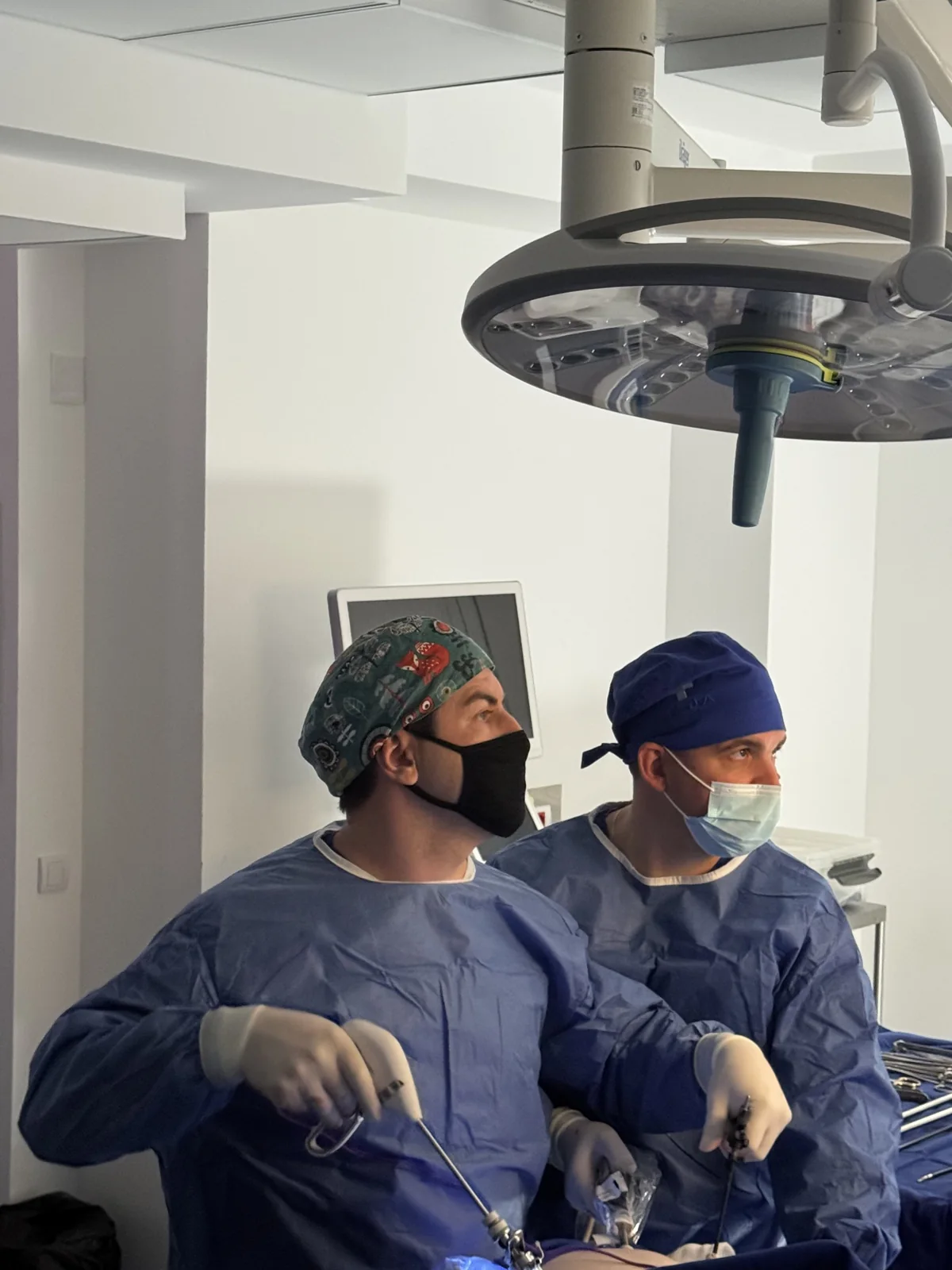
Hiatus hernia surgery is a procedure in which the surgeon returns part of the stomach from the chest to the abdomen and narrows the widened opening in the diaphragm. Anti-reflux surgery is usually done at the same time. At Maja Hospital, Vizantijski bulevar 39 in Niš, the price list includes open and laparoscopic surgery, and the surgeon decides on the operation after a consultation and test results.
All facts
- Procedure
- Returning part of the stomach to the abdomen and narrowing the opening in the diaphragm, usually with anti-reflux surgery (fundoplication)
- Other names
- Hiatus hernia, diaphragmatic hernia, stomach hernia
- Methods
- Open or laparoscopic surgery
- Anaesthetic
- General anaesthetic, given by an anaesthetist
- Before deciding
- Usually gastroscopy and imaging, and before anti-reflux surgery often oesophageal manometry
- Diet after surgery
- In the first weeks liquid, then soft, in small meals, according to the surgeon's plan
- Price
- Items for open and laparoscopic surgery are in the price table; laparoscopic surgery is priced on request.
When the operation is usually recommended
- Reflux symptoms do not improve with treatment and diet changes
- The hernia is large and causes symptoms
- There are complications: difficulty swallowing, bleeding with anaemia
- The surgeon decides after the results that surgery is needed
Can it be treated without surgery?
- A small hernia without symptoms is usually not operated on
- Reflux symptoms are first treated with medicines and diet changes
- The surgeon decides after gastroscopy and imaging
The path to the operation
Step 1: Surgical consultation
The surgeon discusses symptoms, reviews gastroscopy and imaging results and assesses whether surgery is needed.
Step 2: Additional tests
Before anti-reflux surgery the surgeon often asks for an oesophageal pressure test (manometry).
Step 3: Preparation and anaesthesia
Tests are done, and the anaesthetist assesses your health and plans the general anaesthetic.
Step 4: Operation
Part of the stomach is returned to the abdomen, the opening is narrowed, and anti-reflux surgery is usually done.
Step 5: Recovery and follow-up
In the first weeks the diet is liquid, then soft, in small meals; the surgeon gives a plan at discharge.
Hiatus hernia surgery: prices
Recovery
- In the first weeks the diet is liquid, then soft, in small meals, according to the surgeon's plan.
- Temporary difficulty swallowing and bloating are common in the first weeks.
- Heavy lifting is avoided for as long as the surgeon advises.
- Walking is encouraged from the first days, and activities are resumed gradually.
- With severe chest or abdominal pain, difficulty breathing or vomiting blood, call the emergency service on 194.
Show 1 more: Recovery
- If swallowing gets harder or you cannot swallow liquids, contact the surgeon.
How to prepare
- Have the tests that the surgeon and anaesthetist ask for, usually a blood count, biochemistry, clotting tests and an ECG.
- Tell the doctor about allergies and medicines, and do not change blood thinners or diabetes medicines on your own.
- Do not eat or drink before the operation, exactly as instructed by the hospital.
- Stop smoking as early as possible before the operation.
Show 3 more: How to prepare
- Bring your ID card, health insurance card, results, a list of medicines and loose, comfortable clothes.
- Arrange for someone to accompany you and to help at home for the first days after the operation.
- Bring your gastroscopy and imaging results, if you have them.
When to contact the surgeon or the emergency service
Call the emergency service (194) straight away if:
- Severe chest or abdominal pain
- Difficulty breathing
- Vomiting blood or black stools
- You cannot swallow even saliva
Contact the surgeon if after the operation:
- Swallowing gets harder
- Temperature of 38 °C or higher
- Redness, pus or bleeding from the wound
- Nausea or vomiting that do not stop
In detail
What is a hiatus hernia?
The diaphragm is a muscular wall between the chest and the abdomen. The oesophagus passes through an opening in the diaphragm (the hiatus) to the stomach. In a hiatus hernia this opening is widened, so part of the stomach passes through it into the chest. It cannot be seen from the outside. It is often found on gastroscopy or imaging and may be linked to reflux symptoms such as heartburn.
When is a hiatus hernia operated on?
A small hernia without symptoms is usually not operated on. Surgery is considered when reflux symptoms do not improve with treatment and diet changes, when the hernia is large and causes symptoms, or when there are complications such as difficulty swallowing, bleeding with anaemia or a trapped stomach. The surgeon decides after a consultation and results, usually gastroscopy and imaging, and before anti-reflux surgery often oesophageal manometry.
How the operation is done
The surgeon returns part of the stomach from the chest to the abdomen and narrows the widened opening in the diaphragm. Anti-reflux surgery (fundoplication) is usually done at the same time: the top of the stomach is wrapped around the lower end of the oesophagus, which reduces acid reflux. The operation is done under general anaesthetic, open or laparoscopically, and the Maja Hospital price list includes both options.
Recovery and diet after the operation
Recovery depends on the size of the hernia, the method and general health; it takes longer after open surgery. In the first weeks the diet is liquid, then soft, in small meals, and heavy lifting is avoided. Temporary difficulty swallowing and bloating are common in the first weeks. If swallowing gets harder or you cannot swallow liquids, contact the surgeon.
Frequently asked questions
What is a hiatus hernia?
A hiatus hernia is a condition in which part of the stomach passes through a widened opening in the diaphragm into the chest. It cannot be seen from the outside and is often linked to reflux symptoms such as heartburn. It is usually diagnosed by gastroscopy or imaging.
When is a hiatus hernia operated on?
A small hernia without symptoms is usually not operated on. Surgery is considered when reflux symptoms do not improve with treatment, when the hernia is large and causes symptoms, or when there are complications. The surgeon decides after a consultation and the results.
How much does hiatus hernia surgery cost in Niš?
The Maja Hospital general surgery price list has an item for open hiatus hernia surgery and an item for laparoscopic surgery, priced on request. Both are in the price table on this page.
What is anti-reflux surgery (fundoplication)?
It is part of the operation in which the top of the stomach is wrapped around the lower end of the oesophagus, which reduces acid reflux. It is usually done with hiatus hernia surgery.
What is the diet after hiatus hernia surgery?
In the first weeks the diet is liquid, then soft, in small meals. Temporary difficulty swallowing and bloating are common at first. The surgeon gives an exact diet plan at discharge.
The information in this text is general in nature and does not replace an examination by a doctor.
Book an appointment: Hiatus hernia surgery
Information on this website does not replace a medical examination. Treatment is decided by a doctor after the examination.