Hernia belt: does it help and can it replace surgery?
A hernia belt (truss) can ease discomfort for a while, because it supports from the outside the spot where the hernia bulges. It does not close the gap in the abdominal wall, so it does not cure the hernia and does not replace surgery. In adults a hernia does not go away on its own, with or without a belt. Whether a belt makes sense in your case, and for how long, is something the surgeon tells you after an examination.
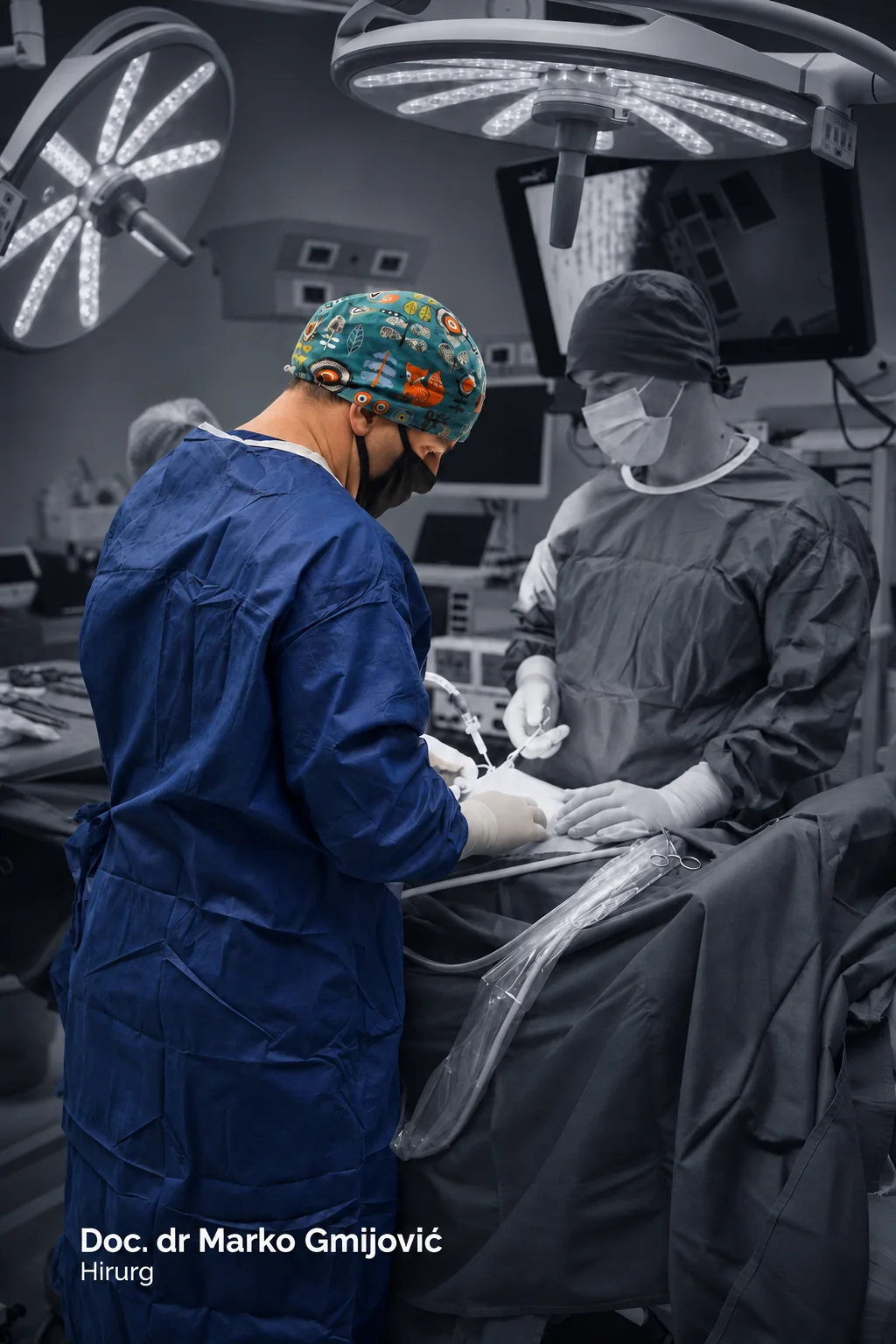
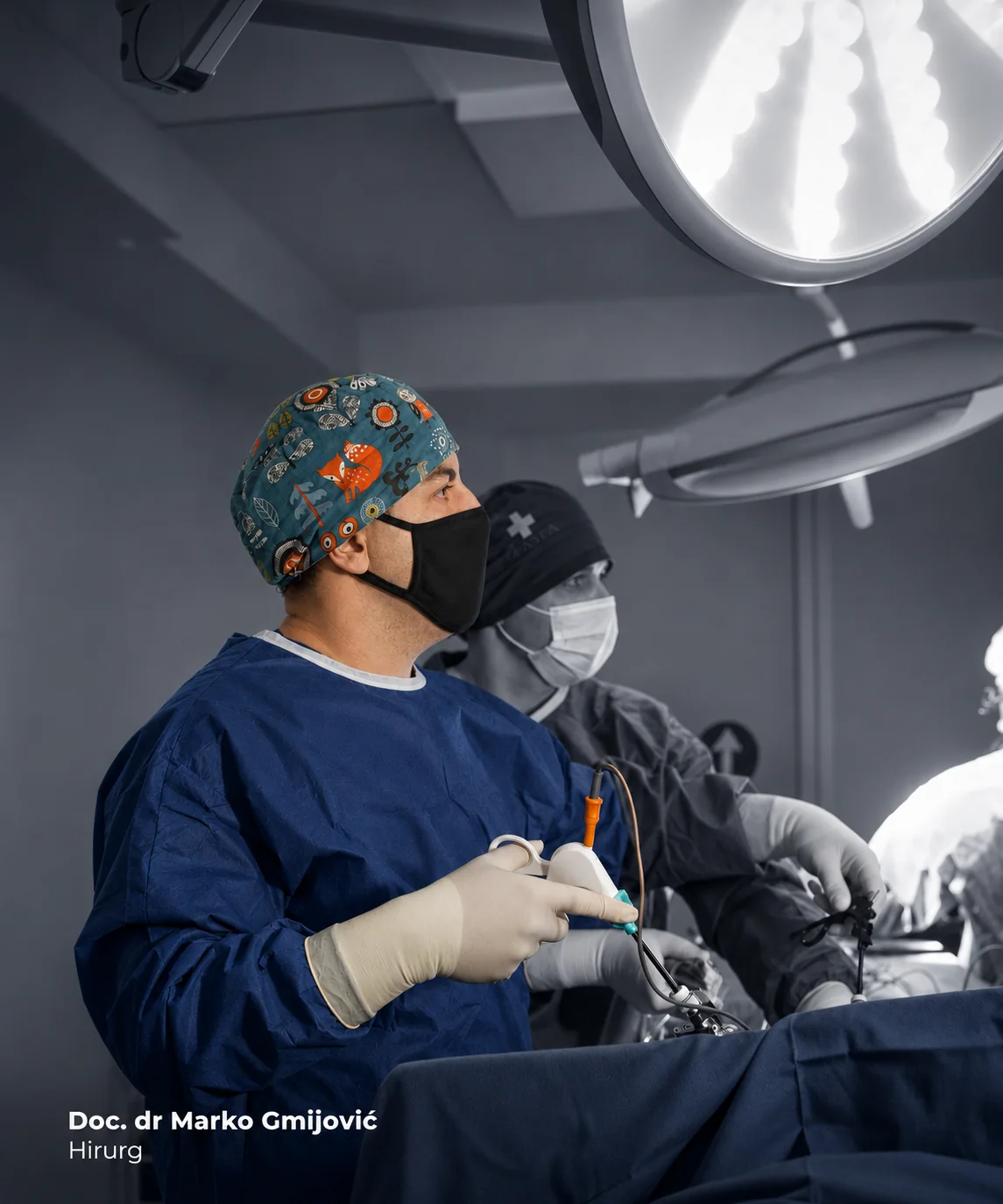
Signed by: Assist. Prof. Marko Gmijović, MD


What is a hernia belt and how does it work?
A hernia belt is an elastic belt or binder worn over the spot where the hernia bulges. A belt for an inguinal (groin) hernia usually has a pad that rests on the groin. For an umbilical hernia and a hernia on a scar, a wider abdominal binder is used more often.
The belt works only from the outside. Its pressure holds the hernia so that it bulges less while you stand, walk or strain. That is why some people feel less pulling and heaviness with a belt.
The belt does not act on the cause. A hernia forms when part of the contents of the abdominal cavity passes through a weak spot in the abdominal wall, and that spot stays the same while the belt is worn.
This text applies to adults.
Can a belt cure a hernia?
No. A belt does not close the gap in the abdominal wall. When it is taken off, the hernia bulges again as before.
In adults a hernia does not go away on its own. The gap in the wall is not closed by a belt, exercises, creams or teas. The only way to strengthen the weak spot permanently is surgery. During the operation the surgeon returns the contents of the hernia to their place and reinforces the wall, most often with a mesh.
This does not mean that every hernia has to be operated on as soon as possible. For a small hernia without complaints, the surgeon sometimes suggests watchful waiting and a repeat examination. That decision is also made after an examination, not by whether a belt eases the complaints.
When can a belt help for a while?
A belt makes sense only as temporary help and only for a hernia that goes back easily when you lie down. The surgeon sometimes suggests it in these situations:
- while you wait for the date of surgery, if the hernia bothers you when standing and walking
- when surgery has to be postponed for health reasons
- in people for whom, in the doctor's judgement, surgery carries a greater risk than the hernia itself
Even then the belt only eases the complaints. It does not stop the hernia from growing and does not rule out the hernia becoming trapped. That is why warning signs still have to be watched while wearing a belt, and follow-up with the surgeon is not skipped.
Before buying a belt it is sensible to have the hernia examined by a doctor. A bulge in the groin or on the abdomen does not have to be a hernia, and a belt is not meant for every type of hernia.
When should a hernia belt not be worn?
A belt is not put on over a hernia that cannot be pushed back. Pressure on contents that are stuck in the gap can make things worse.
A belt should also not be worn in these situations until a doctor has examined you:
- the hernia has become hard, painful or tender to the touch
- the skin over the hernia is red, darker or damaged
- the belt makes the pain worse instead of easing it
- you are not sure that the bulge really is a hernia
A belt should not be a reason to put off an examination for months. If the complaints ease with the belt, the hernia is still there. There is another trap: with a belt people more easily decide to lift loads and do heavy physical work, and a belt does not make the abdominal wall stronger.
How is the belt worn if the doctor has recommended it?
The belt is worn according to the doctor's instructions and the manufacturer's instructions. The following usually applies:
- The belt is put on while lying down, when the hernia has gone back. It is not put on over a hernia that is out.
- The pad or the front part of the belt should rest exactly over the hernia.
- The belt should support, not squeeze. It must not hurt, leave deep marks on the skin or interfere with breathing.
- The skin under the belt should be clean and dry. If redness or a sore appears, take the belt off and contact your doctor.
- When lying down and during the night the belt is usually taken off, unless the doctor says otherwise.
The size and type of belt are best chosen with a doctor's advice, according to the place and size of the hernia. A belt for an inguinal hernia and an abdominal binder for a hernia of the front abdominal wall are not the same aid.
A belt before surgery and a belt after surgery: what is the difference?
A belt before surgery supports a hernia that is still there. A belt after surgery has a different role: it supports the operated area while it heals.
After inguinal hernia surgery a belt is usually not needed. Some surgeons advise comfortable, snug underwear that supports the groin for the first days.
After surgery for a larger hernia of the front abdominal wall, the surgeon sometimes recommends an abdominal binder for a certain time. Whether it is needed, which one and for how long is written in the discharge letter or explained by the surgeon who operated on you.
Do not wear the belt you used before surgery after it on your own initiative. After surgery only the surgeon's instructions apply.
Which signs call for an urgent examination?
A hernia can become trapped even while a belt is worn. The contents of the hernia then stay caught in the gap and cannot go back. These signs can point to it:
- the hernia becomes hard, painful or tender to the touch and cannot be pushed back
- the skin over the hernia turns red or dark
- sudden severe pain in the abdomen or groin
- nausea and vomiting
- a bloated abdomen, without wind or stools
In that case take the belt off, do not push the hernia back by force and do not wait for a booked appointment. Maja Hospital has an emergency surgery service. For urgent conditions, call 018 530 530. In case of loss of consciousness, difficulty breathing or a severe general condition, call the emergency medical service on 194 without delay.
What instead of a belt: an examination by a surgeon at Maja Hospital
If you are thinking about a belt, the first step is an examination by a surgeon. The surgeon examines the bulge while you stand and while you lie down and usually asks you to cough or tense your abdomen. Sometimes an ultrasound is requested as well.
After the examination the surgeon explains whether it is a hernia, whether watchful waiting is enough or surgery is advised, and whether a belt makes sense until then. Hernia surgery is done in the open way, through a cut over the hernia, or laparoscopically, through several small cuts. Which method is an option depends on the type and size of the hernia, earlier operations and general health.
Bring your earlier medical records and a list of the medicines you take regularly. If you already wear a belt, bring it along, so the surgeon can see what it is like and how you put it on.
The price of the surgeon's examination is shown in the table below.
The information in this text is general in nature and does not replace an examination by a doctor.