Gallbladder polyp: what the finding means, follow-up and when surgery is advised
A gallbladder polyp is a small growth on the inner wall of the gallbladder. It is usually found by chance on an abdominal ultrasound and most often causes no symptoms at all. Most polyps are benign, and small polyps are usually followed up with repeat ultrasound at intervals set by the doctor. The surgeon advises removing the gallbladder when the polyp is larger, when it grows, when there are gallstones or symptoms as well, or when other risk factors are present.
Signed by: Assist. Prof. Marko Gmijović, MD

What is a gallbladder polyp?
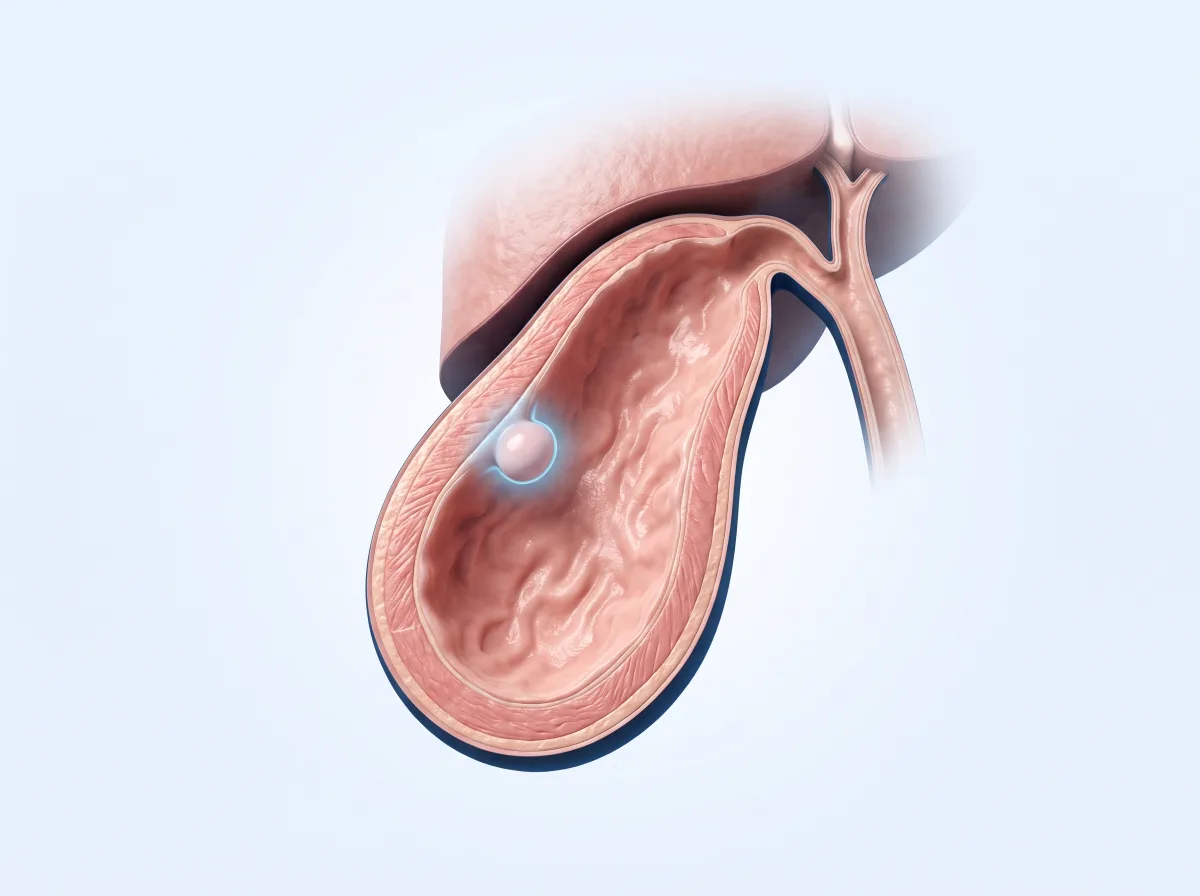
The gallbladder is a small pear-shaped organ under the liver, on the right side of the abdomen. Between meals it stores bile, a fluid made by the liver that helps digest fats.
A gallbladder polyp is a small growth that starts from the inner wall of the gallbladder and protrudes into its cavity. There may be one polyp or several.
Most polyps are benign. The most common are so-called cholesterol polyps, deposits of cholesterol in the gallbladder wall, which are not true tumours. Adenomas, benign tumours of the gallbladder lining, are less common, and only a small share of polyps have, or may develop over time, malignant features. That is why a polyp is not ignored: it is followed up or, when the doctor decides, removed together with the gallbladder. What kind of polyp it was is known for certain only after the gallbladder is examined under a microscope.
How is a gallbladder polyp found?
A gallbladder polyp is usually found by chance, on an abdominal ultrasound done for another reason, for example because of stomach complaints or during a general check-up.
An abdominal ultrasound is painless and uses no radiation. You usually come for the scan on an empty stomach, because the gallbladder is easier to see then. You receive exact instructions when you book.
On ultrasound the doctor distinguishes a polyp from a stone. A stone usually moves when the patient changes position and casts a shadow behind it, while a polyp stays in the same place on the gallbladder wall. The report usually describes the size of the polyp, the number of polyps, their shape and the appearance of the gallbladder wall. When the finding is not clear, the doctor may suggest a repeat ultrasound or additional imaging. The report is always interpreted by a doctor, together with your symptoms and the examination.
Does a gallbladder polyp cause symptoms?
A polyp usually causes no symptoms. Most people learn about it only from the ultrasound report.
When pain in the upper right abdomen, nausea or bloating after meals are present together with a polyp, the cause is often something else, for example gallstones or stomach and bowel complaints. That is why the surgeon assesses at the examination whether the symptoms really come from the gallbladder. This assessment also shapes the advice on whether follow-up is enough or whether it is better to remove the gallbladder.
Severe pain in the upper abdomen that does not ease even after several hours, especially with fever, vomiting or yellowing of the skin and the whites of the eyes, needs urgent care. In that case call emergency services on 194 or go to the nearest emergency department.
What does ultrasound follow-up of a polyp look like?
Small polyps without other warning signs are usually only followed up. Follow-up means a repeat abdominal ultrasound at intervals set by the doctor. At each check the size of the polyp is measured and compared with the earlier report.
Bring all earlier ultrasound reports to every check-up. A change in the size of the polyp over time is one of the most important pieces of information for the decision, and the doctor can judge it only when the sizes are written in the reports.
Diet, teas and herbal products do not remove a polyp. How long follow-up lasts and when it can stop is decided by the doctor.
When does the surgeon advise removing the gallbladder?
The surgeon usually considers removing the gallbladder when one of the following factors is present:
- a larger polyp (professional guidelines often give about 1 cm as the threshold, but the doctor assesses each patient individually)
- a polyp that grows on follow-up scans
- gallstones together with a polyp
- symptoms that come from the gallbladder
- a polyp with a wide base or a thickened gallbladder wall on ultrasound
- other factors, such as age and other diseases of the bile ducts
A polyp cannot be removed on its own, separately from the gallbladder. When surgery is needed, in usual surgical practice the whole gallbladder is removed, most often laparoscopically, through several small incisions. After the operation the gallbladder is examined under a microscope (histopathology report), and the report is brought to the follow-up visit with the surgeon.
The patient makes the decision about surgery together with the surgeon, after the examination and the ultrasound findings. What the operation involves is described on the procedure page.
What does the surgeon's examination at Maja Hospital look like?
Bring the abdominal ultrasound report, all earlier ultrasound reports if you have them and your other medical records to the surgeon's examination. Also bring a list of the medicines you take regularly.
The surgeon talks with you about your complaints, examines you and reviews the results. After that the surgeon explains whether follow-up is enough and when the next ultrasound should be, or whether it is better to remove the gallbladder.
Abdominal ultrasound is done at Maja Radiology. Prices for the surgeon's examination, abdominal ultrasound and laparoscopic gallbladder removal are shown in the table below.
The information in this text is general in nature and does not replace an examination by a doctor.