
Skip to content
Bolnica MajaBOLNICA

Rectal prolapse surgery (rectopexy) in Niš

The rectum comes out through the anus. It should not be confused with prolapsing haemorrhoids; the proctologist establishes the difference at the consultation.
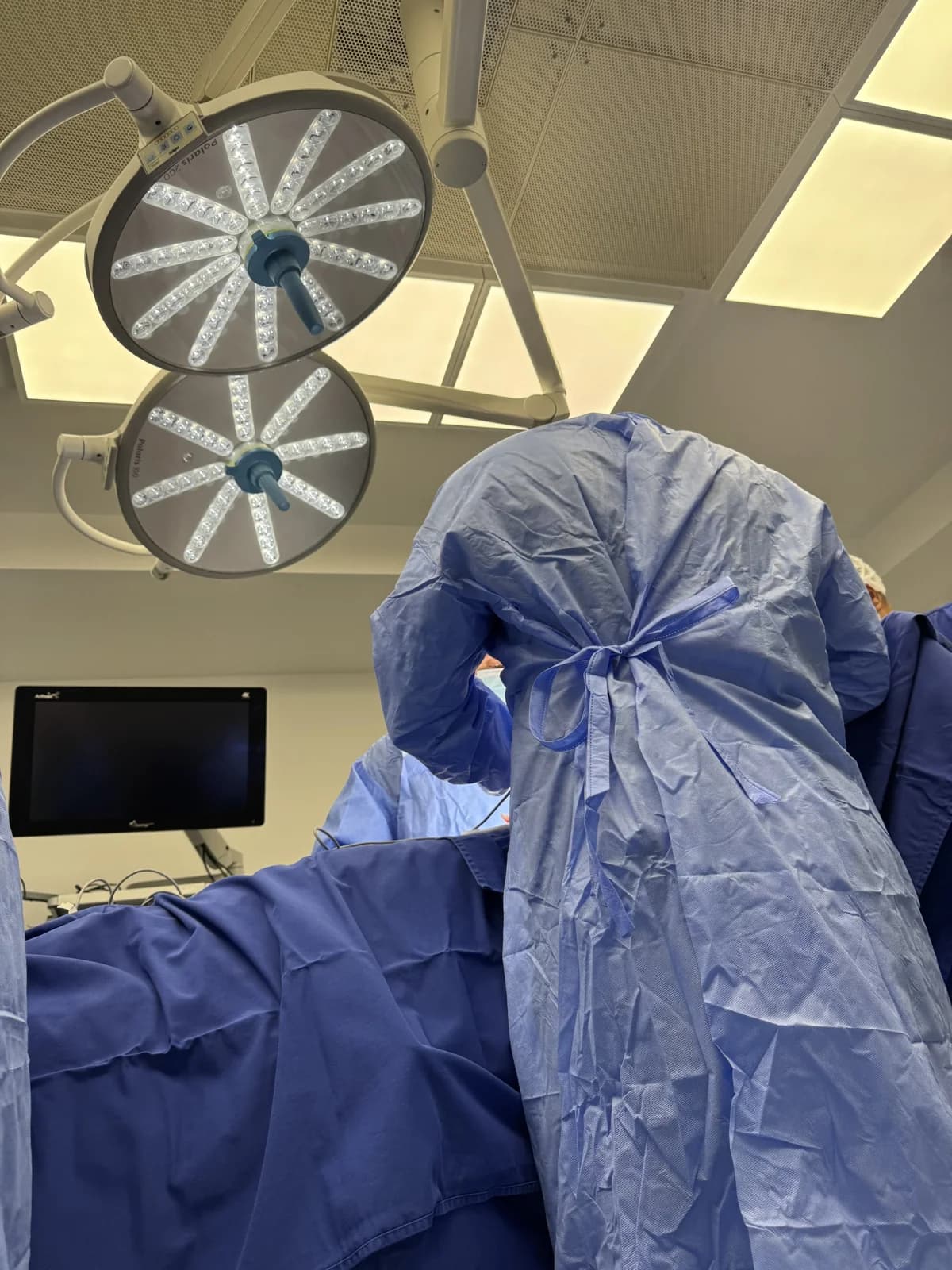
Rectal prolapse surgery

At a glance

Condition
Rectal prolapse
Operation
Open or laparoscopiclaparoscopic rectopexy
First step
Proctology consultation
Anaesthetic
Surgeon and anaesthetist decide
Facts and description

Rectal prolapse is a condition in which the last part of the large bowel (rectum) comes out through the anus. At Maja Hospital, Vizantijski bulevar 39 in Niš, rectal prolapse surgery is performed, including laparoscopic rectopexy, in which the rectum is returned and secured in the pelvis. The consultation and operation are done by proctologists, and the surgeon chooses the approach according to the findings, age and general health.

All facts

Rectal prolapse
The last part of the large bowel (rectum) comes out through the anus
Price list operations
Rectal prolapse surgery and laparoscopic rectopexy for rectal prolapse
Rectopexy
Returning and securing the rectum in the pelvis, through the abdomen
Who operates
General surgeons who specialise in colorectal surgery and proctology
Choice of approach
According to the findings, age and general health
Price
Both items are in the price table on this page.

When the operation is usually considered

  • The rectum comes out through the anus, when straining or all the time
  • A feeling of something coming out, wetness or mucus from the anus
  • Difficulty controlling stools or wind
  • The proctologist confirms rectal prolapse after a consultation

What to know before deciding

  • Rectal prolapse is not the same as prolapsing haemorrhoids
  • The approach depends on the findings, age and general health
  • Medicines do not reverse a prolapse permanently

The path to the operation

  1. Step 1: Proctology consultation

    Discussion and examination; the doctor establishes whether it is a rectal prolapse or haemorrhoids.

  2. Step 2: Further tests

    If needed, colonoscopy or other tests, as assessed by the surgeon.

  3. Step 3: Choice of operation

    The surgeon chooses the approach according to the findings, age and general health.

  4. Step 4: Operation

    The rectum is returned and secured; with laparoscopic rectopexy through several small cuts.

  5. Step 5: Recovery and follow-up

    The surgeon gives a plan for diet, bowel movements and activity at discharge.

Rectal prolapse surgery: prices

Our specialists

Recovery

  • Pain and discomfort around the wound are expected in the first days. The surgeon prescribes pain relief.
  • Walking is encouraged from the first days, and daily activities are resumed gradually.
  • Keep the wound clean and dry. The surgeon will tell you when you can shower, and when you can take a bath or swim.
  • Stitches, unless they are dissolvable, are removed at the follow-up appointment.
  • With severe abdominal pain, difficulty breathing or chest pain, call the emergency service on 194 or go to the nearest emergency department.
Show 3 more: Recovery
  • Lifting and heavy physical effort are avoided for as long as the surgeon advises.
  • After a general anaesthetic, do not drive for at least 24 hours and have someone with you for the first 24 hours.
  • Contact the surgeon if you develop a temperature of 38 °C or higher, redness, pus or heavier bleeding from the wound, pain that gets worse, or nausea and vomiting that do not stop.

How to prepare

  • Have the tests that the surgeon and anaesthetist ask for, usually a blood count, biochemistry, clotting tests and an ECG.
  • Tell the doctor about allergies and medicines, and do not change blood thinners or diabetes medicines on your own.
  • Do not eat or drink before the operation, exactly as instructed by the hospital.
  • Stop smoking as early as possible before the operation.
Show 4 more: How to prepare
  • Bring your ID card, health insurance card, results, a list of medicines and loose, comfortable clothes.
  • Arrange for someone to accompany you and to help at home for the first days after the operation.
  • Bring colonoscopy, imaging and pathology results, if you have them.
  • Do bowel preparation, if needed, only as instructed by the surgeon.

When to contact the surgeon or the emergency service

Contact the emergency service (194) or an emergency department straight away if:

  • The prolapsed bowel cannot be pushed back and becomes painful, dark red or bluish
  • Heavy bleeding from the anus
  • Severe abdominal pain with vomiting

Contact the surgeon if after the operation you have:

  • A temperature of 38 °C or higher
  • Pain that gets worse
  • Bleeding or pus from the wound
  • No bowel movements with bloating

In detail

What is rectal prolapse?

Rectal prolapse is a condition in which the rectum comes out through the anus, at first usually when straining and later sometimes when standing or walking. It may come with a feeling of something coming out, wetness, mucus or blood from the anus and difficulty controlling stools or wind. Medicines do not reverse a prolapse permanently, so it is usually treated with an operation.

Prolapse or haemorrhoids: the difference

Rectal prolapse should not be confused with prolapsing haemorrhoids. With haemorrhoids enlarged cushions of blood vessels in the anal canal come out, while with a prolapse the whole wall of the rectum comes out. The symptoms can be similar, so the proctologist establishes the difference at the consultation.

How is rectal prolapse operated on?

There are operations through the abdomen and operations through the anus. In rectopexy the surgeon returns the rectum through the abdomen and secures it in the pelvis. The Maja Hospital price list includes rectal prolapse surgery and laparoscopic rectopexy, done through several small cuts with a camera. The surgeon chooses the approach according to the findings, age and general health.

Frequently asked questions

How much does rectal prolapse surgery cost in Niš?

The Maja Hospital general surgery price list has items for rectal prolapse surgery and for laparoscopic rectopexy for rectal prolapse. Both are in the price table on this page.

What is laparoscopic rectopexy?

It is an operation in which the surgeon, through several small cuts with a camera, returns the rectum to its place and secures it in the pelvis.

How do I know whether it is a prolapse or haemorrhoids?

The symptoms can be similar, so the proctologist establishes the difference at the consultation. With haemorrhoids enlarged cushions of blood vessels come out, with a prolapse the whole wall of the rectum.

When is a prolapse an emergency?

If the prolapsed bowel cannot be pushed back and becomes painful, dark red or bluish, or if there is heavy bleeding, contact the emergency service on 194 or the nearest emergency department straight away.

← Proctological surgery

The information in this text is general in nature and does not replace an examination by a doctor.

Book an appointment: Rectal prolapse surgery

Information on this website does not replace a medical examination. Treatment is decided by a doctor after the examination.