Recovery after breast implant surgery: what patients most often ask
Recovery after cosmetic breast augmentation with silicone implants, in everyday speech often called getting breast implants, takes several weeks, and the first few days are the most sensitive. At that stage the breasts are usually swollen, tight and tender when you move. Lighter duties and desk work are usually possible after one to two weeks, and heavy physical work after four to six weeks. At Maja Hospital in Niš, the plastic surgeon decides at your check-ups how long to wear a special bra, how to sleep and when you can return to exercise.
What to prepare at home before surgery
This article covers cosmetic breast augmentation with silicone implants. Recovery after breast surgery for a tumour or after breast reconstruction is different, so follow your own surgeon's instructions.
Recovery is easier if your home is ready before you go in for surgery. For the first few days your arm movements are limited, so it helps to have everything you need within easy reach.
- Arrange who will drive you home and who can stay with you for the first two to three days.
- Have clothes ready that fasten at the front with buttons or a zip, so you do not have to pull them over your head.
- Get several pillows ready so you can sleep on your back with your upper body raised.
- Put food, glasses and any medicines you take regularly on shelves at waist height.
- At your pre-operative appointment, tell the doctor which medicines and supplements you take regularly and ask which to continue and which to stop for a while. Do not stop any medicine on your own.
- If you smoke, ask your doctor for how many weeks before and after surgery you should not smoke. Smoking slows wound healing.
- Write down your questions for the doctor and bring them to your pre-operative appointment.
The first days after surgery
After surgery you stay under observation until you have recovered from the anaesthetic. How long you stay in hospital depends on the type of anaesthetic, how the operation went and your doctor's assessment. Do not go home alone and do not drive, so arrange for someone to accompany you in advance.
The first two to three days are usually the hardest. Most patients describe the feeling as pressure, tightness and tenderness in the breasts rather than sharp pain. When the implant is placed under the muscle, the discomfort is often somewhat greater. Swelling and bruising are common and settle gradually over several weeks. When you are discharged, the doctor explains which pain relief to take and how.
- Rest, but get up and take short walks around your home several times a day. Moving helps your circulation.
- Do not lift shopping bags, a laundry basket or a small child until your doctor says you may.
- Do not raise your arms high above your head or reach for things on high shelves.
- Drink plenty of fluids and eat lighter meals.
- Do not smoke conventional or electronic cigarettes for as long as your doctor advises.
- Continue or temporarily stop your usual medicines only as agreed with your doctor.
- Keep the wounds and dressing dry until your doctor tells you that you may shower.
Wearing a bra after surgery: which one and for how long
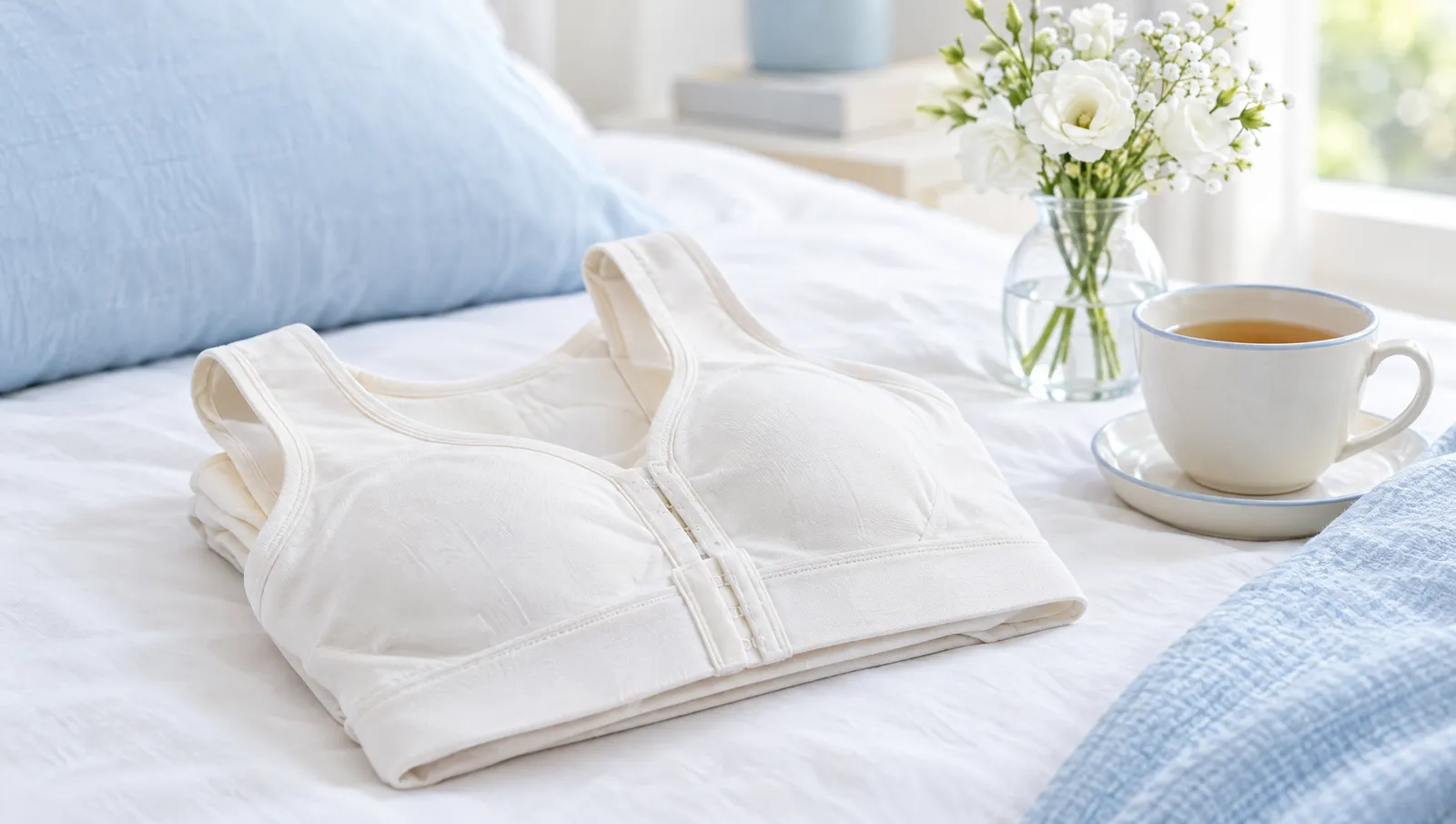
After breast implant surgery you will usually wear a special bra, either a surgical or a sports bra, without underwire. It holds the breasts and implants steady and helps reduce swelling. In the first weeks it is usually worn day and night and taken off only to shower and change dressings, if your doctor recommends this. Some surgeons also recommend an elastic band worn above the breasts together with the bra.
How long you wear the bra depends on the surgical technique, the position of the implants and how you are healing. It is usually four to six weeks, and you will be given the exact timing at your check-up. An underwired bra is usually put off until the implants have settled, which can take around two to three months. So leave buying new bras until later, once the shape of your breasts has settled.
- Ask in advance whether you will be given the bra at the hospital or need to buy it yourself, and what size you need.
- Choose a front-fastening style. It is easier to put on when your arm movements are limited.
- Have two, so one can be washed while you wear the other.
How to sleep after breast surgery
For the first few weeks you will usually sleep on your back, with your upper body slightly raised. Pillows behind your back and at your sides help stop you rolling onto your side during the night. A pillow under your knees can make lying on your back more comfortable. To get out of bed, move to the edge, lower your legs and push yourself up using your legs and core, without leaning on your arms.
Sleeping on your side is usually allowed after two to four weeks, once pressure on the breasts is no longer uncomfortable. Sleeping on your front is usually possible only after about six weeks or later, once your doctor judges that the implants are stable. If you find it hard to fall asleep on your back, tell your doctor at your check-up.
When you can return to work and driving
Going back to work depends mostly on how physically demanding your job is. The timings below are a guide, and the final assessment is made by your surgeon:
- desk work, with no carrying or lifting: usually after about one to two weeks
- work that involves long periods of standing, dealing with people or light carrying: usually after two to three weeks
- heavy physical work, lifting loads or working with your arms above your head: usually after four to six weeks, and sometimes later
Only get behind the wheel once you are no longer taking painkillers that make you drowsy and you can turn the steering wheel, look over your shoulder and brake suddenly without feeling any pulling. This is usually after about a week or later. If you need a certificate for your employer, ask before surgery what documents you will be given on discharge.
Exercise and physical activity
Walking is encouraged from the first days and can be gradually extended. Other activities are reintroduced step by step. The chest muscles and shoulders need to be protected for longer, especially if the implant is placed under the muscle.
- First two weeks: walking and light housework, with no lifting or sudden arm movements.
- Around weeks three and four: brisk walking, an exercise bike and light leg exercises, if your doctor agrees.
- From around week six onwards: a gradual return to arm, shoulder and back exercises, running and jumping, wearing a good sports bra.
- Press-ups, weights and chest exercises usually come last, only once your surgeon has specifically approved them.
If you feel pain, increased swelling or uncomfortable tightness while exercising, stop and go back to a gentler pace. If swelling after exercise does not go down, or one breast suddenly becomes larger, firmer or more painful, contact your surgeon. Soaking in a bath, swimming in a pool or the sea, saunas and hot baths should all be avoided until the wounds have fully healed, the swelling has gone and your doctor agrees. Protect your scars from the sun for the first few months.
Check-ups and wound care
The first check-up is usually within the first week after surgery, and your surgeon sets the exact appointment. At this visit the surgeon examines the wounds and changes the dressings if needed. If a drain, a thin tube that carries away fluid, has been placed, it is usually removed in the first few days after surgery, as the surgeon judges. Dissolvable stitches are often used, so they do not need to be removed, while other stitches are taken out at the check-up. Agree the date of your first check-up before you go home and write it down.
Further check-ups are usually after a few weeks and a few months, and then as agreed with your doctor. In the first weeks the implants usually sit somewhat higher, and the breasts feel firmer and tight. The implants gradually settle, so the final shape is usually seen after three to six months. Sensation in the nipples and breast skin is often altered in the first months. It usually returns gradually, but for some women the change is permanent. The scar is reddish at first and usually fades over six to twelve months. If it becomes thickened, raised or itchy, show it to your surgeon.
Bring your discharge summary to the check-up, along with a list of any questions that came up at home. The doctor will also explain how to care for your scar, when you may shower and which activities you can resume. When booking, check whether post-operative check-ups are included in the price of the procedure.
Even after recovery, regular check-ups are advised and, if your doctor recommends it, a breast ultrasound or breast MRI scan. Show your doctor any new swelling, lump or change in the shape of the breast, even if it appears years after surgery.
When to contact your doctor before your scheduled check-up
Most symptoms in the first days are expected and gradually ease. Some changes, however, mean you should contact your surgeon as soon as possible, before your scheduled check-up:
- sudden swelling, tension, hardness or severe pain in one breast only
- severe pain that does not ease even with the pain relief your doctor prescribed
- spreading redness, warm skin, pus or cloudy discharge from the wound, or an unpleasant smell
- a temperature of 38 °C or higher, or shivering
- a wound that is opening
Swelling and pain in the calf of one leg, sudden breathlessness or difficulty breathing, sudden chest pain, a racing heart or coughing up blood are reasons to call the emergency ambulance on 194 without delay. If you are not sure whether a symptom is expected, it is better to contact your doctor. Before surgery, ask who to call if a question comes up outside working hours.
The information in this text is general in nature and does not replace an examination by a doctor.