
Dr Ljiljana Paunković
specialist in plastic and reconstructive surgery
Book an appointment with Dr Ljiljana PaunkovićBreast augmentation (also known as breast enlargement, or informally as having silicone implants) is an operation that uses silicone implants to increase the size or change the shape of the breasts.
Note: These figures are general and approximate. The doctor decides for each patient after a consultation.
At Maja Hospital, at Vizantijski bulevar 39 in Niš, the procedure is carried out by specialists in plastic and reconstructive surgery, together with an anaesthetist. The operation is usually done under general anaesthetic and takes one to two hours. After a consultation, the surgeon decides on the type of implant, the incision site and the length of the hospital stay. Prices are in the plastic and aesthetic surgery price list.
specialist in plastic and reconstructive surgery
Book an appointment with Dr Ljiljana Paunković
specialist in plastic and reconstructive surgery
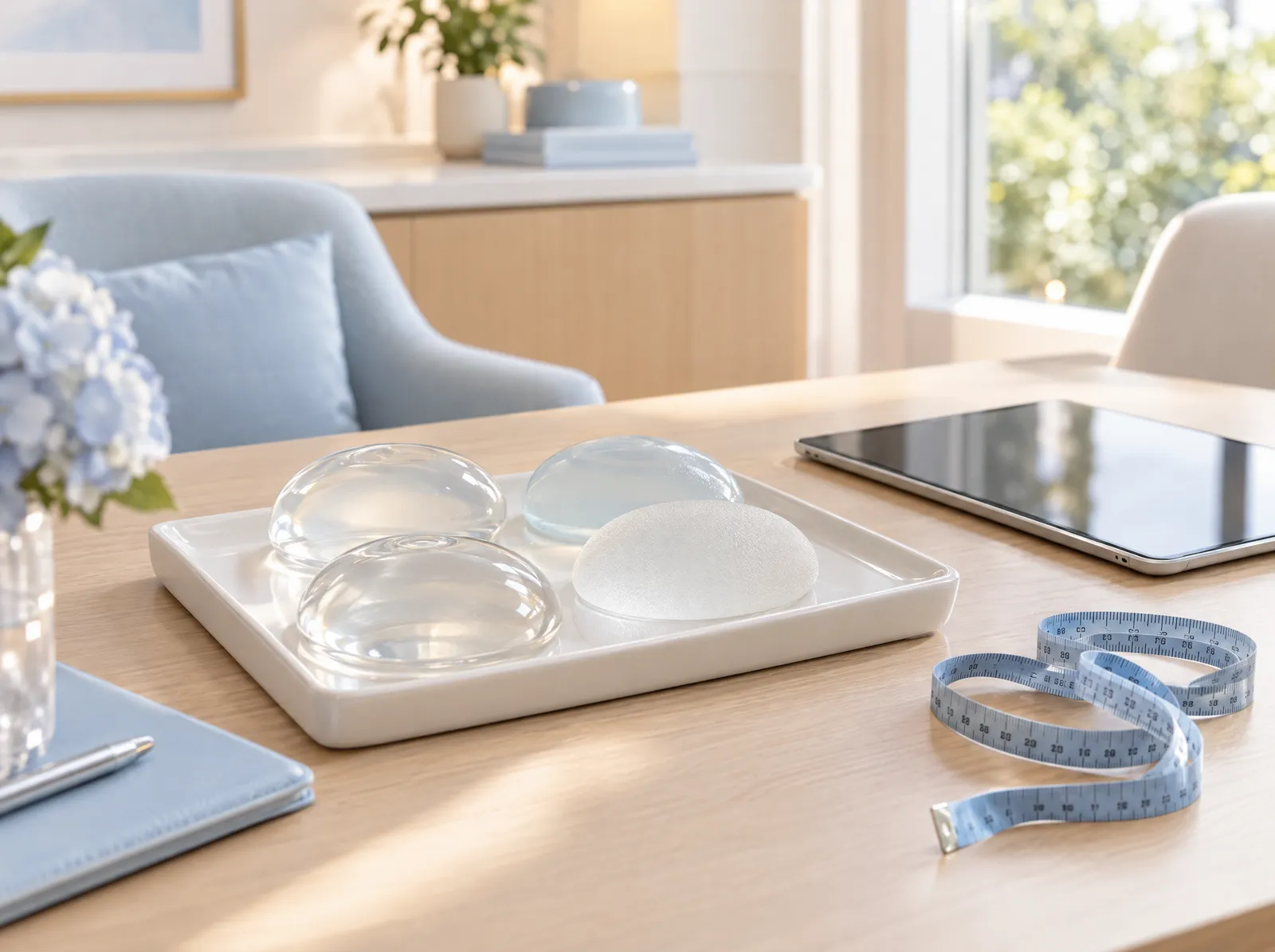
Book an appointment with Dr Dimitrije AdamovićBreast augmentation (the medical term is augmentation mammoplasty) is an operation to increase the size or change the shape of the breasts. In everyday speech it is often simply called getting silicone implants. Through an incision a few centimetres long, the surgeon places a silicone implant. The implant has an outer shell made of silicone and is filled with a thick silicone gel. It is placed behind the glandular tissue of the breast, under the chest muscle or partly under the muscle. At Maja Hospital the procedure is carried out by specialists in plastic and reconstructive surgery. The plastic and aesthetic surgery price list also includes other breast procedures, such as breast lift and breast reduction.
Women most often choose breast augmentation for cosmetic reasons: because they would like larger breasts, because of a difference in size between the two breasts, or because the breasts have lost volume after pregnancy, breastfeeding or weight loss. Implants are also used for congenital differences in the shape and development of the breasts. In these cases more than one procedure is sometimes needed. The procedure is not planned during pregnancy or breastfeeding. After breastfeeding, it is usual to wait a few months for the breasts to settle. The procedure is also postponed in the case of an acute illness or an unexplained change in the breast, until the investigations have been completed. When the breast is sagging, the surgeon may suggest a breast lift, either on its own or together with an implant. The decision about the procedure is made by the patient and the surgeon, after a consultation and a discussion about expectations.
Implant shape. Round implants are symmetrical and usually give more fullness in the upper part of the breast. Anatomical implants are teardrop-shaped, with more volume in the lower part of the breast. The Maja Hospital price list shows procedures with round implants and with anatomical implants as separate items, as well as augmentation of one breast and augmentation combined with a small breast lift. At the consultation, the surgeon recommends which implant is suitable.
Implant position. The implant is placed behind the glandular tissue, under the chest muscle or partly under the muscle. The choice depends on the thickness of the skin and tissue, the build of the chest and the look you want.
Incision site. The incision is most often made in the fold under the breast. Less often, it is made at the edge of the areola (the darker ring of skin around the nipple) or in the armpit.
Size. The size is chosen at the consultation, based on chest measurements, breast width and skin elasticity. The surgeon explains which options are realistic for each patient's build and which methods they recommend.
You need to fast before the operation and arrive at the time agreed with the hospital. After you are admitted, you fill in the paperwork and sign a consent form for the procedure. The anaesthetist checks your test results and explains how the anaesthetic will be given. Before the operation, while you are standing or sitting, the surgeon uses a marker pen to mark the incision sites and the position of the implants. The operation is usually done under general anaesthetic and takes one to two hours. After you wake up, you stay in your room under observation. A dressing or a special support bra is put on. You go home once the doctor judges that your condition is stable. Before you leave, you are given instructions on aftercare and an appointment for your first follow-up. You should go home with someone accompanying you and not drive yourself.
Like any operation, breast augmentation carries possible risks. Swelling, bruising and pain are usual in the first few days. Changes in sensation in the nipple and the skin of the breast are common in the first few months. They usually pass, but in some women they are permanent. Less common problems are a collection of blood (haematoma) or fluid (seroma), infection, movement of the implant, rippling of the implant visible under the skin and a difference in appearance between the two breasts.
Hardening of the scar tissue around the implant (capsular contracture) can happen at any time, most often in the first few years after the procedure. An implant can also rupture. With a silicone implant, a rupture often causes no symptoms and is found on an ultrasound or MRI scan. Very rarely, most often with implants that have a rough (textured) surface, a particular type of lymphoma associated with breast implants (BIA-ALCL) has been described. It usually appears years after the implants were put in, as new swelling or a lump in the breast. Some women report general symptoms, such as tiredness or joint pain, which they link to their implants. The cause of these symptoms is still being researched.
Implants are not designed to last a lifetime, but they do not have a fixed expiry date either. Over the years, some women need another operation, for example to replace or remove the implants. For this reason, regular check-ups are advised and, if the doctor recommends it, a breast ultrasound or breast MRI scan. Prices for both scans are in the radiology price list. Any new swelling, pain, lump or change in the shape of the breast should be checked by a doctor, even if it appears years after the procedure. The risks in each individual case are discussed with the surgeon at the consultation.
Implants do not last a lifetime. At some point implant removal or replacement may be needed, for example because the shape or firmness of the breast changes, the implant is damaged or at the patient's wish. When a thickened scar capsule forms around the implant, the surgeon can remove it (capsulectomy). Implant removal and capsulectomy are described on a separate page, together with prices. Whether a new implant is placed in the same procedure is assessed by the surgeon at the consultation.
Prices for breast augmentation at Maja Hospital are shown in the table on this page and in the plastic and aesthetic surgery price list. The price depends on the type of implant, whether one or both breasts are treated and whether the augmentation is done together with a breast lift. The consultation and the follow-up appointment with the plastic surgeon are listed as separate items in the price list. Please check when you book what is included in the price of the procedure, for example the implants, anaesthetic, hospital stay and follow-up appointments.
Yes. Breast enlargement, breast augmentation and having silicone implants are names for the same operation, in which silicone implants are used to increase the size or change the shape of the breasts. At Maja Hospital in Niš the procedure is carried out by specialists in plastic and reconstructive surgery, and the surgeon suggests the type and size of implant after a consultation.
Swelling, tightness and tiredness are strongest for the first few days and gradually ease over the first two weeks. Lighter activities and office work are usually possible after 1 to 2 weeks. Sport and heavy lifting usually need about 6 weeks. The final shape of the breasts is visible after 3 to 6 months. The surgeon sets out your exact recovery plan.
With office work, you can usually go back after 1 to 2 weeks. With work that involves physical effort, lifting or working with your arms above your head, 4 to 6 weeks are usually needed. The doctor assesses at a follow-up appointment when it is safe for you to return.
The operation is usually done under general anaesthetic, so you are asleep during the procedure. For the first few days after the operation there is usually pain and a feeling of tightness in the breasts. The pain is relieved with medicines prescribed by the doctor and usually eases day by day. When the implant is under the muscle, the discomfort is often somewhat greater.
Silicone implants do not have a fixed expiry date, but they are not designed to last a lifetime. The longer they have been in place, the more likely it is that a change will occur. They are replaced or removed when a change occurs, for example hardening of the tissue around the implant or rupture of the implant, or when the patient wants a different size. The decision to replace them is based on check-ups and test results, not just on the number of years.
Most women can breastfeed after having implants, but in some the amount of milk is lower or breastfeeding is not possible. An incision around the nipple and placing the implant behind the gland can affect the milk ducts and nerves more than an incision in the fold under the breast. Pregnancy and breastfeeding can also change the appearance of the breasts later on. If you are planning a pregnancy, tell the surgeon at the consultation, because this affects the choice of technique and the timing of the procedure.
According to the evidence available so far, silicone implants do not increase the risk of breast cancer. Very rarely, most often with implants that have a rough (textured) surface, a particular type of lymphoma (a cancer of the immune system) has been described in the tissue around the implant, known as BIA-ALCL. It usually appears years after the implants were put in, as swelling or a lump in the breast. Women with implants continue to have regular preventive breast check-ups and tell the radiologist about their implants before every scan.
Every incision leaves a scar. With an incision in the fold under the breast, the scar is usually a few centimetres long and sits underneath the breast. In the first few months it is reddish, and over 6 to 12 months it usually fades. Less often, the scar becomes thickened or raised, and it is then treated separately. How the scar looks also depends on each person's skin and how they heal.
Round implants are symmetrical and usually give more fullness in the upper part of the breast. Anatomical implants are teardrop-shaped, with more volume in the lower part of the breast. An anatomical implant can rotate within its pocket, so this is checked at follow-up appointments. No single shape suits everyone. The surgeon recommends a shape based on your build and the look you want.
For the first few weeks you sleep on your back. Sleeping on your side is usually possible after 2 to 4 weeks, and on your front after about 6 weeks. The surgeon sets the exact timing at a follow-up appointment.
Yes. Breast ultrasound and breast MRI are also carried out in women with implants, and both scans are in the Maja Hospital radiology price list. A mammogram is also possible, using a special imaging technique, because the implant can partly hide the breast tissue. Before every scan, tell the radiologist about your implants and bring details of the type of implant, if you have them.
← Plastic, reconstructive and aesthetic surgery
The information in this text is general in nature and does not replace an examination by a doctor.
Information on this website does not replace a medical examination. Treatment is decided by a doctor after the examination.