Varicose vein surgery in Niš
Varicose vein surgery at Maja Hospital in Niš, at Vizantijski bulevar 39, is part of the hospital's vascular surgery service.
At a glance
Facts and description
The hospital team includes Dr Nemanja Stepanović, a specialist in vascular surgery. Before a decision on the procedure is made, you have a consultation with a vascular surgeon and a Doppler ultrasound scan of the leg veins. The varicose vein is either closed from the inside, through a small puncture in the skin, or removed surgically. The method, the anaesthetic and the length of the hospital stay are decided by the surgeon on the basis of the findings.
All facts
- What the procedure is
- Closing or removing a superficial leg vein that does not return blood properly
- Performed by
- A specialist in vascular surgery
- Before the procedure
- A consultation with a vascular surgeon and a Doppler ultrasound scan of the leg veins
- Methods
- At the consultation, the surgeon explains which methods are offered at Maja Hospital and which one suits your findings. Methods used in practice include closing the vein from the inside, conventional surgery, removal of branch veins through small punctures and sclerotherapy.
- Anaesthetic
- Usually a local anaesthetic when the vein is closed from the inside; a spinal or general anaesthetic for conventional surgery
- Length of the procedure
- Usually 30 to 90 minutes per leg, depending on the method and the extent of treatment
- Hospital stay
- Depends on the method and the anaesthetic: usually no overnight stay after the vein is closed from the inside, and usually up to one night after conventional surgery. The length of the stay is decided by the doctor.
- Walking
- Usually on the day of the procedure, wearing a compression stocking or bandage; after a spinal or general anaesthetic, once the anaesthetic has worn off
- Compression stocking
- Usually 1 to 4 weeks, as instructed by the surgeon
- Return to normal activities
- As a rough guide, within a few days of the vein being closed from the inside, and 1 to 3 weeks after conventional surgery
- Follow-up appointments
- The first is usually within the first 1 to 2 weeks, often with an ultrasound scan; after that, depending on the findings
- Price
- The price of the procedure is not published in the price list. The price of a Doppler scan of the leg blood vessels is listed in the Maja Radiology price list.
- Note
- These figures are general and approximate. The method, the anaesthetic, the hospital stay and the recovery are decided by the doctor on the basis of the findings.
Our specialists
Recovery
- Walking is usually recommended from the day of the procedure, several times a day.
- The compression stocking is worn as instructed by the surgeon, usually day and night for the first few days and then during the day, for a total of 1 to 4 weeks.
- For the first few days, avoid standing or sitting still for long periods. When resting, it helps to raise your leg.
- Bruising, tenderness and tightness along the vein are common and usually settle within a few days to a few weeks.
Show 4 more: Recovery
- Showering is usually allowed after 24 to 48 hours. Avoid baths, swimming pools, saunas and strong sun on the treated part of the leg until the doctor says you can.
- As a rough guide, you can return to lighter work within a few days of the vein being closed from the inside, and 1 to 3 weeks after conventional surgery. Heavier physical exertion and exercise are usually possible after 1 to 2 weeks when the vein is closed from the inside, and later after conventional surgery, with the doctor's permission.
- You can drive when you can move your leg without pain and the doctor has approved it. Discuss longer journeys and flights in the first few weeks with the doctor.
- The first follow-up appointment is usually within the first 1 to 2 weeks, often with an ultrasound scan of the veins. All figures are approximate; your recovery plan is decided by the doctor.
How to prepare
- Have the tests the surgeon and anaesthetist ask for, usually a full blood count, blood clotting tests and an ECG.
- Mention blood thinners, hormone treatment and contraception, and do not change your treatment on your own.
- Mention pregnancy, any previous thrombosis and allergies, for example to a local anaesthetic.
- Ask whether you need to get the compression stocking yourself, and if you buy it, bring it to the procedure.
Show 2 more: How to prepare
- On the day of the procedure, do not put cream on your leg, wear loose clothing and bring flat shoes.
- Before a spinal or general anaesthetic or sedation, come having fasted, as instructed by the anaesthetist.
When to contact a doctor right away
- Contact a doctor without delay if you notice swelling and pain in the calf that are getting worse, redness and warmth in the leg, a raised temperature or bleeding that does not stop. If there is bleeding, lie down, raise your leg and press on the area with clean gauze. If you are short of breath, have chest pain or are coughing up blood, call the emergency medical service on 194.
In detail
What is varicose vein surgery?
The veins in the legs carry blood back to the heart. They contain small valves that stop blood from flowing backwards. When the valves in the superficial veins do not close properly, blood pools in them, and the veins widen and become visible and twisted. These are known as varicose veins of the legs, or varicosities.
Varicose vein surgery closes or removes the superficial vein that is not working properly. This is usually the great or small saphenous vein and its branches. Blood then continues to flow through healthy veins, mainly the deep veins of the leg, which carry most of the blood from the legs. At Maja Hospital, the procedure is part of the vascular surgery service.
When is surgery recommended?
The decision on surgery is made after a consultation with a vascular surgeon and a Doppler ultrasound scan of the leg veins. Varicose veins are not always a reason for surgery.
The surgeon usually suggests the procedure when the Doppler scan shows that blood is flowing backwards through a superficial vein and there are also symptoms or changes such as:
- a feeling of heaviness and tiredness in the legs, especially after standing for a long time
- swelling around the ankles towards the end of the day
- cramps in the calves at night
- changes in skin colour, eczema or hardening of the skin on the lower leg
- a wound on the lower leg that is slow to heal
- repeated inflammation of a superficial vein, or bleeding from a varicose vein
These symptoms can also have other causes, for example heart, kidney or arterial disease, so they should always be assessed by a doctor.
For some patients, wearing compression stockings, moving about more and attending regular check-ups is enough. The strength of the stockings is decided by the doctor after checking the circulation in the arteries of the legs, because when blood flow through the arteries is reduced, strong compression can cause harm.
The procedure is usually postponed during pregnancy and for some time after giving birth, and also in the case of a recent deep vein thrombosis or inflammation of a superficial vein. If the deep veins have been blocked in the past, or the circulation in the arteries of the legs is reduced, the surgeon assesses particularly carefully whether the procedure is possible. This is always decided by the doctor.
Laser and conventional vein surgery: what methods are there?
This is an overview of the methods used today. At the consultation, the surgeon explains which of them are offered at Maja Hospital and which one suits your findings. The surgeon chooses the method on the basis of the Doppler findings, the width and course of the vein and your general health.
Closing the vein with a laser (endovenous laser ablation, EVLA). Through a small puncture in the skin, guided by ultrasound, a thin fibre is passed into the vein. Heat from the laser closes the vein from the inside. It is usually done under a local anaesthetic, through a puncture, without a surgical cut.
Closing the vein with radiofrequency energy (radiofrequency ablation, RFA). The principle is the same as with the laser, but the vein is closed by a thin catheter that is heated with radiofrequency energy.
Conventional surgery. The vein is tied off in the groin or behind the knee and removed through small cuts. It is usually done under a spinal or general anaesthetic. It is still used today, for example when the vein is very wide or twisted.
Removal of branch veins through small punctures (phlebectomy). Varicose side branches are removed through punctures a few millimetres long, often together with one of the methods above.
Sclerotherapy. A substance that closes them is injected into a smaller vein or into thread veins. It is done as an outpatient procedure, usually without an anaesthetic.
There are also other methods, for example closing the vein with medical glue.
What happens on the day of the procedure?
Arrive for admission at the time agreed with the hospital, bringing your test results and a list of your medicines. Your medical records are checked, the doctor talks to you about the procedure once more, and you sign a consent form for the procedure.
Before the procedure, the surgeon uses ultrasound, usually while you are standing, to mark on your skin the course of the vein and the branches to be treated. The anaesthetic is then given: usually a local anaesthetic when the vein is closed from the inside, and usually a spinal or general anaesthetic for conventional surgery.
After the procedure, an elastic bandage or a compression stocking is put on your leg. After a local anaesthetic, you usually get up and walk about after a short rest. After a spinal or general anaesthetic, you get up only once the anaesthetic has worn off, the first time with help from the staff. Before you are discharged, you receive written instructions, advice on wearing the stocking and an appointment for your first follow-up.
Arrange for someone to accompany you home. Do not drive yourself on the day of the procedure.
Who is the vascular surgeon in the Maja Hospital team?
The Maja Hospital team includes Dr Nemanja Stepanović, a specialist in vascular surgery. You will find out who will carry out your procedure at the consultation. When a spinal or general anaesthetic is needed, it is managed by a specialist in anaesthesiology and resuscitation.
What are the possible risks of vein surgery?
Every procedure carries certain risks, which the surgeon discusses with you at the consultation. After varicose vein surgery, the most common effects are bruising, tenderness and a feeling of tightness along the treated vein. These usually settle within a few days to a few weeks.
Less common effects include numbness or tingling in a patch of skin (this usually goes away and only rarely becomes permanent), inflammation of a superficial vein, darker discolouration of the skin over the vein, a collection of blood under the skin and inflammation at the site of a puncture or cut. Deep vein thrombosis is rare, and very rarely a blood clot travels to the lungs. The risk is reduced by walking after the procedure, wearing a compression stocking and having a follow-up ultrasound scan, and for some patients the doctor also prescribes a medicine to prevent blood clots.
Frequently asked questions
Is laser vein surgery painful?
Closing a vein with a laser is usually done under a local anaesthetic. A numbing solution is injected along the vein through several small punctures, which is usually more uncomfortable than the closure of the vein itself. While the vein is being closed, you feel pressure and sometimes warmth. After the procedure, a feeling of tightness, tenderness and bruising along the vein are common. These usually settle within a few days to a few weeks. The surgeon will advise you on how to ease them.
How long does recovery take after varicose vein surgery?
It depends on the method and the extent of the procedure. After the vein is closed from the inside, you can usually walk on the day of the procedure, and, as a rough guide, lighter activities can be resumed within a few days. After conventional surgery, recovery usually takes 1 to 3 weeks. Bruising and tightness along the vein may last for a few weeks. Your exact recovery plan and return to work are decided by the surgeon.
What is the difference between laser and conventional vein surgery?
With the laser method, the vein is closed from the inside through a small puncture, usually under a local anaesthetic and without a surgical cut. In conventional surgery, the vein is tied off and removed through small cuts, usually under a spinal or general anaesthetic, so recovery usually takes a little longer. Conventional surgery is still used today, for example when the vein is very wide or twisted. The surgeon chooses the method on the basis of the Doppler findings.
How long do you wear a compression stocking after vein surgery?
Usually for 1 to 4 weeks. For the first few days, the stocking is usually worn day and night, and then only during the day. How long you wear it and the strength of the stocking are decided by the surgeon, depending on the method and the findings. The stocking reduces swelling and bruising and helps blood flow through the deep veins.
Do I need a Doppler scan before vein surgery?
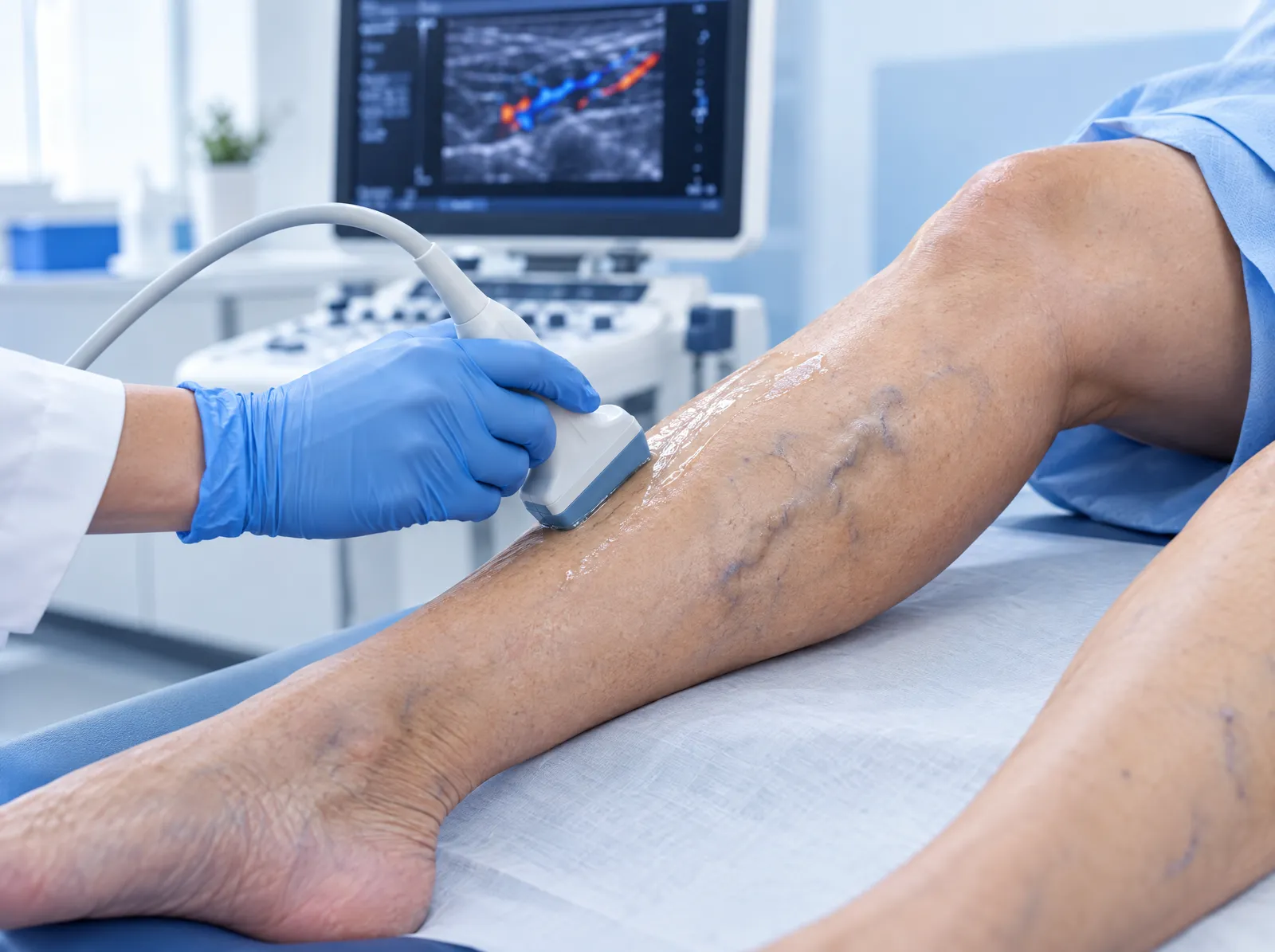
Yes. A Doppler ultrasound scan of the leg veins shows which veins are not closing properly, where blood is flowing backwards and the condition of the deep veins. On the basis of the findings, the surgeon decides whether the procedure is needed and which method to suggest. The scan is done with a probe moved over the skin, with no needles and no radiation, usually partly while you are standing. Where the Doppler scan is done is agreed with the surgeon; a Doppler scan of the leg blood vessels is also listed in the Maja Radiology price list.
Show 3 more: Frequently asked questions
Do varicose veins come back after surgery?
A vein that has been successfully closed or removed usually no longer fills with blood, but in some patients a closed vein reopens over time. New varicose veins may also appear in other places, because a tendency towards weak vein walls and valves often remains. Follow-up appointments help to spot changes early, and staying active and keeping your weight in check are good for your veins. If varicose veins come back, they can usually be treated again.
Does vein surgery leave scars?
After the vein is closed from the inside, small dot-like puncture marks remain, which usually become barely visible over time. After conventional surgery and removal of branch veins, small scars from the cuts remain, usually in the groin, behind the knee or along the leg. How a scar looks also depends on your skin and how it heals. Darker discolouration of the skin over the vein usually fades within a few months, and rarely lasts longer.
How much does varicose vein surgery cost in Niš?
The price of varicose vein surgery at Maja Hospital is not published in the price list. It depends on the method, on whether one or both legs are treated and on the extent of the procedure. The final price depends on the treatment plan the surgeon proposes after the consultation and Doppler scan. The price of a Doppler scan of the leg blood vessels is listed in the Maja Radiology price list.
The information in this text is general in nature and does not replace an examination by a doctor.
Book an appointment: Varicose vein surgery
Information on this website does not replace a medical examination. Treatment is decided by a doctor after the examination.