Skip to content
Bolnica MajaBOLNICA
Maja BeautyBEAUTYSkin and scars

Skin reconstruction with grafts and flaps in Niš

Covering a skin defect with a graft or a flap, after an injury or removal of a lesion. The plastic surgeon chooses the method according to the size and location of the defect.
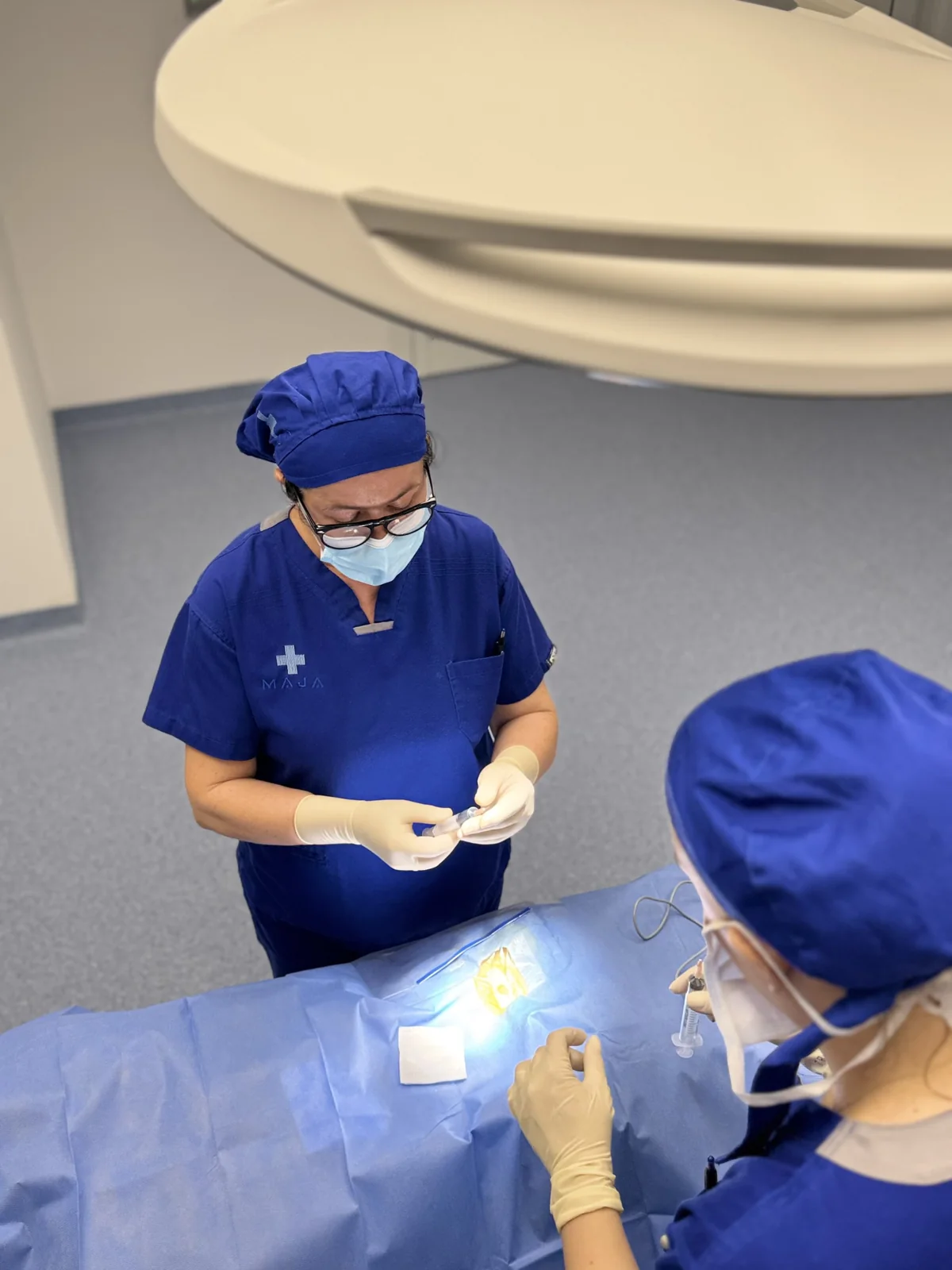
Skin reconstruction: grafts and flaps

At a glance

Graft
Thiersch or Wolfeskin from another part of the body
Flap
Local or tissue flapmoving nearby tissue
Price depends on
Size and complexity
Method chosen by
The plastic surgeon
Facts and description

Skin reconstruction is the covering of a skin defect after an injury or removal of a lesion, with a graft (skin taken from another part of the body) or a flap (moving nearby tissue). At Maja Hospital, Vizantijski bulevar 39 in Niš, it is carried out by specialists in plastic and reconstructive surgery. The price list includes Thiersch and Wolfe grafts and local and tissue flaps, and the surgeon decides on the method.

All facts

Thiersch graft
A thin layer of skin (split-thickness graft), usually for larger areas
Wolfe graft
Full-thickness skin, usually for smaller areas
Local flap
Moving nearby skin that stays connected to its blood vessels
Tissue flap
A more complex reconstruction with a larger piece of tissue
Method
Chosen by the plastic surgeon according to the size, depth and location of the defect
Price
Depends on the method and size of the defect. The items are in the price table on this page.

When the procedure is usually considered

  • A skin defect after removal of a lesion that cannot be closed directly
  • A skin defect after an injury
  • A wound in a place where tissue cover is needed
  • After assessment by the plastic surgeon

What the procedure cannot do

  • Scars remain at the graft site and where the skin was taken
  • The colour and texture of grafted skin may differ from the surrounding skin
  • The surgeon decides on the method according to the size and location of the defect

The path to the procedure

  1. Step 1: Plastic surgery consultation

    The surgeon talks about your reasons and expectations, examines the area and explains the options.

  2. Step 2: Plan and preparation

    The method, anaesthetic and tests are agreed. With general anaesthesia or sedation you are also seen by an anaesthetist.

  3. Step 3: Day of the procedure

    After admission the surgeon explains the procedure once more, and you sign a consent form.

  4. Step 4: After the procedure

    You receive instructions for wound care and dressings; the surgeon decides on the length of stay.

  5. Step 5: Follow-up

    At the follow-up the surgeon checks healing, removes stitches when needed and discusses scar care.

Skin reconstruction: grafts and flaps: prices

Our specialists

Recovery

  • Swelling, bruising and tenderness in the treated area are expected in the first days and gradually subside.
  • Take pain relief as advised by the surgeon.
  • Keep the wound clean and dry and change the dressing as instructed after the procedure.
  • Stitches, unless they are dissolvable, are removed at the follow-up appointment, on a date set by the surgeon.
Show 3 more: Recovery
  • A scar matures over months; the surgeon explains scar care and sun protection at the follow-up.
  • Exercise, sport and returning to work are agreed with the surgeon, depending on the procedure.
  • Contact the surgeon without delay if you develop a temperature, redness, warmth or pus at the wound, bleeding that does not stop with pressure, or pain and swelling that get worse.

How to prepare

  • Bring your results and a list of medicines you take regularly.
  • Tell the doctor about allergies, especially to local anaesthetics, and about blood thinners; do not stop any treatment on your own.
  • Have blood tests if the doctor asks for them.
  • For a procedure under local anaesthetic, fasting is usually not needed; you will receive instructions when booking.
  • If sedation is given with the procedure, arrange for someone to accompany you and do not drive yourself afterwards.

When to contact the surgeon

Contact the surgeon without delay if after the procedure you have:

  • A temperature of 38 °C or higher, or shivering
  • Redness, warmth or pus at the wound
  • Bleeding that does not stop with pressure
  • Pain or swelling that gets worse

Call the emergency service (194) if:

  • You have difficulty breathing or chest pain
  • You have severe swelling of the face, lips or tongue

In detail

What is skin reconstruction?

When a defect remains after an injury or removal of a skin lesion that cannot be closed by direct stitching, the plastic surgeon covers it with a graft or a flap. The aim is to close the wound and preserve the shape and function of that part of the body.

Thiersch and Wolfe skin grafts

A graft is skin taken from another part of the body and moved to the defect. A Thiersch graft is a thin layer of skin (split-thickness) and is usually used for larger areas. A Wolfe graft is full-thickness skin and is usually used for smaller areas, for example on the face.

Local and tissue flaps

A flap is a piece of skin and tissue near the defect that is moved over it while staying connected to its blood vessels. A local flap is used for small and medium defects, and tissue flaps for larger or more complex defects. The price list also includes complex defect reconstruction.

Frequently asked questions

How much does a skin graft cost in Niš?

The price depends on the method and the size of the defect. The Maja Hospital price list has items for small, medium and large defects with a Thiersch graft, small and medium with a Wolfe graft, local flaps and tissue flaps. All are in the price table on this page.

What is a Thiersch graft?

It is a thin layer of skin (split-thickness graft) taken from another part of the body, usually used to cover larger areas.

What is a Wolfe graft?

It is full-thickness skin taken from another part of the body, usually used for smaller areas, for example on the face.

What is a flap in plastic surgery?

A flap is a piece of skin and tissue near the defect that is moved over it while staying connected to its blood vessels.

← Plastic, reconstructive and aesthetic surgery

The information in this text is general in nature and does not replace an examination by a doctor.

Book an appointment: Skin reconstruction: grafts and flaps

Information on this website does not replace a medical examination. Treatment is decided by a doctor after the examination.